Upgrade your rental without wiring: the best plug-in wall sconce styles (swing-arm, uplight, task, fabric shades) plus clean cord-hiding ideas, mounting opti...
Warm Lumen
The Magic Light Trick: Wall Sconces Without Wiring

Lumi
Lumi is the friendly little firefly host of Warm Lumen, with a heart that glows as brightly as a perfectly placed pendant lamp. He loves discovering how soft bulbs, warm color temperatures, and layered lighting can transform any dark room into a welcoming retreat. Lumi is always fluttering by to share bright ideas and cheer you on as you create a beautifully lit space.
Published
Let’s find the perfect glowing touch for every corner of your home! If you’ve ever wished you could add wall sconces but stopped at the words “no wiring,” this is the little lighting trick that keeps things simple. You’ll mount a decorative sconce, then tuck a battery-operated puck light inside using an easy PVC adapter so it looks like a real hardwired glow.
One quick tradeoff up front: this is mood and accent light, not a replacement for a true wired fixture. You’ll also plan for battery changes (or recharging) depending on the puck you choose.
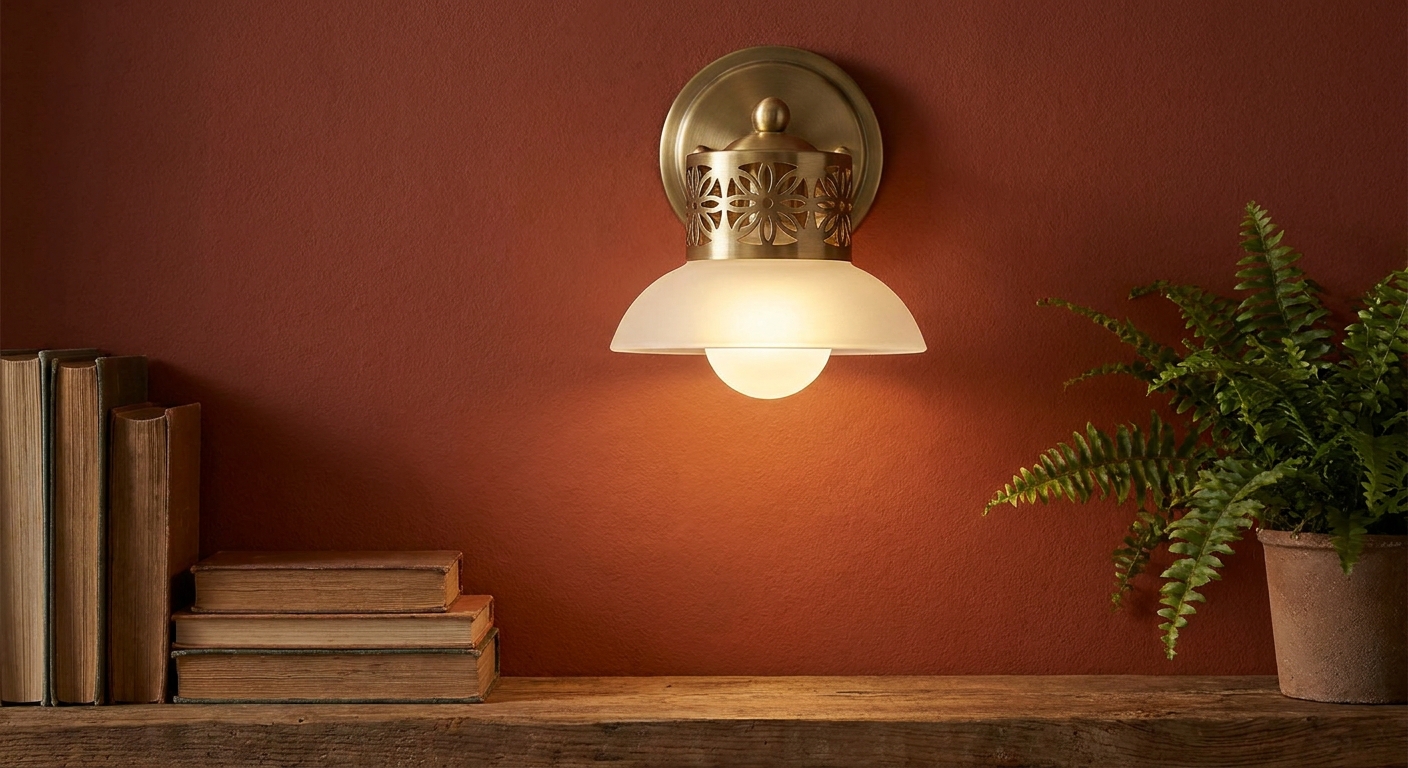
What this trick is and why it works
A typical wall sconce is designed to hold a bulb socket connected to house wiring. Instead of opening the wall, you’ll create a stable “mini light engine” that sits where the bulb would normally shine.
- Battery puck light: provides the light, usually with a built-in switch or remote.
- PVC adapter: acts like a neat, centered holder so the puck doesn’t rattle around or look obvious.
- Regular sconce body: gives you the style, shade, and wall presence that makes the light feel permanent.
This is especially handy for renters, hallways, dark corners, and spots where a plug-in cord would look messy. If you want a plug-in option too, flutter over to Renter-Friendly Plug-In Wall Sconces and Cord Hiding Tricks.
Materials and tools
What to buy
- Decorative wall sconce (hardwired or “no wiring required” style). Look for one with a shade or globe that can hide a puck.
- Battery-operated puck light (tap-on, remote, or both). Warm white is usually the coziest choice.
- PVC pipe fitting to act as an adapter (often a short length of PVC pipe or a PVC coupling). Pick a diameter that fits neatly inside the shade or socket area.
- Mounting method: wall anchors and screws, or heavy-duty picture hanging strips if the sconce is lightweight and the wall surface is smooth.
- Adhesive: removable mounting tape, hook-and-loop dots, or a small bead of removable adhesive putty to secure the puck inside the PVC.
Choosing a puck light
- Brightness expectations: look for enough output to read as a sconce glow, not just a night-light. If your goal is hallway guidance or bedside ambience, medium output is often plenty.
- Dimming and modes: multi-level dimming, a warm mode, and an optional timer can make it feel more “fixture-like.”
- Color quality: if you care about how paint and art look at night, check CRI. CRI Explained: Why Color Accuracy Matters in Home Lighting can help.
- Power: rechargeable is convenient, disposable batteries can be simpler if you do not want to remove the puck often. Either way, plan easy access.
Tools that help
- Measuring tape
- Level
- Pencil
- Drill and bit set (if using anchors)
- Screwdriver
- Fine-tooth saw or PVC cutter (only if trimming PVC)
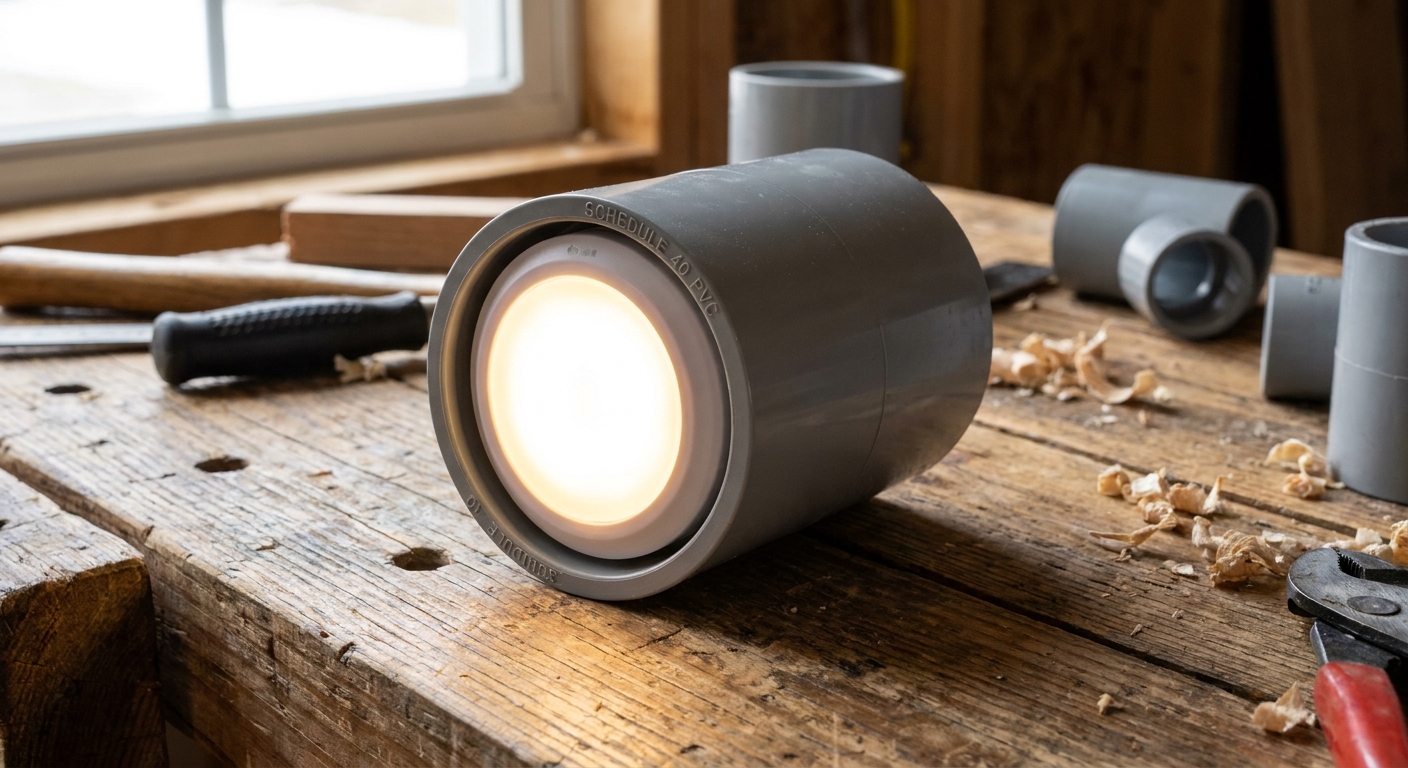
Step-by-step: wire-free sconce install
1) Pick the right sconce shape
The easiest styles for this trick have a shade, globe, or drum that hides the light source from direct view. Open-cage sconces can still work, but you may see the puck unless it’s tucked behind a diffuser.
If you love globe lighting, keep glare in mind. Frosted glass hides the puck best. Clear glass can show the light unit. See Glass Globe Lighting: Clear vs Frosted for help choosing.
2) Decide your height and spacing
Common placement is often around 60 to 66 inches from the floor to the center of the light, adjusting for ceiling height, head clearance, and how the sconce looks from where you actually stand or sit.
- Bedside: align with the top third of the headboard or slightly above shoulder height when seated.
- Hallways: space sconces evenly so the light pools overlap, and make sure the fixture does not protrude into the walking path in a way that feels tight.
- Bathroom: this trick is better for decorative glow than task lighting. For real vanity brightness, visit Best Color Temperature for Bathroom Vanity Lighting.
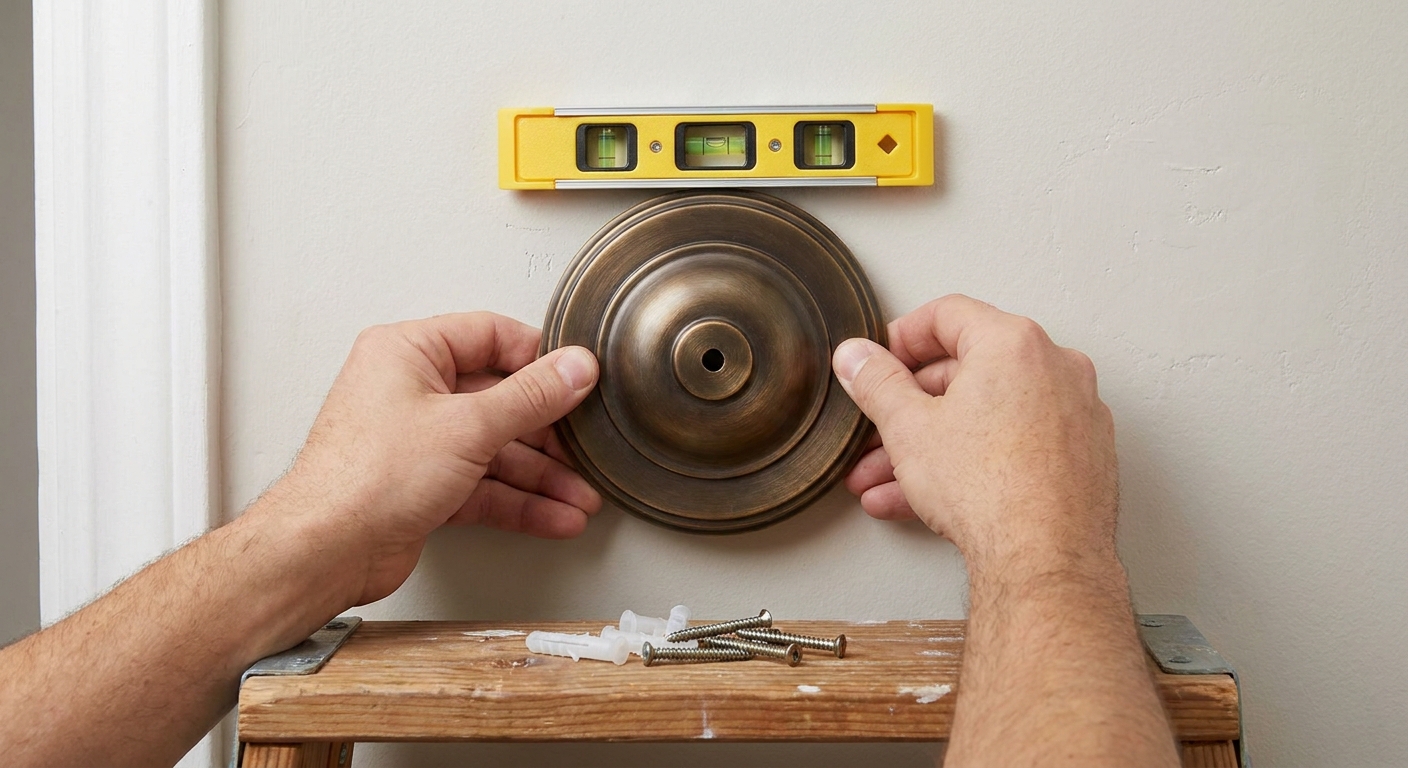
3) Mount the sconce body securely
Even though there’s no wiring, treat the mounting like a real fixture install.
- Use a stud when possible.
- If not, use anchors rated for the sconce weight.
- Make sure the fixture sits flat and doesn’t wobble.
4) Build the PVC adapter
The goal is a short “sleeve” that holds the puck centered inside the shade or socket area.
- Measure the opening where you want the puck to sit.
- Measure the puck (its diameter and depth).
- Choose PVC that gives you a snug, centered fit. You want a little clearance so it slides in easily, but not so much that it looks sloppy.
- Trim the length so the puck sits far enough back to hide hardware, but not so far back that the shade blocks all the light.
Tip: If the inside feels too shiny, a quick pass with fine sandpaper can reduce reflections and help tape grip better.
5) Secure the puck light inside the adapter
Use a method that matches how often you’ll change batteries:
- Hook-and-loop dots: easy battery access, strong hold.
- Removable mounting tape: neat and simple, best when you rarely remove the puck.
- Adhesive putty: great for lightweight pucks, easiest to reposition.
Keep the puck’s battery door accessible. If the puck has a tap-on face, make sure you can still tap it or reach the switch once it’s inside the sconce.
Make it look like a real sconce glow
Choose the right color temperature
For most living spaces, 2700K looks like a classic warm bulb. 3000K is a little cleaner and brighter. If you want a deeper cozy glow, some puck lights offer “warm white” modes that dip lower.
If you want a quick refresher on warm vs cool light, browse Lighting Basics & Education.
Soften the hotspot
Puck lights can create a bright center spot. A few ways to smooth it out:
- Use a frosted globe or a fabric shade.
- Add a thin diffuser if the sconce design allows, like a frosted acrylic circle cut to size and placed behind the shade or inside a globe opening.
- Aim the puck slightly upward inside the shade so the light bounces and spreads.
Match brightness to the room
Wire-free sconces are usually for accent and mood lighting, not whole-room illumination. If you need to plan overall brightness, use Calculate the Right Lumens for Any Room to layer your lighting so it feels balanced.
Safety and placement notes
- Heat: battery puck lights usually run cooler than old-school incandescent bulbs, but they can still warm up. Avoid trapping them in a sealed, no-airflow spot, and follow the puck manufacturer’s guidance for enclosed use.
- Bathrooms and damp areas: treat most battery puck lights as dry-location products unless the packaging specifically says damp-rated. Keep them out of wet zones and away from direct spray. For fixture rating basics, see Damp vs Wet Rated Lights.
- Battery access: plan for easy removal so you do not have to unmount the whole sconce later.
- Wall damage: anchors are sturdy but leave holes. Adhesive strips are gentler but have weight limits.
- Adhesives and wall surfaces: adhesive strips grip best on clean, smooth, fully cured paint. Fresh paint needs time to harden, and textured walls and wallpaper can be unpredictable. When in doubt, use screws and anchors and patch later.
Troubleshooting
The puck light looks obvious
- Move it deeper into the shade using a longer PVC sleeve.
- Switch to a frosted shade or globe.
- Choose a puck with a lower profile.
The light is too dim
- Use a higher-output puck light or a multi-LED model.
- Pick a sconce shade that is lighter inside (white or reflective lining).
- Place a second puck light if the shade is large enough and the manufacturer guidance allows enclosed use.
The light falls off the mount
- Clean surfaces with isopropyl alcohol and let dry before applying tape.
- Upgrade to hook-and-loop dots or a stronger removable mounting method.
- Add a snug PVC ring so the puck cannot slide.
Remote control is unreliable
- If your puck uses an IR remote, some metal shades or deep shades can block the signal.
- Rotate the puck so its receiver faces outward.
- Consider a tap-on puck if the sconce is within easy reach.
Where this trick shines
- Entryway glow: add a welcoming sparkle on either side of a mirror or coat hooks. See Entryway Lighting.
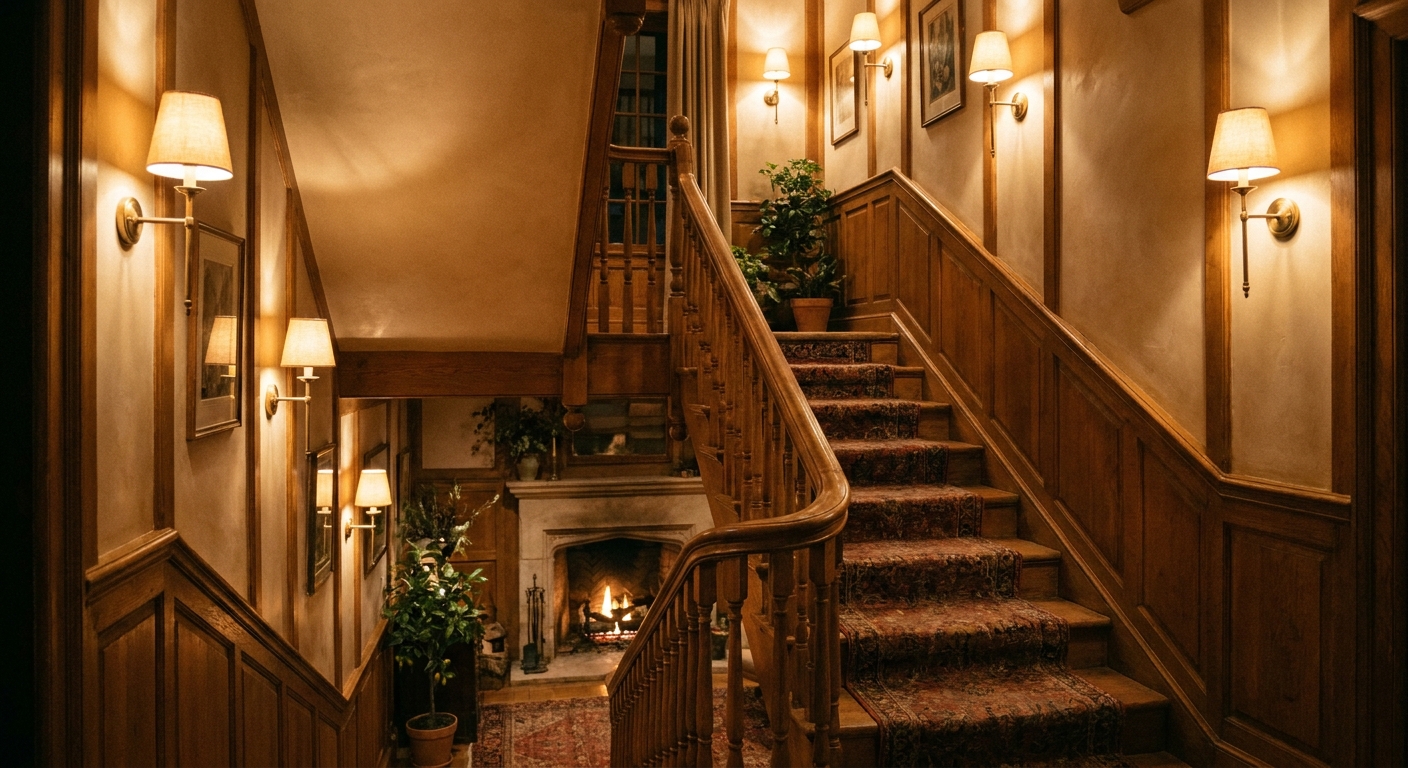
- Hallways and stairs: guide-the-way light without calling an electrician. Visit Hallway and Staircase Lighting Ideas.
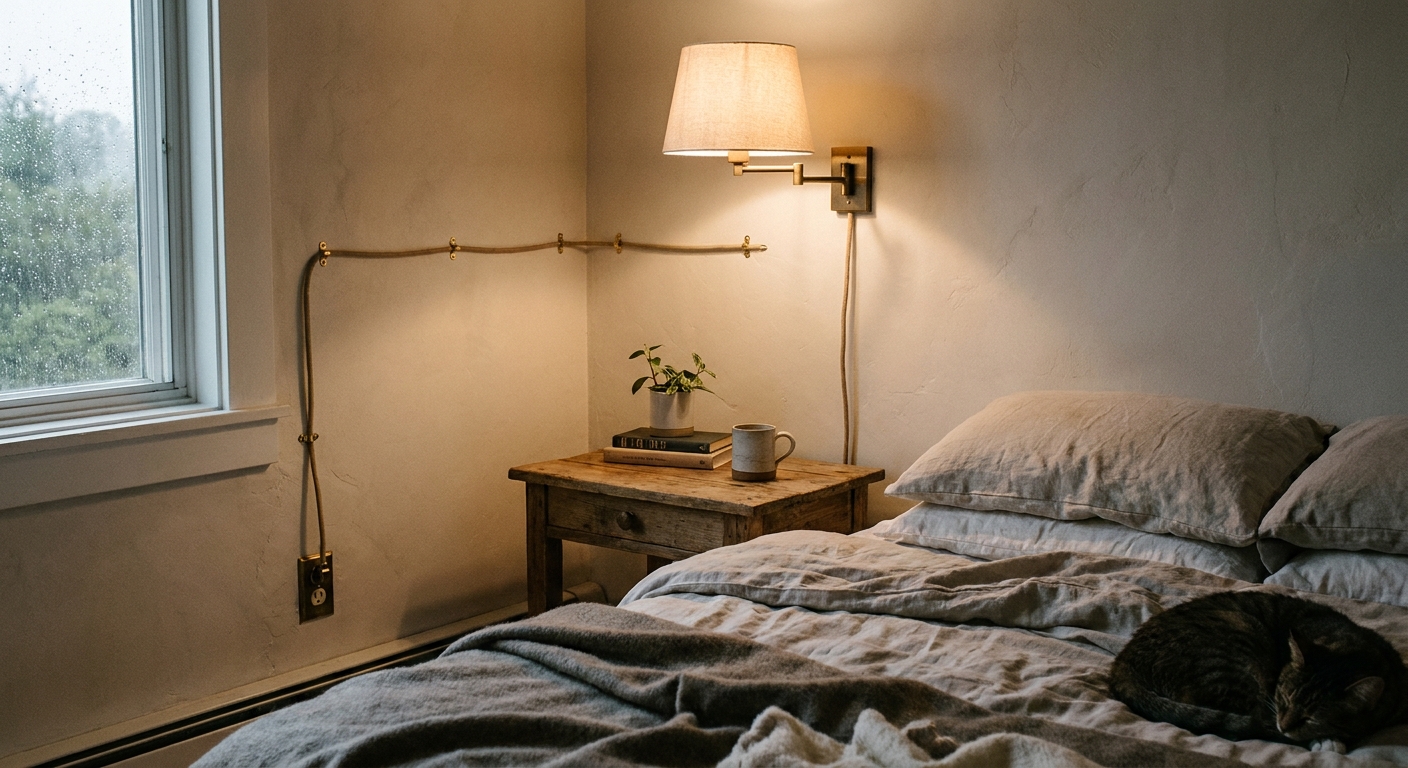
- Bedside ambience: a soft sconce glow frees up nightstand space. Compare options in Bedside Lighting: Lamps vs Sconces vs Pendants.
- Gallery walls: use wire-free accent lighting near frames, then layer with picture lights for a curated look. See Art and Picture Lighting for Gallery Walls.
Quick FAQ
Will this look like a real hardwired sconce?
From a normal standing distance, it can look surprisingly convincing, especially with a shade or frosted globe that hides the puck and softens the beam.
Can this be the main light in a room?
Usually no. Battery pucks are best for accent and mood lighting. For main lighting, pair your sconces with a ceiling fixture, floor lamp, or under-cabinet lighting depending on the room.
How often will batteries need changing?
It depends on the puck’s brightness and usage time. If the sconce is used nightly, plan for more frequent changes and choose a mounting method that makes removal easy.
Do I need to keep the socket and wires?
This is a decorative, non-electrified setup. If your sconce includes a socket and wiring, the safest approach is to remove the socket and wiring assembly if the fixture design allows. If parts must remain for structure, make sure nothing is connected to power, and ensure any conductors are secured and isolated according to the fixture instructions so there are no loose, exposed ends.
A tiny glow-up
This is one of those cozy little upgrades that changes how a room feels the moment the lights come on. With a decorative sconce, a warm puck light, and a simple PVC adapter, you can add that wall-lit charm without opening the drywall. May your corners feel brighter, softer, and perfectly guided home.
If you’d like more small upgrades like this, visit DIY & Easy Upgrades.