Stop guessing your lighting. Use a simple foot-candle × square footage formula to find total lumens, then split them into ambient, task, and accent layers wi...
Warm Lumen
Entryway Lighting

Lumi
Lumi is the friendly little firefly host of Warm Lumen, with a heart that glows as brightly as a perfectly placed pendant lamp. He loves discovering how soft bulbs, warm color temperatures, and layered lighting can transform any dark room into a welcoming retreat. Lumi is always fluttering by to share bright ideas and cheer you on as you create a beautifully lit space.
Published · Last updated
Let's find the right glow for the very first corner everyone sees. An entryway does a lot in a small amount of time. It guides footsteps, flatters faces, and sets the mood before anyone even kicks off their shoes. The secret is not one “perfect” fixture. It is a cozy little team of lights working together, each doing a different job.
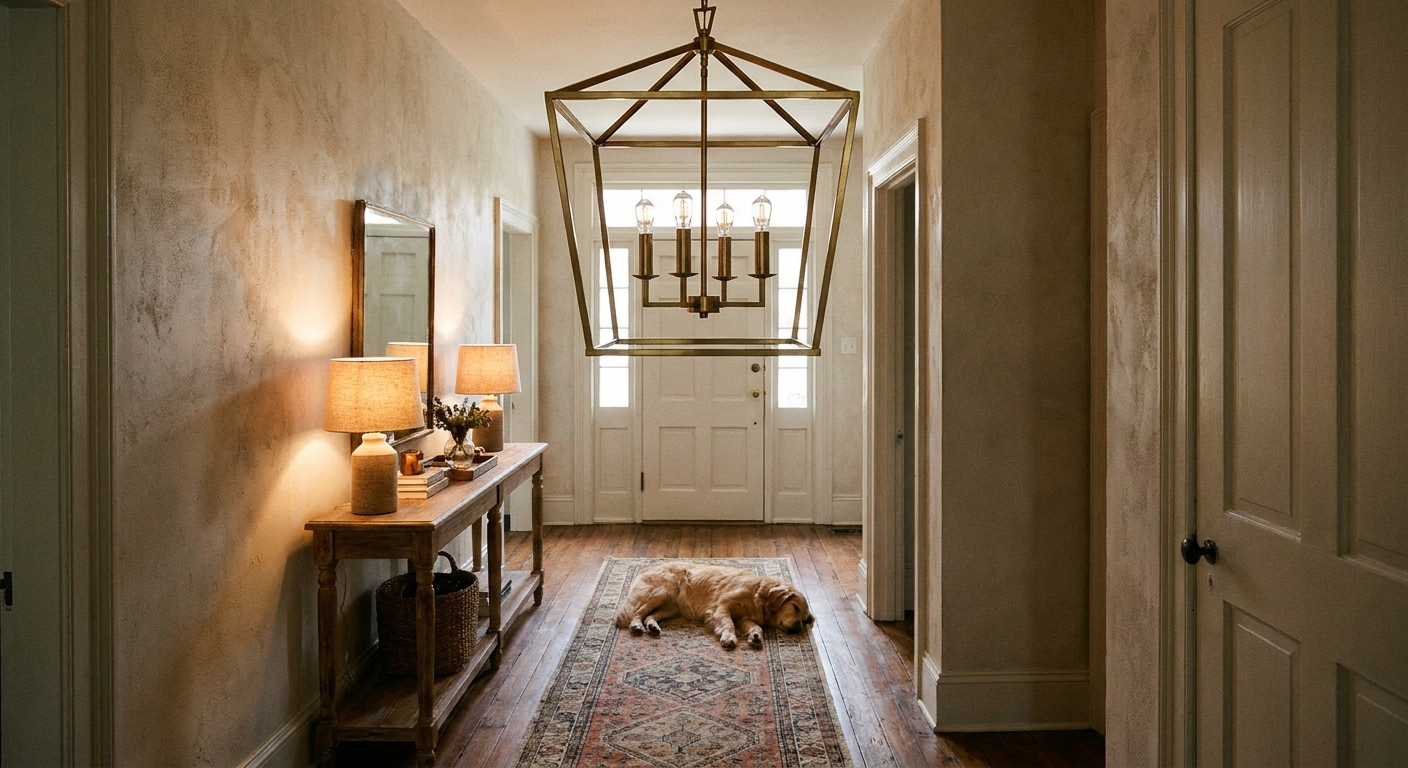
The three layers that make an entryway feel inviting
Layered lighting means you combine different types of light so the space feels bright enough to use, soft enough to enjoy, and balanced from top to bottom.
- Ambient (general) light: The main ceiling fixture, usually a chandelier, pendant, or flush mount. This is your overall brightness.
- Task light: Light aimed where you need it, like near a mirror, a key drop zone, or a closet. This often comes from lamps or sconces.
- Accent light: The glow that adds depth, like highlighting art, a plant, or a textured wall. This can be a small picture light, a mini spotlight, or even a lamp placed for mood more than function.
If you want a deeper dive into layering logic, hop over to Lighting Basics & Education. It helps make every room feel intentional, not accidentally bright or mysteriously dim.
Start with the statement
Your overhead fixture is the entryway's “hello.” It can be bold, but it should still play nicely with your ceiling height and the size of the space.
Pick a style that suits the architecture
- Traditional homes: Lantern chandeliers, classic candelabra shapes, warm metals.
- Modern spaces: Simple globes, clean-lined drum shades, matte black or mixed-metal finishes.
- Cozy, organic looks: Woven shades, soft linen diffusers, warm brass, aged bronze.
For more fixture styles that work across different home vibes, see Fixtures & Styles.
Size it so it feels proportional
If you like quick rules, here is a classic one that works surprisingly well: add your room's length and width (in feet), then use that number as the approximate fixture diameter (in inches). A 10 ft by 8 ft entryway often looks good with a fixture around 18 inches wide.
It is a guideline, not a law. If your foyer is visually open to other rooms, you can lean a little larger. If it is tight with lots of doors, a little smaller feels calmer.
Hang it at a comfortable height
This is the part that saves you from the “bonk your head” feeling.
- If people walk under it: Aim for the bottom of the fixture about 80 to 84 inches (203 to 213 cm) above the finished floor. In taller spaces, you can go a bit higher.
- If it hangs above a table or a console where no one walks under: Treat it more like dining lighting and keep the bottom roughly 30 to 36 inches (76 to 91 cm) above the surface, adjusting for glare and sightlines.
- In a two-story foyer: “Centered” is a look some people love, but it is not the only right answer. A common approach is to place the bottom of the fixture around the height of the second-floor railing, or slightly above the first-floor ceiling line, so it feels connected to the entry rather than floating too high.
When in doubt, a slightly higher hang usually feels more relaxed than a too-low drop, especially near doors and traffic paths.
Add the soft glow
If a chandelier is the greeting, console lamps are the friendly handshake. They add light at eye level, which makes faces look better and the whole entryway feel more welcoming.
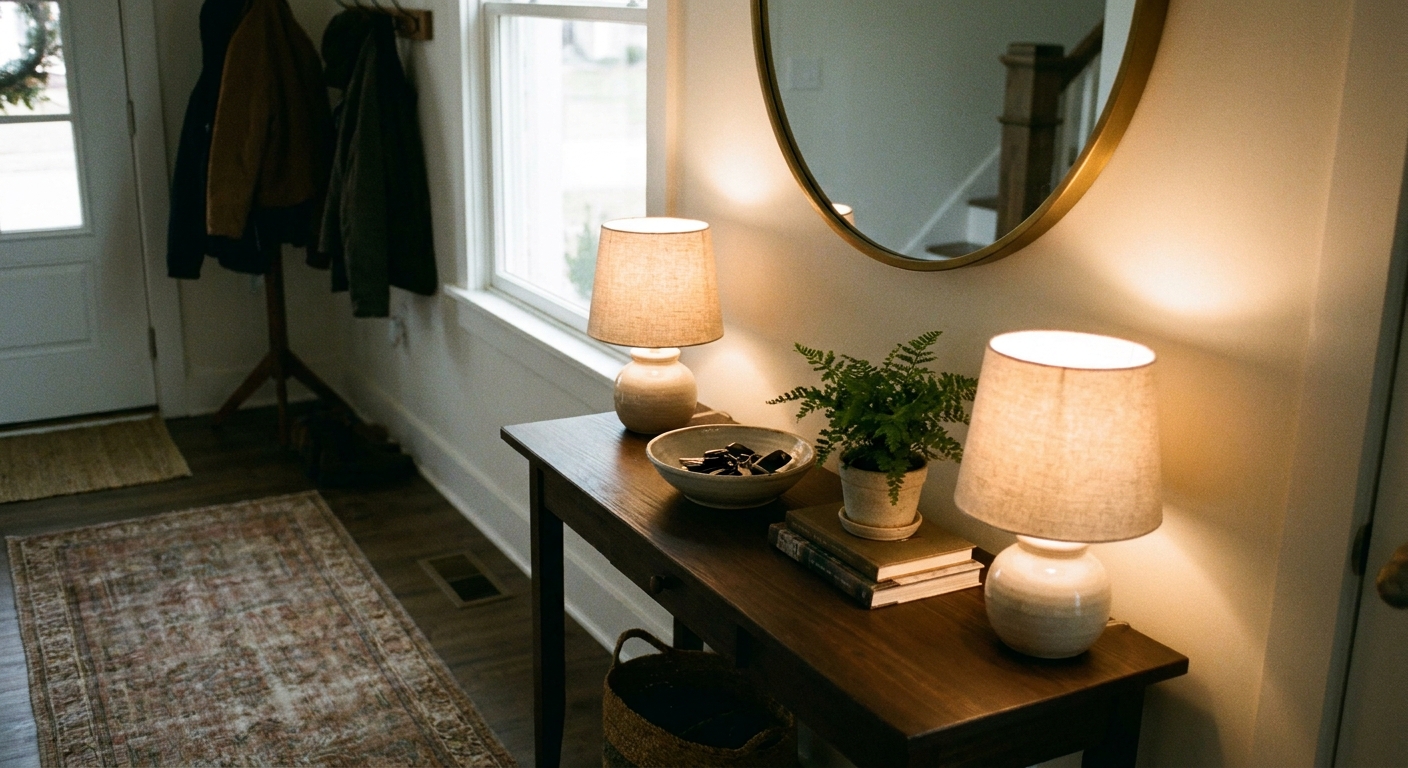
How many lamps work best?
- Two lamps: The easiest way to create symmetry and calm. Great for wider consoles.
- One lamp: Perfect for a small console or when you want room for decor. Balance it with a plant or sculptural object on the other side.
Shade choice matters more than people think
- Light-colored shades (linen, white, warm ivory) spread glow and feel airy.
- Opaque or dark shades create mood, but can make a small entry feel dim unless you have strong ambient light too.
Bulb tips for instant comfort
Choose warm color temperatures so the entryway feels inviting rather than clinical. If you want help picking a Kelvin range, the guidance in Best Color Temperature for Bathroom Vanity Lighting translates beautifully to entryways too, especially the idea of flattering, comfortable light.
One more detail that makes a big difference: look for LEDs with a CRI of 90+ if you can. It tends to make skin tones, wood, and paint colors look more natural, which is exactly what you want in the spot where everyone says hello.
Fill the shadows
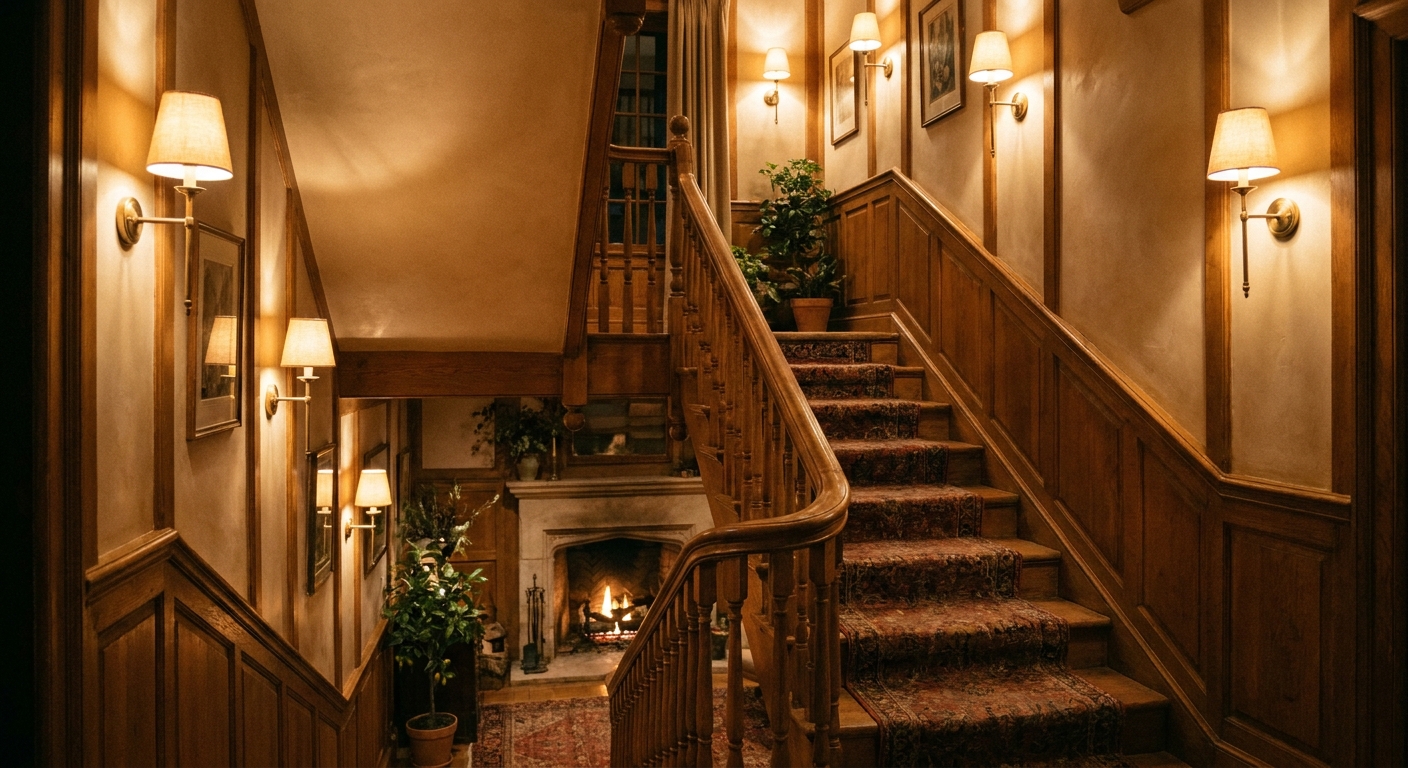
Wall sconces are the quiet heroes of an entryway. They reduce harsh contrast by brightening the walls, which can make the space feel larger, smoother, and more finished.
Great spots for sconces
- On either side of a mirror above a console for gentle, face-friendly light.
- Along a long entry hall to keep the path evenly lit.
- Near a coat closet so you can see what you are grabbing.
Matching does not have to mean identical
A common layered look: a statement chandelier overhead, then simpler sconces that repeat a finish or shape. For example, a brass chandelier with clean white glass sconces. The room feels coordinated without looking like a lighting showroom.
If you are deciding between lamps, sconces, and pendants in tighter spaces, this guide can help: Bedside Lighting: Lamps vs Sconces vs Pendants. The spacing logic and comfort considerations apply to entryways too.
Bulbs and brightness
Layered fixtures only feel magical if the light itself is comfortable. Three things matter most: brightness, color temperature, and bulb quality.
Easy lumen targets for entryways
These ranges are meant for the whole entryway combined (ceiling light plus lamps plus sconces). They give you a practical starting point, then dimmers do the rest.
- Small entry (about 30 to 60 sq ft): roughly 700 to 1,200 lumens total.
- Medium entry (about 60 to 120 sq ft): roughly 1,200 to 2,000 lumens total.
- Large foyer (120+ sq ft, or tall ceilings): roughly 2,000 to 3,500+ lumens total, often split across more than one layer so the perimeter does not feel cave-like.
A simple way to divide it: let the overhead fixture do about half, then use lamps and sconces for the rest, so you get brightness and warmth without harsh shadows.
Using dimmers is the simplest way to make one setup work for many moments, from busy weekday mornings to slow evenings.
Color temperature that feels welcoming
- 2700K: Classic warm home glow. Soft, inviting, great for lamps.
- 3000K: Still warm, a touch cleaner. Nice when you want the entry to feel crisp but not cold.
Try to keep all entryway bulbs in a similar range so the chandelier does not look icy while the lamps look golden. Also, if you are mixing bulb brands, double-check the Kelvin number and the “warmth” description. Two bulbs can both claim 2700K and still look slightly different.
Simple lighting recipes
Here are a few easy combinations that tend to look good in real homes, even when the entryway is small.
Recipe 1: The classic welcome
- Chandelier or pendant overhead
- Two small console lamps with warm bulbs
- Optional: a mirror to bounce light around
Recipe 2: The narrow hallway entry
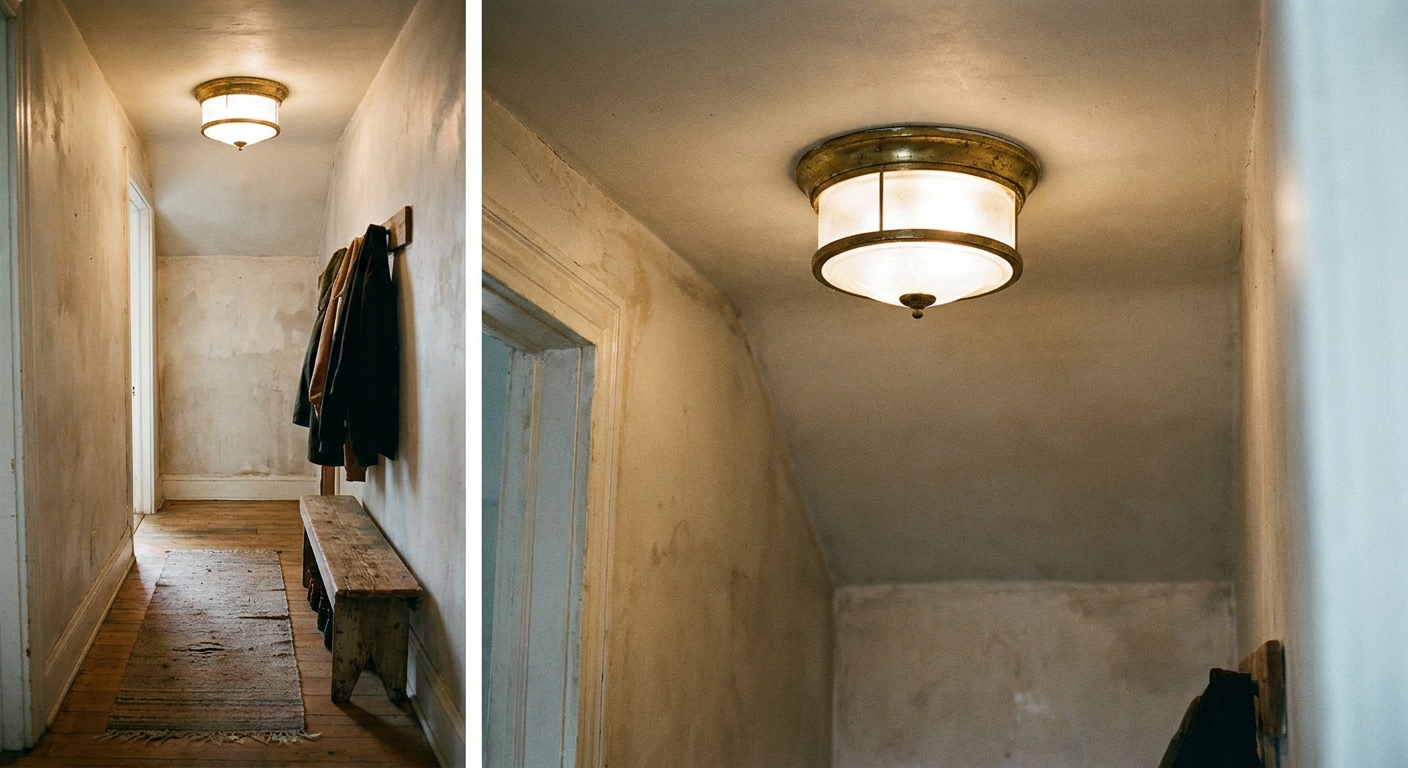
- Flush mount or semi-flush ceiling light
- Two or three wall sconces spaced down the hall
- Optional: a small table lamp on a slim shelf or wall-mounted ledge
Recipe 3: The modern minimal
- Clean-lined pendant
- One sculptural table lamp on the console
- One directional accent light aimed at art or a textured wall
Practical details
Entryways have real-life needs. A few small choices make the lighting feel effortless day to day.
- Use a dimmer for the overhead fixture so it can shift from functional to cozy.
- Consider a timer or smart control for console lamps so the entry feels welcoming automatically at the times you typically come and go.
- Mind glare if your chandelier has exposed bulbs. A bulb with a softer finish or a fixture with diffusers can feel more comfortable.
- Check door swings so wall sconces and lamp shades are not in the path of a door.
- Watch the rating if your entry is right by an exterior door where humidity and temperature swings happen. A damp-rated fixture is often the safer, longer-lasting choice.
- Hardwiring note: Adding sconces or moving a ceiling box is usually a job for a licensed electrician. It is one of those upgrades that feels small, but needs to be done safely.
Quick checklist
- One overhead fixture for ambient light
- One or two lamps for warmth at eye level
- Sconces or accent light to brighten walls and corners
- Warm, consistent bulb color temperature across the space
- High-CRI LEDs (90+) for flattering, natural color
- Dimming for flexibility
Want more room-specific glow ideas? Browse Room-by-Room Lighting for welcoming solutions that make each space feel like it knows exactly what it is here to do.