Make a ceiling-light-free living room feel warm and bright with layered lighting. Get placement ideas, lumen targets, bulb warmth tips, and easy layouts usin...
Warm Lumen
Renter-Friendly Plug-In Wall Sconces and Cord-Hiding Tricks

Lumi
Lumi is the friendly little firefly host of Warm Lumen, with a heart that glows as brightly as a perfectly placed pendant lamp. He loves discovering how soft bulbs, warm color temperatures, and layered lighting can transform any dark room into a welcoming retreat. Lumi is always fluttering by to share bright ideas and cheer you on as you create a beautifully lit space.
Published
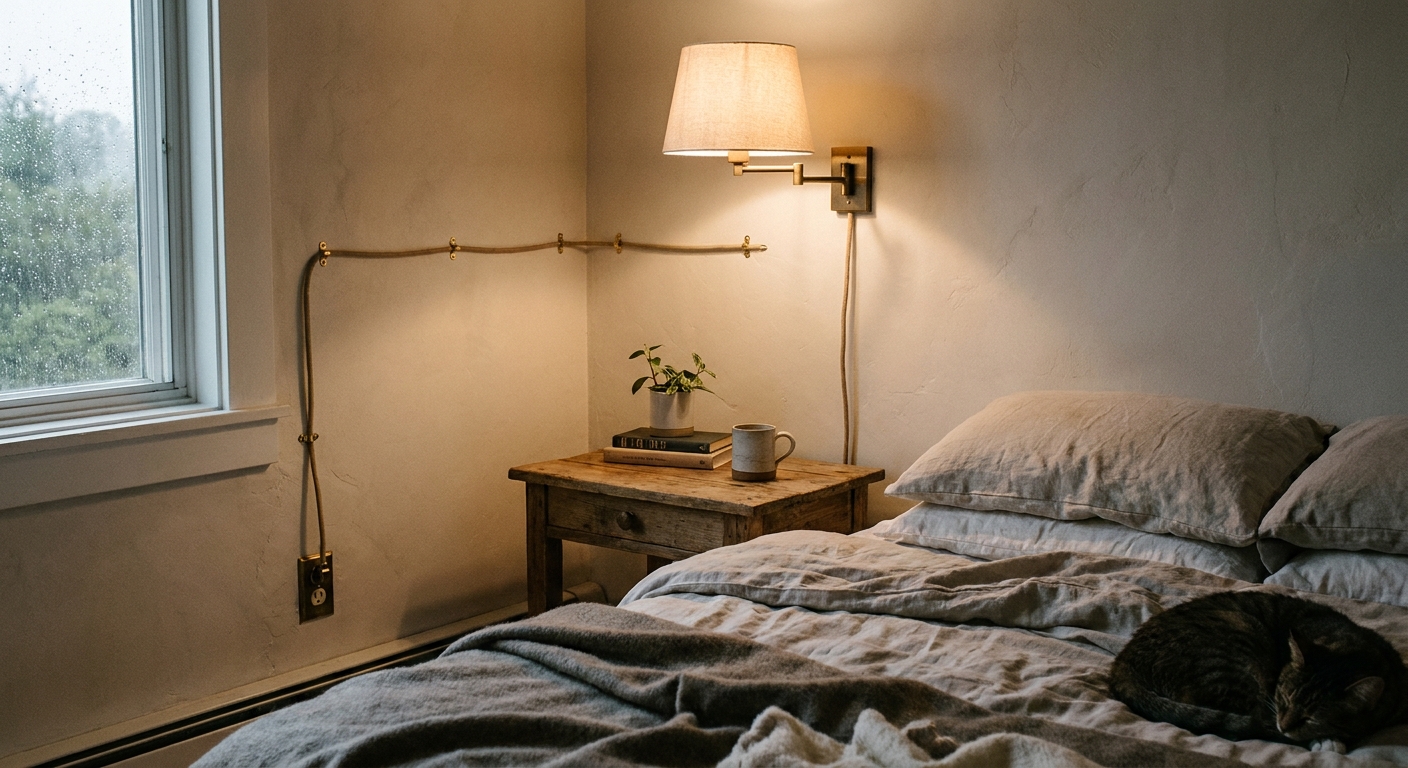
Let’s find the perfect glowing touch for every corner of your home, without touching a single wire. Plug-in wall sconces are one of the sweetest renter-friendly upgrades because they bring that built-in look and layered, cozy light, but they can come right back down when you move.
Below you’ll find the plug-in sconce styles that tend to work best in real rooms, plus cord-hiding tricks that keep things looking tidy and intentional.
What makes a plug-in sconce renter-friendly
A plug-in sconce is simply a wall-mounted fixture with a cord and standard plug, instead of hardwired connections in the wall. That means you can add:
- Height and direction (light can sit at eye level and aim where you need it)
- Layered lighting (a gentle glow that complements ceiling lights and lamps)
- A custom look (especially when you hide the cord and choose the right shade)
If you want help thinking in layers, flutter over to Lighting Basics & Education and Room-by-Room Lighting.
Best plug-in wall sconce styles for renters
“Best” is really about how you live in the space. Here are the styles that typically behave beautifully in rentals.
Swing-arm plug-in sconces
These are the superstars for bedsides and reading nooks. The arm pivots, so you can pull the light closer to a book, then tuck it back when you want a calmer glow.
- Where they shine: beside the bed, next to a sofa, over a chair
- What to look for: a wide range of motion, a shade that hides the bulb from view, and an easy-to-reach switch
Uplight sconces
Uplights bounce illumination off the wall and ceiling, which feels soft and spacious. If you want “cozy hotel hallway” energy, this is a good place to start.
Note: some fixtures are true up and down sconces that throw light both ways. Those can look especially architectural, but they can also create brighter hotspots if the bulb is exposed.
- Where they shine: entryways, hallways, dining nooks, living rooms without overhead fixtures
- What to look for: an opaque shade or diffuser so the light stays gentle
If overhead lighting is limited or nonexistent, you’ll like Living Room Lighting Without Overhead Fixtures.
Downlight or task sconces
These direct light downward, making them handy for desks, kitchen corners, or a “drop zone” table where you always set keys.
- Where they shine: small desks, craft corners, vanity-adjacent spots
- What to look for: a swivel head and glare control (no bare bulb in your line of sight)
Hardshade sconces (metal shades)
Metal shades can control glare and direction well, which is helpful if you want a focused pool of light. They feel a bit more modern and a bit more “fixture-like.”
- Where they shine: reading, work surfaces, accenting art
- What to look for: a finish that works with your room (brass, black, white) and a smooth interior that reflects light evenly
Fabric or linen shade sconces
This style is pure warm glow. Fabric shades soften the bulb’s brightness and are wonderful when you want calm, cozy ambience.
- Where they shine: bedrooms, living rooms, hallways
- What to look for: a shade deep enough that you do not see the bulb directly when seated
Plug-in picture lights
Not just for art. Picture lights are slim and elegant, and they can add a gentle wash above a mirror, shelf, or gallery wall.
- Where they shine: above framed art, above a headboard, over shelves
- What to look for: dimmable models or a dimmable bulb for flexibility
Want to explore fixture aesthetics more broadly? Visit Fixtures & Styles.
Quick buying checklist (so the glow feels right)
1) Bulb type and color temperature
For most cozy spaces, a warm color temperature usually feels best.
- Warm and relaxing: 2700K
- Extra cozy, amber-leaning: 2200K to 2400K (great for evenings, not as crisp for task work)
If you are lighting near a mirror, the best choice can shift depending on finishes and makeup tasks. This guide can help: Best Color Temperature for Bathroom Vanity Lighting.
2) Dimming options
Plug-in sconces may dim in a few ways:
- Inline cord dimmer: easiest, built into the cord
- Smart bulb: dims from an app or voice assistant, if the fixture is compatible
- Wall plug-in dimmer: the sconce plugs into a dimmer module at the outlet (use an LED-compatible dimmer and a dimmable bulb)
3) Cord length and exit direction
Check where the cord exits the fixture and whether it runs down neatly. If your outlet is far, a longer cord can prevent an extension-cord look.
4) Shade geometry and glare
If you can see the bulb from bed or the sofa, your eyes will notice. Choose a deeper shade, a diffuser, or a design where the bulb sits higher inside.
5) Mounting weight
Heavier sconces often need sturdier anchors. Before you commit, check the fixture’s weight and the hardware recommendations in the instructions. If you are aiming for zero holes, choose a lighter fixture and use renter-safe mounting methods that match the manufacturer’s rated limits.
Renter-safe mounting methods (from least to most commitment)
Always follow your lease and the fixture’s instructions. The best approach depends on weight, wall type, and how flawless you need the move-out to be.
Option A: No-drill mounting for very light sconces
- Adhesive picture-hanging strips: only for fixtures that the strip manufacturer rates for the full weight, on smooth, clean, well-bonded paint
- Removable adhesive hooks: great for cord routing, and sometimes for ultra-light fixtures with the right back plate and rated hardware
Little firefly caution: heat, humidity, and textured walls can reduce hold strength. If the fixture feels even slightly wobbly, step up to a more secure method.
Option B: Small nail holes using picture hooks
For medium-weight sconces, traditional picture hangers can create tiny holes that are typically easier to patch than large anchors. Choose a mounting point that keeps the fixture stable and level.
Option C: Screws and anchors (most secure)
If the sconce is heavy, this is the safest way to prevent a fall. Keep the original hardware and patch properly when you move. If you are unsure what your wall is made of, check with your building manager before drilling.
Cord-hiding tricks that look clean and intentional
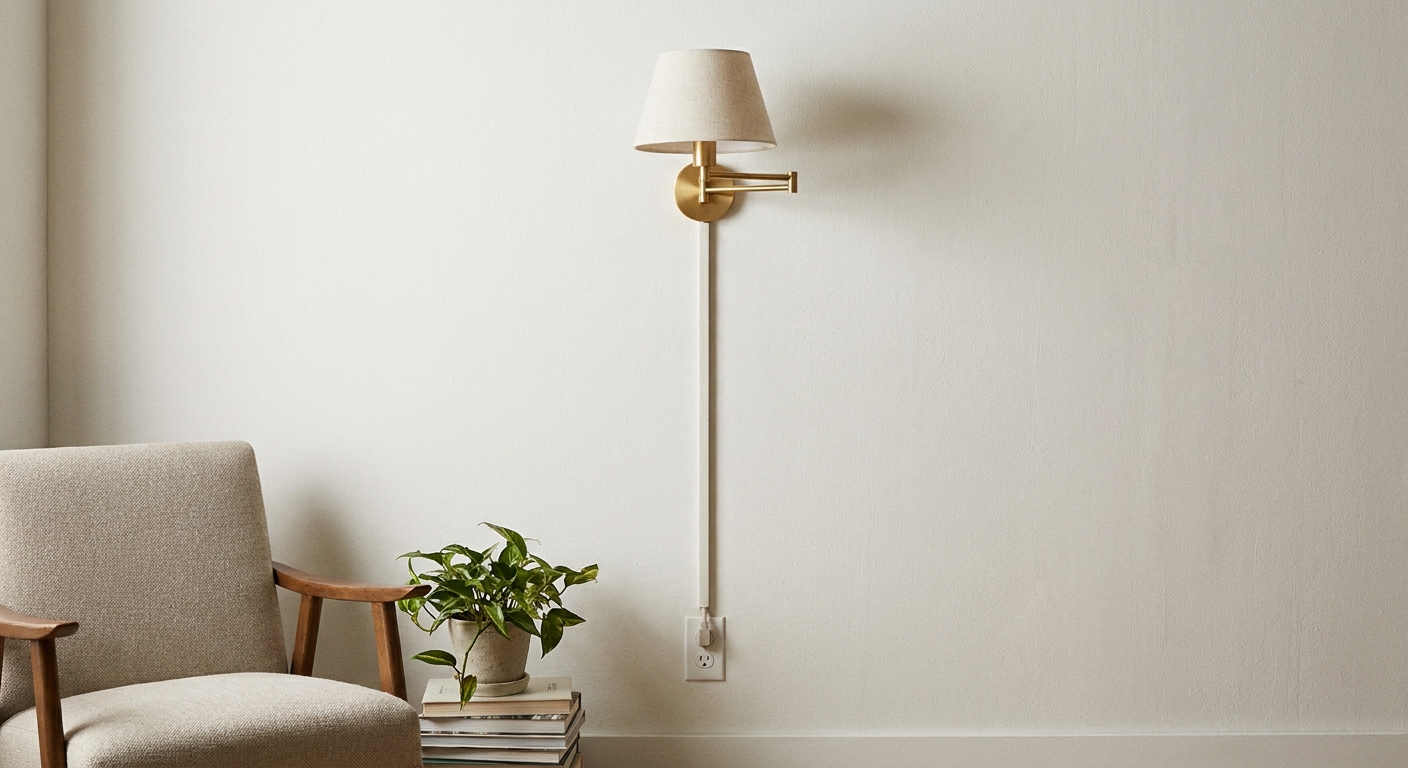
A plug-in sconce can look surprisingly “built-in” once the cord is tamed. Here are renter-friendly ways to do it, from invisible to decorative.
Use paintable cord covers (raceways)
This is the neatest option for most rentals. A cord cover sticks to the wall and creates a slim channel for the cable.
- Best for: a straight drop to the outlet
- Look tip: align it with a corner, trim line, or furniture edge so it reads as part of the room’s architecture
- Renter note: use removable adhesive when possible and remove slowly to protect paint
Hide cords behind furniture on purpose
Place the sconce above a nightstand, console, or bookshelf so the cord can travel down behind it. If the outlet is off to the side, route the cord along the back edge of the furniture, then to the plug.
- Best for: bedrooms and living rooms with outlets near furniture
- Look tip: keep the visible portion of the cord perfectly vertical and close to the sconce
Clip along baseboards (low-profile cord clips)
If you must travel horizontally to reach an outlet, running a cord along the baseboard is often less noticeable than crossing mid-wall.
- Best for: old apartments with outlets in inconvenient spots
- Safety tip: avoid pinching the cable under rugs or furniture legs
Use a “cord as decor” approach
Some plug-in sconces are designed with a visible cord that loops gracefully. If hiding is hard, make it intentional:
- Choose a cord color that matches the wall or the fixture finish.
- Create one tidy loop, not a tangle of curves.
- Keep the loop high and away from places where it can snag.
Do not modify cords
Skip splicing, cutting, or running a cord through the wall. In rentals, the safest and cleanest approach is to keep cords accessible, use surface cord covers, and rely on smart bulbs or plug-in controls for convenience.
Where plug-in sconces work best (room ideas)
Bedroom: better bedside lighting without a table lamp
Wall sconces free up nightstand space and put light right where you need it.
- Reading-friendly setup: swing-arm sconce + warm dimmable bulb
- Placement tip: mount so the bottom of the shade lands around shoulder to eye level when you are sitting up, and so the bulb is not in your direct line of sight
- Soft safety tip: keep shades and cords clear of pillows, drapes, and anything that can brush against the fixture
If you are deciding between options, this comparison helps: Bedside Lighting: Lamps vs Sconces vs Pendants.
Living room: add layers when the ceiling light is harsh
One ceiling fixture can feel bright and flat. A pair of plug-in sconces on one wall can add depth and calm.
- Best style: uplights or fabric-shade sconces for ambient glow
- Pairing tip: if you are hanging two, keep them at the same height and roughly balanced around a focal point like a sofa or console
- Cord trick: route down behind a console table, then along the baseboard to the outlet
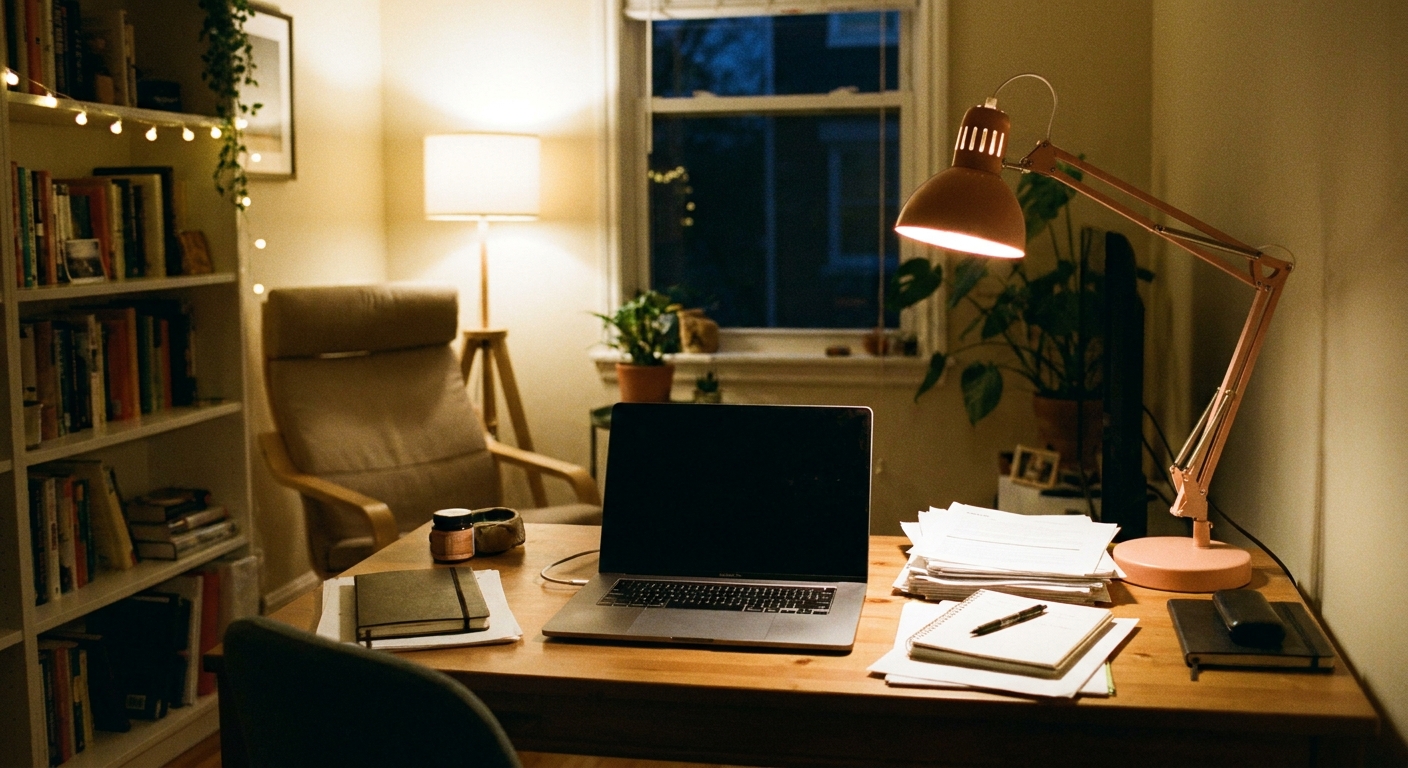
Home office: reduce screen glare with side lighting
Light coming from the side can feel easier on your eyes than a bright overhead source.
- Best style: adjustable head or downlight sconce aimed at the desk surface
- Glare tip: avoid bulbs visible in your peripheral vision
For a complete setup, visit Home Office Lighting Setup: Reduce Screen Glare and Eye Strain.
Kitchen and dining nook: soft glow, better mood
Plug-in sconces can add warmth to corners that feel shadowy, especially near a breakfast nook or pantry wall.
For bigger kitchen lighting plans, see How to Layer Kitchen Lighting.
Outlet and switch planning
- Switched outlets: if an outlet is controlled by a wall switch, a plug-in sconce can feel almost like a hardwired fixture.
- Awkward switch placement: if the sconce switch is hard to reach, consider a smart bulb or smart plug so you can tap on and off without climbing over furniture.
- Plan the cord path first: locate the outlet, then decide sconce height so the cord drop looks intentional instead of improvised.
Safety notes for cozy, worry-free light
- Do not run cords under rugs where heat can build up or the cord can be damaged.
- Keep cords away from doors and drawers so they do not pinch.
- Use LED bulbs when possible. They run cooler and are efficient.
- Mind bulb wattage limits listed on the fixture. Even with LEDs, the fixture and socket are designed to safely handle only so much heat and electrical load.
- Choose a stable mounting method for the fixture’s weight so it cannot fall.
Troubleshooting: common plug-in sconce hiccups
The sconce looks crooked
- Check if the wall plate is flush and the screws are evenly tightened.
- Use a small level when marking holes.
- If it is adhesive-mounted, remove and reapply rather than trying to “twist it straight.”
The cord cover keeps peeling
- Clean the wall surface first and let it fully dry.
- Avoid placing adhesive over dusty texture or flaky paint.
- Use shorter segments rather than one long run if the wall is slightly uneven.
The light feels too harsh
- Switch to a warmer bulb (try 2700K or lower).
- Use a lower-lumen bulb or add dimming.
- Swap to a shade that hides the bulb or diffuses better.
The sconce does not feel like enough light
- Add a second light source for layering, like a floor lamp across the room.
- Use a brighter LED bulb if the fixture allows it, especially in task areas.
- Aim the sconce at a light-colored wall to help bounce and spread illumination.
One last glow tip
If you want plug-in sconces to look polished, focus on two things: a warm, comfortable bulb and a cord path that looks planned. Once those are in place, even a simple fixture can feel like it has always belonged on the wall.
If you’d like more easy, renter-friendly upgrades, flutter over to DIY & Easy Upgrades.