
Confused why paint, skin tones, or food look “off” at night? Learn what CRI (Color Rendering Index) measures, how it differs from lumens and Kelvin, and why ...
Warm Lumen
Best Color Temperature for Bathroom Vanity Lighting

Lumi
Lumi is the friendly little firefly host of Warm Lumen, with a heart that glows as brightly as a perfectly placed pendant lamp. He loves discovering how soft bulbs, warm color temperatures, and layered lighting can transform any dark room into a welcoming retreat. Lumi is always fluttering by to share bright ideas and cheer you on as you create a beautifully lit space.
Published · Last updated
Let’s find the perfect glowing touch for every corner of your home, starting right at the mirror. Bathroom vanity lighting can feel tricky because it has two jobs at once: it needs to be flattering and accurate. The good news is that color temperature, measured in Kelvins (K), makes this decision much simpler. Your finishes, your eyes, and your preferences matter too, so think of these ranges as friendly starting points, not hard rules.

Quick answer: best Kelvin range
For many bathrooms, a great color temperature for vanity lighting is 2700K to 3000K for a warm, welcoming look that still feels clean. If your bathroom finishes are very cool-toned, or you simply like a crisper look at the mirror, you may prefer going a bit higher.
- 2700K: softer and cozier, great for a warm, relaxing vibe.
- 3000K: a touch crisper, often the sweet spot for daily grooming.
If your bathroom is very cool-toned (lots of white tile, gray stone, chrome) or you want extra clarity for detail work, 3500K can work well. I recommend being cautious with 4000K and above at the vanity because it can look stark and emphasize shadows or texture in a less forgiving way, especially in the evening.
What Kelvin changes at the mirror
Color temperature affects how your skin tone, makeup, shaving lines, and even under-eye shadows appear. It also shifts how your paint, tile, and countertops read from cozy to crisp.
Warm (2200K to 2700K)
- Pros: cozy, calming, flattering for winding down.
- Cons: can feel dimmer or slightly yellow if your bathroom finishes are very cool or very white.
Warm neutral (3000K to 3500K)
- Pros: balanced, clear visibility without feeling harsh, great for most vanities.
- Cons: if mixed with much cooler overhead lights, the bathroom can look mismatched.
Cool (4000K+)
- Pros: crisp, high perceived brightness, can feel very “clean.”
- Cons: can look clinical and cast stronger-looking shadows, especially with poor fixture placement.
Pick Kelvin by routine
Everyday grooming
Choose 3000K. It keeps faces looking natural while still giving you clear detail.
Makeup and skincare detail
Choose 3000K to 3500K, paired with excellent placement and high color quality (more on that next). This range can help colors look truer without turning your vanity into a spotlight.
Relaxing baths and night routines
Choose 2700K, or use dimmable 2700K to 3000K lighting so you can keep it bright in the morning and softer at night.
Kelvin is not everything: CRI
If Kelvin is the “warm vs cool” slider, CRI (Color Rendering Index) is the “how true do colors look” slider.
- Look for CRI 90+ for vanity bulbs whenever possible.
- CRI in the 80s is common and usable, but it may make makeup shades and skin tones look slightly off.
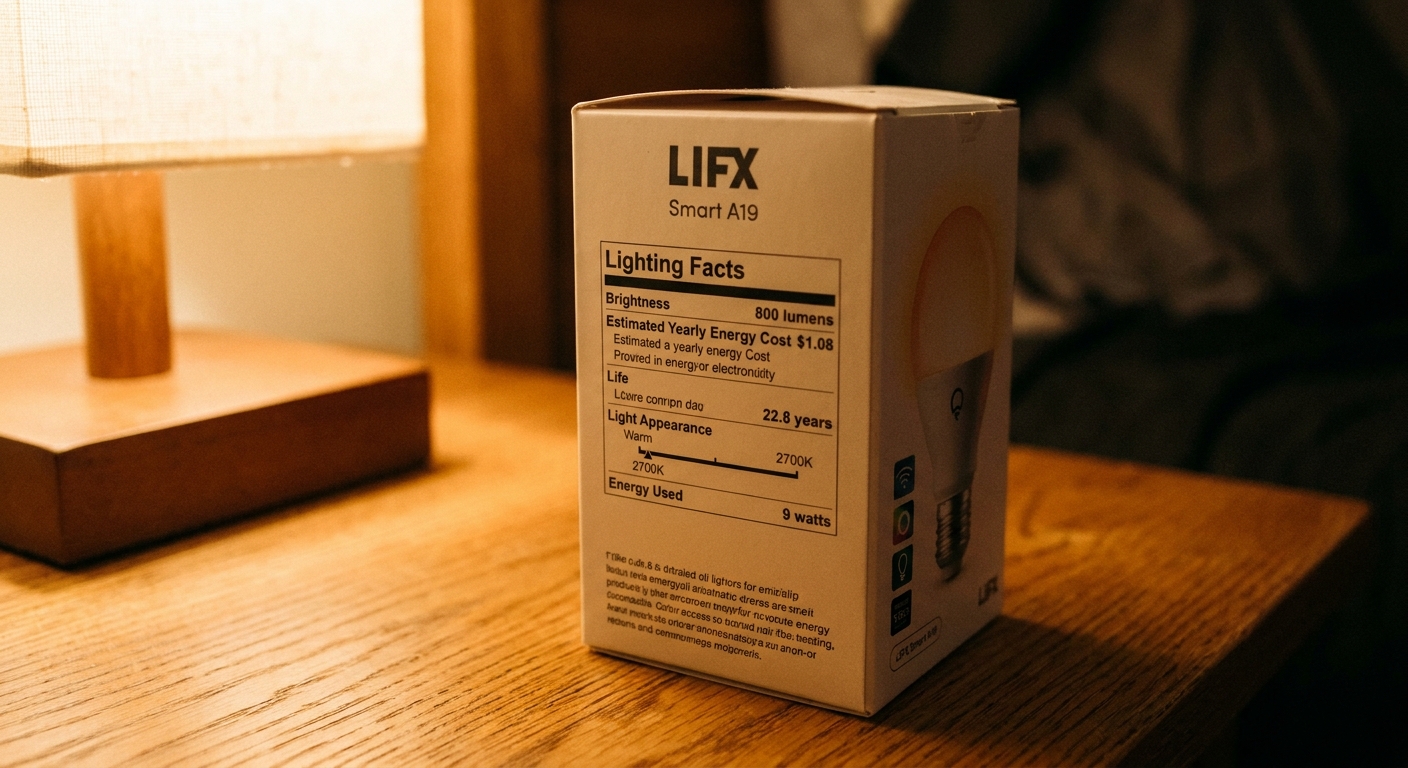
Many bulb boxes list CRI. If it is missing, it often means it is not a highlight feature. If you are shopping online, check the manufacturer spec sheet or full listing details, since some decent bulbs just do not show CRI on the front-of-box marketing.
If you want to go one notch more advanced: when it is listed, a stronger R9 value can help reds and skin tones look more natural at the mirror.
Fewer shadows: placement and layers
Even the perfect Kelvin can still look unflattering if the light comes from the wrong angle. Vanity lighting looks best when it spreads light across the face from both sides, not from a single point overhead.
Best setup: sconces on both sides
- Place one sconce on each side, with the center of the light around 60 to 66 inches from the floor in many homes, or roughly at eye level.
- Ideally, the light spans eye to cheek level so it fills in under-eye shadows.
- Aim for a soft, even spread across the face to reduce harsh lines.

Good alternative: wide light above mirror
- Choose a fixture that is wide enough to spread light across the mirror rather than creating a bright hotspot in the center.
- Look for shades or diffusers that soften the light source and reduce glare.
Layering makes the room feel right
Try to separate your bathroom lighting into layers:
- Vanity lighting: the main face lighting (your focus for Kelvin and CRI).
- Ambient lighting: ceiling fixture or recessed lights for general brightness.
- Accent or night lighting: toe-kick, a small lamp, or a gentle night light for late evenings.
For more on building layers, flutter by Lighting Basics & Education.
Match Kelvin across the bathroom
Bathrooms look best when bulbs in the same line of sight share a similar Kelvin rating. If your vanity is 3000K but your overhead recessed lights are 5000K, the room can feel visually split.
- Try to keep most bathroom lighting within one Kelvin neighborhood (example: 2700K and 3000K together is usually fine).
- If you must mix, make the vanity the priority, since that is where you do detail work.
Also watch finishes. Very warm bulbs can make bright white countertops look creamy. Very cool bulbs can make warm paint look dull or grayish.
Bulb and fixture picks
LED bulbs
- Efficient, long-lasting, available in many Kelvin options.
- Look for dimmable, frosted or diffused bulbs to reduce glare.
- Prioritize CRI 90+ at the mirror.
Integrated LED fixtures
- Many modern vanity bars have built-in LEDs.
- Check that the fixture lists the color temperature (often 2700K to 3500K for vanity comfort).
- Look for quality diffusers so you do not see harsh bright points.
Selectable CCT fixtures
These let you pick 2700K, 3000K, 3500K, and sometimes higher options. They are handy if you are unsure, but once you pick, keep the rest of the bathroom consistent.
How bright should it be?
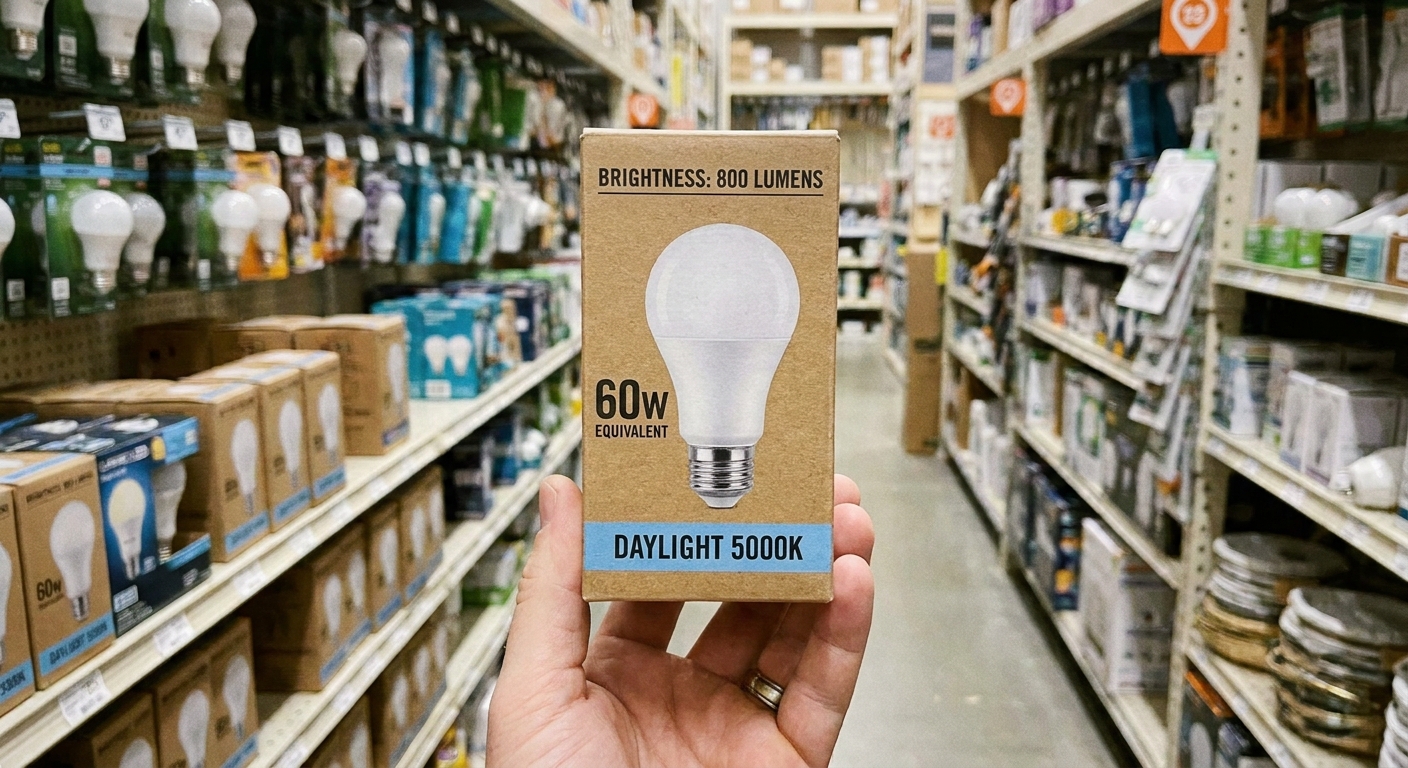
Brightness is measured in lumens, not Kelvins. Cooler light can feel brighter, but lumens still determine the measurable amount of light you are getting.
For many medium-size vanities, a helpful ballpark is about 1600 to 3200 total lumens aimed at the face, adjusted for mirror size, diffusion, wall color, and daylight. A simple way to sanity-check that range:
- Two bulbs: often 800 to 1100 lumens each.
- Four bulbs: often 400 to 800 lumens each.
Small powder rooms may feel better at the lower end, while larger or darker bathrooms often need more. If your bulbs are glaring or your mirror feels like a stage spotlight, the fix is usually better diffusion and dimming, not a higher Kelvin.
Dimmers and flicker
Dimming is one of the easiest ways to make vanity lighting work for both morning reality checks and soft nighttime routines, but LED dimming can be picky.
- Use dimmable bulbs or a fixture rated for dimming.
- Make sure your dimmer switch is LED-compatible. Older dimmers can cause flicker, shimmer, or buzzing.
- If you notice flicker at low levels, try a different dimmer or a higher-quality bulb. Your eyes will thank you, especially at the mirror.
Common mistakes and fixes
Mistake: choosing 5000K for “brightness”
Fix: Use 3000K to 3500K with higher lumens, good diffusion, and good placement. You will keep clarity without the icy feel.
Mistake: warm vanity lights with cool overhead lights
Fix: Match the overhead bulbs to the vanity bulb’s Kelvin range, or at least get them close.
Mistake: one ceiling light and nothing at the mirror
Fix: Add side sconces or a wider vanity bar. Shadows are usually a placement problem first, not a Kelvin problem.
Mistake: exposed clear bulbs at eye level
Fix: Switch to frosted bulbs or fixtures with diffusers to reduce glare and eye strain.
By bathroom style
Warm, traditional bathrooms
Try 2700K for a gentle glow, or 3000K if you want a fresher look without losing warmth.
Modern white and gray bathrooms
Try 3000K to keep it clean but welcoming. If the room reads too yellow to you, nudge up to 3500K.
Lots of daylight
Daylight can make warm bulbs feel warmer by contrast. 3000K is often the easiest match, especially if the vanity is used during the day.
FAQ
Is 3000K too warm for a bathroom?
Usually, no. 3000K is a warm neutral that reads clean in most bathrooms, especially with white fixtures and reflective surfaces.
Is 4000K good for vanity lighting?
It can be, but it often feels stark at the mirror. If you like a crisp look, consider 3500K first, and prioritize CRI 90+ so colors still look natural.
Should vanity lights match overhead lights?
They should be close. Keeping the bathroom within a similar Kelvin range helps the space feel calm and intentional.
What is the best light color for makeup?
3000K to 3500K with CRI 90+, plus even lighting from both sides of the mirror, is a strong combination for accurate color and fewer shadows.
A simple pick for most homes
If you want one easy recommendation that works in a lot of real bathrooms: choose 3000K, CRI 90+, dimmable bulbs (or an integrated fixture with the same specs) and aim for even light at face level. That trio helps your mirror look bright, balanced, and kind.
If you’d like more room-by-room glow ideas, float over to Room-by-Room Lighting.