Choosing between flush and semi-flush mount lights? Learn how drop distance, ceiling bounce, glare control, and room type affect brightness and headroom in l...
Warm Lumen
Hallway and Staircase Lighting Ideas for Safety and Style

Lumi
Lumi is the friendly little firefly host of Warm Lumen, with a heart that glows as brightly as a perfectly placed pendant lamp. He loves discovering how soft bulbs, warm color temperatures, and layered lighting can transform any dark room into a welcoming retreat. Lumi is always fluttering by to share bright ideas and cheer you on as you create a beautifully lit space.
Published · Last updated
Let’s find the perfect glowing touch for every corner of your home, especially the in-between spaces that quietly do a lot of work. Hallways and staircases guide sleepy feet, busy hands, and wandering pets, so the lighting here should feel welcoming and steady while also helping everyone move safely.
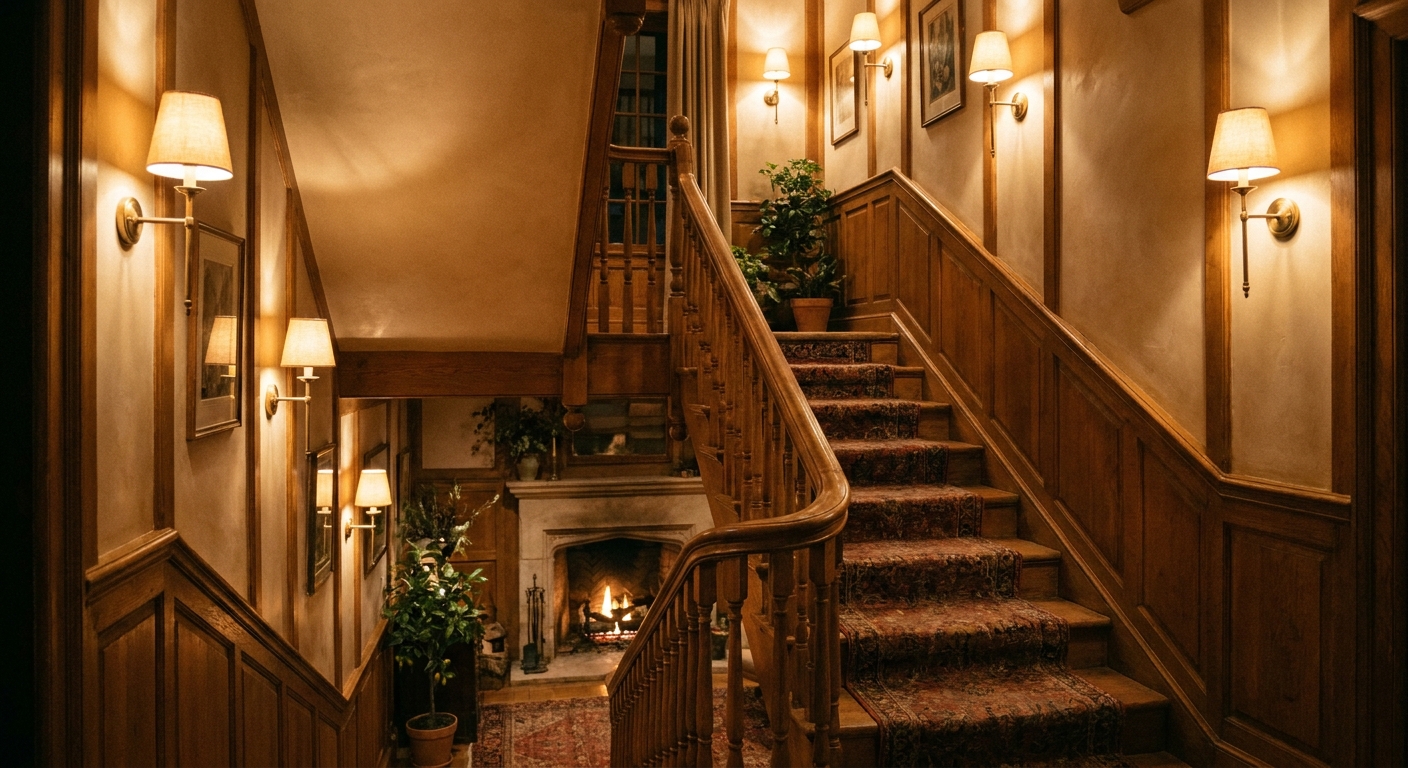
Start with a simple lighting plan: glow, guide, and highlight
Transitional spaces look best when the light is layered. Think of it as three friendly jobs:
- Glow: an overhead fixture that fills the space with comfortable ambient light.
- Guide: low level light that helps feet find edges, landings, and turns.
- Highlight: accent lighting that makes the hallway or staircase feel intentional, not like an afterthought.
If you want a quick primer on layering light in a different room, the same ideas carry over beautifully from kitchens. See How to Layer Kitchen Lighting and then apply the same “layers” to your hallway and stairs.
Overhead lighting: bright, glare-free, and out of the way
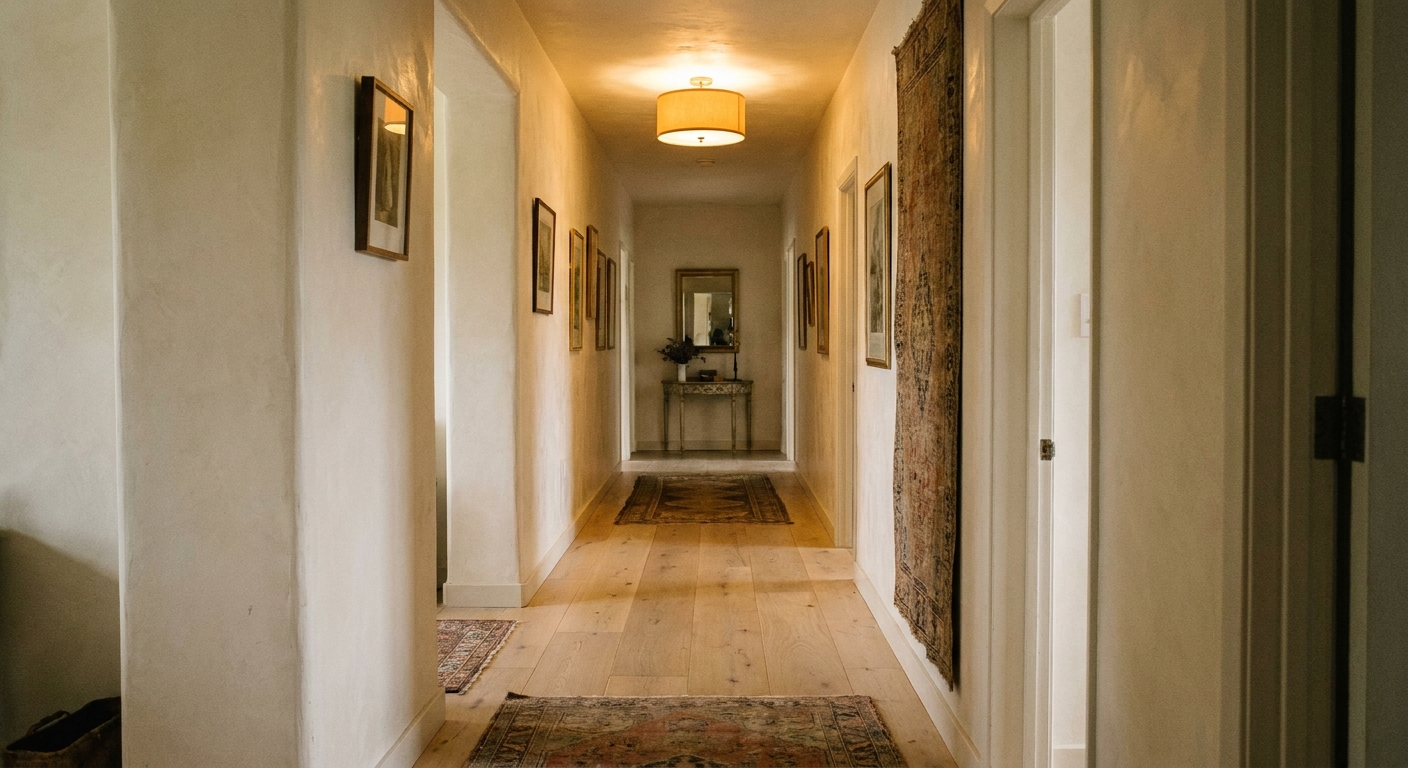
Overhead fixtures do the heavy lifting in hallways, and they help staircases feel consistent from top to bottom. The key is choosing fixtures that do not create harsh shadows or low clearance surprises.
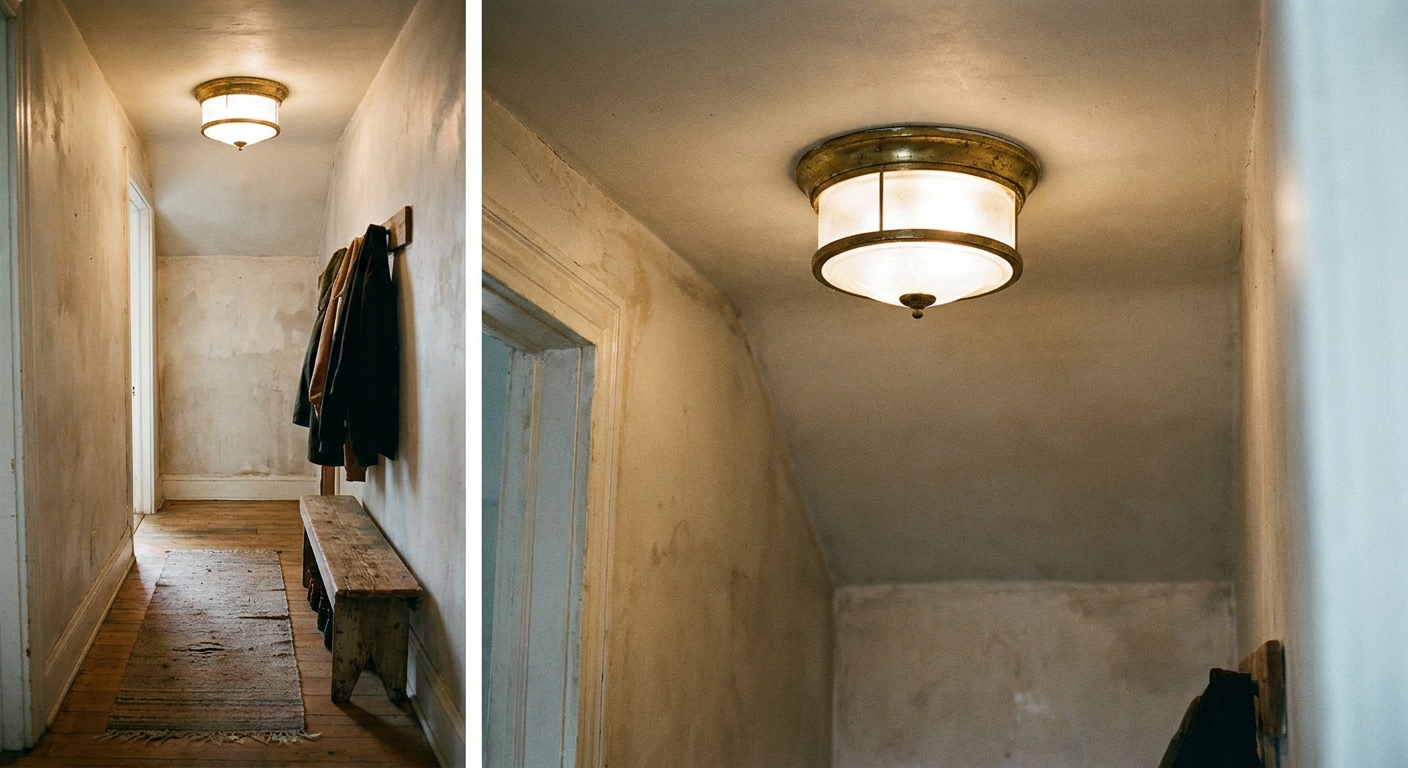
Flush and semi-flush for low ceilings
If your hallway ceiling is on the lower side, a flush mount is a safe and stylish choice. Look for:
- Diffused shades (frosted glass or fabric) to soften glare.
- Wide light distribution so the floor does not get patchy.
- Dimmable capability for evening comfort.
Semi-flush mounts are a nice step up when you have a bit more height. They add personality while still staying tidy and out of the way.
Hallway spacing tip
A good rule of thumb is to place fixtures so pools of light overlap, rather than leaving dark gaps. If your hallway has multiple ceiling lights, aim for an even rhythm instead of a bright spot at one end and a dim tunnel at the other.
Wall sconces: style that helps you see better
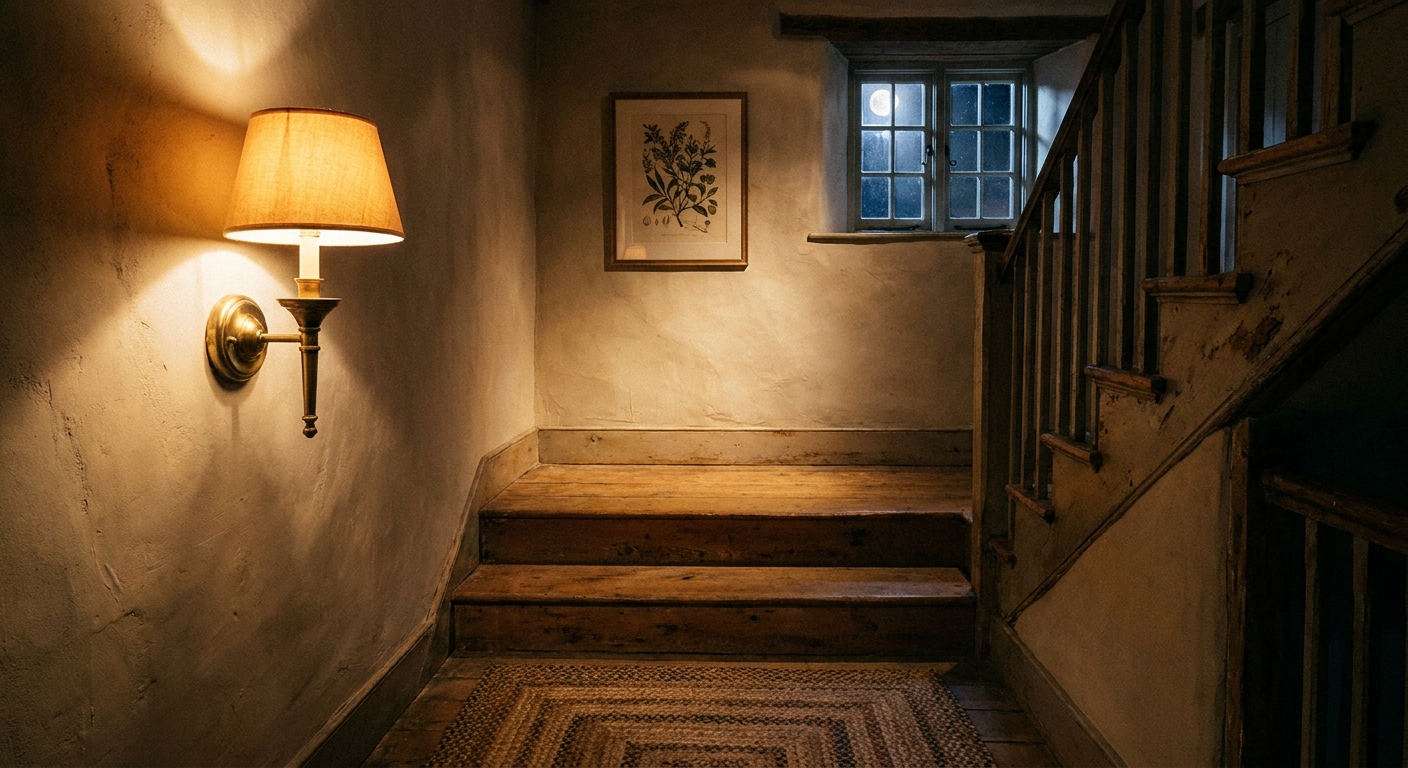
Wall sconces are a hallway and staircase favorite because they add light at eye level, reduce harsh overhead shadows, and instantly make the space feel designed.
Where sconces shine most
- Long hallways: sconces break up the length and create a cozy cadence.
- Staircase runs: sconces can brighten treads and the handrail area without blinding anyone.
- Landings and turns: these are the spots where people pause, pivot, and need clarity.
Sconce height and spacing (easy targets)
- Mounting height: a common range is 60 to 66 inches from the finished floor to the center of the sconce. For stairs, measure from the tread nosing line, and adjust if glare hits your eyes while descending.
- Spacing: many hallways look balanced with sconces about 6 to 10 feet apart, then adjusted so the light feels even (and artwork, mirrors, or door trim are not fighting for space).
Pick the right sconce direction
- Up-and-down light adds drama and helps walls feel taller, but it can create contrast. Great for style, best when paired with other layers.
- Downlight or shaded sconces feel gentler and are often better for practical wayfinding.
- Opaque metal shades can look sleek, but make sure the light still reaches the floor where it counts.
Want more fixture inspiration across styles? Explore Fixtures & Styles for ideas that match everything from modern to vintage to cozy cottage.
Low-level step lighting: the safety layer that feels magical
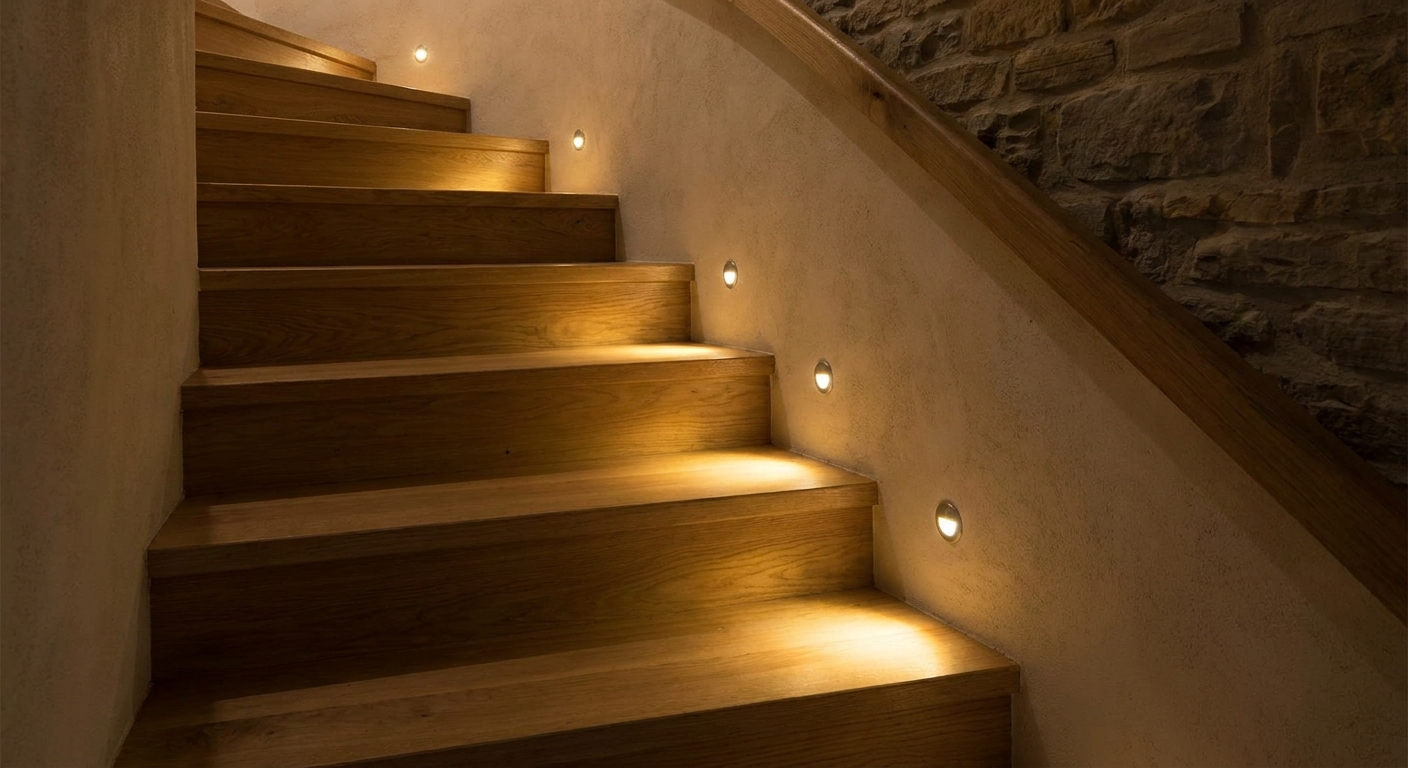
If there is one upgrade that makes stairs feel calmer at night, it is low-level guidance lighting. Step lights reduce the risk of missed edges and help everyone move without turning the whole house into daylight.
Great options for step-level light
- Recessed step lights in the wall beside the staircase, aimed downward.
- LED strip lighting tucked under the stair nosing or beneath a handrail for a hidden glow.
- Plug-in night lights for hallways with outlets, ideally with a warm, directional beam.
Placement tips that keep it comfortable
- Aim light down toward treads and landings to avoid eye-level glare, especially for people walking down the stairs.
- Use diffusers or channels for LED strips so you do not see “dots” or hot spots.
- Keep it consistent across the run so the brightness does not jump step-to-step.
- Use warm color temperature for nighttime navigation that does not feel harsh.
Motion sensors and smart controls: safer steps, less fuss
Hallways and stairs are perfect places for lighting that turns on automatically. Motion sensors and smart switches help prevent those careful, half-awake trips in the dark.
Control ideas that work well
- Motion-sensing wall switches for hallways, staircases, or both. Choose models with adjustable sensitivity and timeout so the light does not click off mid-stair.
- Occupancy sensors (auto on, auto off) for frequently used routes.
- Vacancy sensors (manual on, auto off) when you want more control but still want lights to turn off automatically.
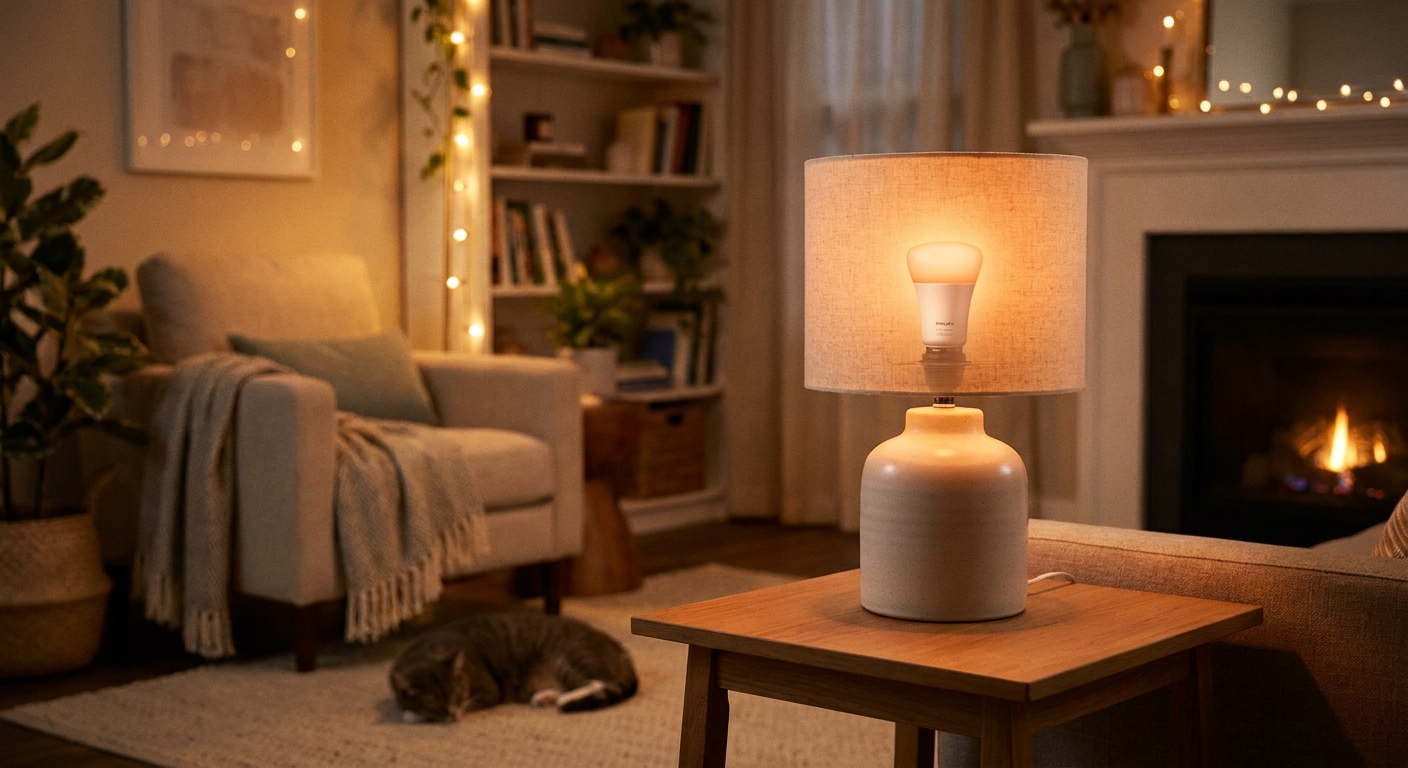
- Smart bulbs or smart dimmers to schedule softer evening levels and brighter daytime levels.
If you are adding sensors on a staircase, consider a setup that lights both the top and bottom entries. It helps eliminate that shadowy middle zone.
Color temperature and brightness: warm, clear, and not harsh
For hallways and staircases, the goal is clarity without glare. A warm or soft-white tone often feels the most inviting in transitional spaces, especially at night.
Quick, practical targets
- Color temperature: Many homes feel best with warm white lighting in the 2700K to 3000K range for hallways and stairs.
- Color quality: Look for CRI 90+ when possible (with CRI 80+ as a decent baseline) so floors, rugs, and stair edges read clearly.
- Brightness: Stairs with dark runners, stained wood, or heavy texture often need a bit more light than pale, smooth surfaces. If you can dim, you can have “safe bright” when needed and “cozy low” later.
If you like getting specific about color temperature, the same thinking that helps in grooming areas can help you avoid lighting that feels too yellow or too stark. See Best Color Temperature for Bathroom Vanity Lighting and apply the warm-versus-neutral guidance to your hallway and stair decisions.
Style ideas that still put safety first
Now for the fun part. Here are ways to make hallways and stairs look special while keeping every step easy to read.
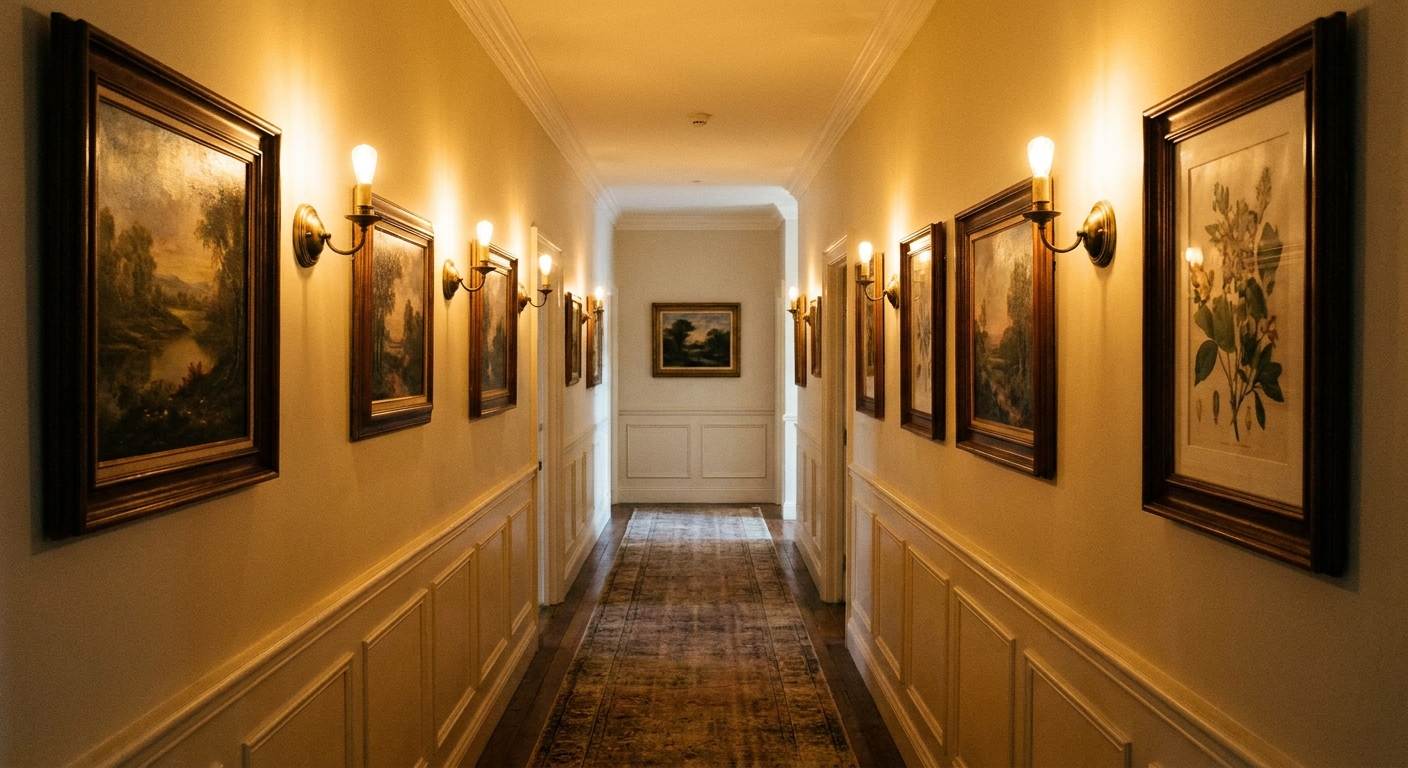
Gallery hallway glow
- Use a series of sconces to create an even wash of light.
- Add picture lights only if the hallway still has solid ambient lighting.
- Keep glare low so frames do not reflect bright hotspots.
Stairwell statement fixture
- Choose a statement semi-flush mount or small chandelier above a stairwell only if ceiling height, headroom, and local requirements allow. When in doubt, a licensed electrician can help confirm safe clearance.
- Pair it with step or sconce lighting so the stairs never rely on one dramatic fixture.
Handrail glow
- Mount a concealed LED strip under the handrail for a subtle guide line.
- Pick a warm tone and a diffuser channel so individual LED points are not visible.
Baseboard guidance
- In hallways, low-level lighting along the baseboard can create a gentle runway effect.
- Keep it dimmable and warm so it reads as guidance, not spotlighting.
Staircase safety checklist
Before choosing fixtures, it helps to do a quick safety pass. These are small details that make a big difference on stairs.
- Light the top and bottom landing so the first and last steps are obvious.
- Avoid strong shadows across treads. Multiple light sources often beat one bright source.
- Reduce glare by using diffusers, shades, and dimmers.
- Make switching easy: control from both ends of the stairs with a 3-way setup, and if you need control from three or more locations, ask about adding a 4-way switch in between.
- Keep pathways clear: choose fixtures that do not intrude into narrow stair widths or low headroom zones.
- Use consistent bulbs so color and brightness match across the whole run.
Easy upgrades for renters and quick refreshes
Not every hallway or staircase makeover needs wiring. A few simple changes can dramatically improve comfort.
- Swap to a warmer, higher-quality bulb in existing fixtures.
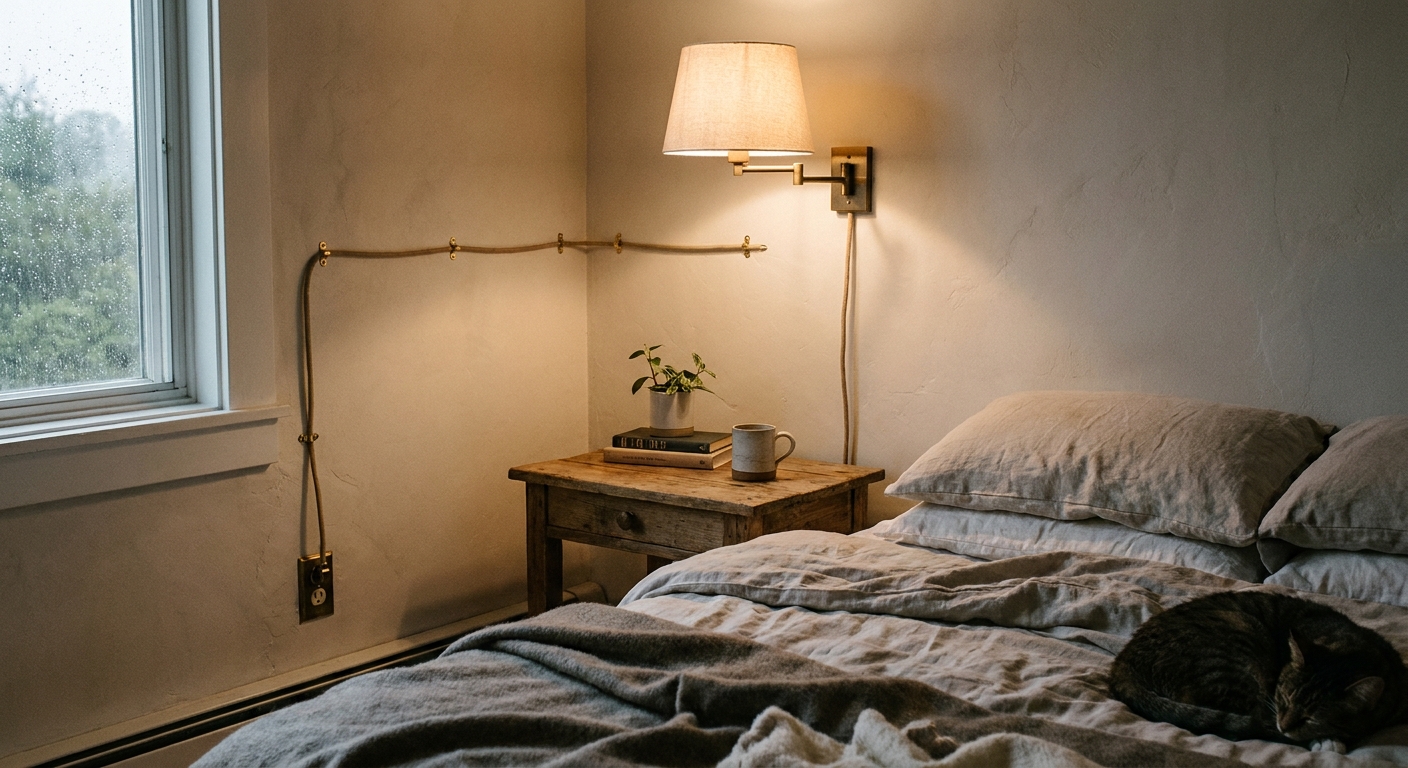
- Add plug-in sconces where hardwiring is not possible.
- Use motion-sensing plug-in night lights for hallways, especially near bedrooms.
- Try rechargeable, motion-activated lights inside stair-adjacent closets or dark corners, but avoid relying on battery lights as the only staircase illumination.
For more small, high-impact ideas, visit DIY & Easy Upgrades.
Common mistakes to avoid
- One bright ceiling light and nothing else: it often creates harsh shadows and a tunnel feeling.
- Cool white bulbs at night: they can feel stark and can be uncomfortable for sleepy eyes.
- Exposed bulbs at eye level: beautiful fixtures still need glare control in a narrow corridor.
- Skipping the landings: that is where people turn and need the most clarity.
- Inconsistent color temperatures: mismatched bulbs make hallways feel chaotic and can distort how step edges look.
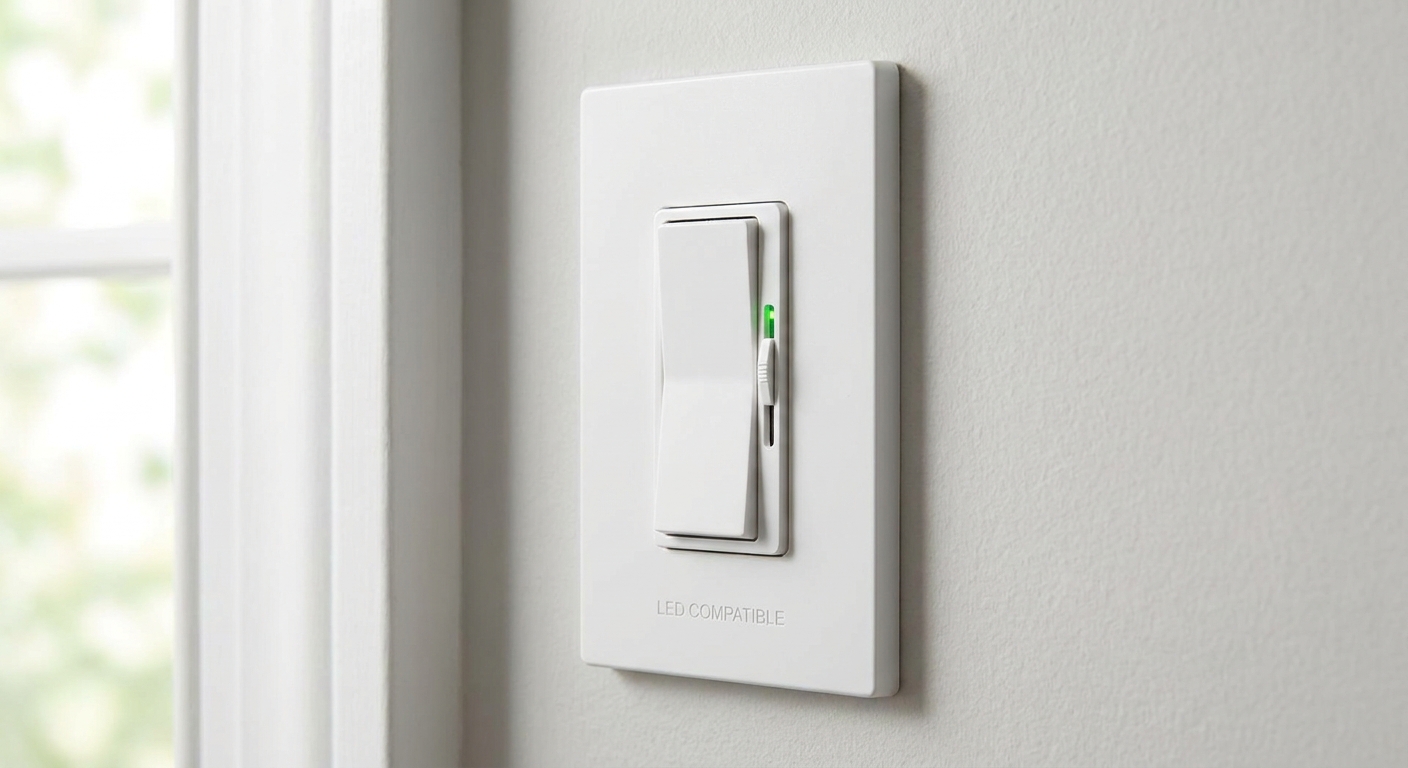
- Dimmer mismatch or flicker: LEDs need compatible dimmers. If you see shimmer, strobing, or buzzing, swap to an LED-rated dimmer or choose a bulb tested for dimming.
A simple combo that works in most homes
If you want a reliable recipe to start with, this blend fits many hallways and staircases:
- Ambient: one or more flush or semi-flush ceiling fixtures on a dimmer.
- Mid-level: wall sconces placed along the hall or staircase run for softer, wider visibility.
- Low-level: step lights or a hidden handrail glow for nighttime guidance.
- Controls: two-end switching on stairs plus motion sensing for late-night trips.
When these layers work together, transitional spaces stop feeling like a pass-through and start feeling like part of the home’s story, warm, safe, and gently glowing all the way through.
For more room-specific lighting ideas, browse Room-by-Room Lighting or learn the basics in Lighting Basics & Education.