A simple dining chandelier sizing guide: match fixture width to table size, hang it 30–36 inches above the tabletop, adjust for tall ceilings, and avoid comm...
Warm Lumen
How to Light a Room With Sloped or Vaulted Ceilings

Lumi
Lumi is the friendly little firefly host of Warm Lumen, with a heart that glows as brightly as a perfectly placed pendant lamp. He loves discovering how soft bulbs, warm color temperatures, and layered lighting can transform any dark room into a welcoming retreat. Lumi is always fluttering by to share bright ideas and cheer you on as you create a beautifully lit space.
Published
Let’s find the perfect glowing touch for every corner of your home, even the ones that tilt, soar, and slope. Vaulted and slanted ceilings add drama and airiness, but they also love to steal light from where you actually live. The secret is to treat the ceiling like a launching point, not the whole plan, and to use fixtures that can aim, drop, and layer light exactly where it’s needed.
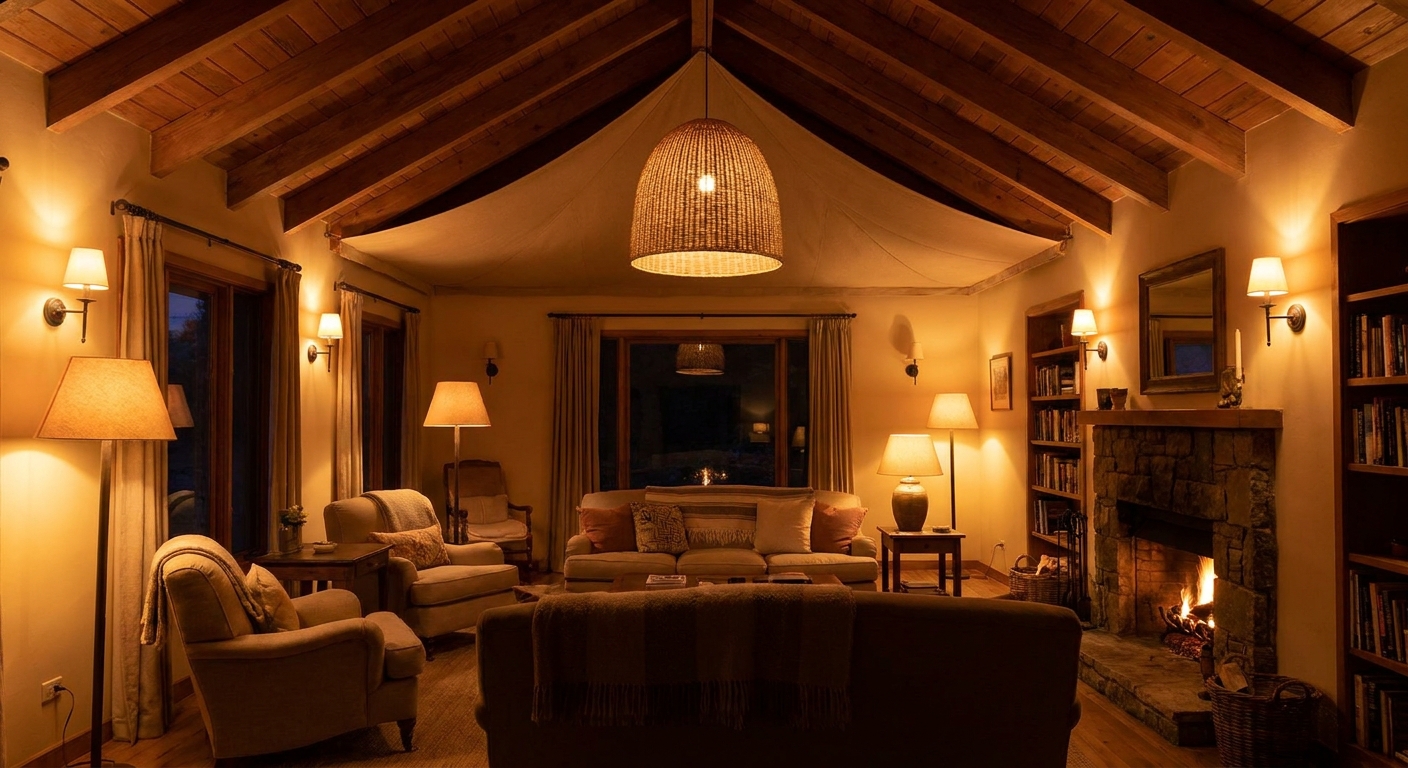
Start with the 3 lighting jobs
Sloped architecture changes angles, not human needs. Before choosing fixtures, decide how you want the room to feel and function. Most rooms need a mix of:
- Ambient light to fill the space and reduce shadows.
- Task light where eyes work, like reading spots, desks, kitchen counters, or vanities.
- Accent light to highlight art, beams, stone, built-ins, or a favorite chair.
If you want a quick layering refresher, take a quick detour to Lighting Basics & Education and then come right back to the slopes.
Why slopes cause lighting issues
- Light lands in the wrong place. A ceiling fixture can end up shining into open air instead of down into the room.
- Glare gets easier. A downlight placed on a slope can beam straight into eyes, especially on stairs, sofas, and beds.
- Ceiling height can be misleading. A vaulted peak may be very high, but the usable areas of the room sit under lower edges where people actually gather.
- Shadows multiply. One central light often leaves dark pockets along walls and under beams.
The fixes are happily straightforward: use aimable fixtures, bring pendants down to human scale, and add wall-level light so the room glows from more than one direction.
Best fixtures for sloped ceilings
1) Pendants and chandeliers (with the right hang)
Pendants work beautifully in vaulted spaces because they bring light down into the “people zone.” The trick is making the mount and drop work with the angle.
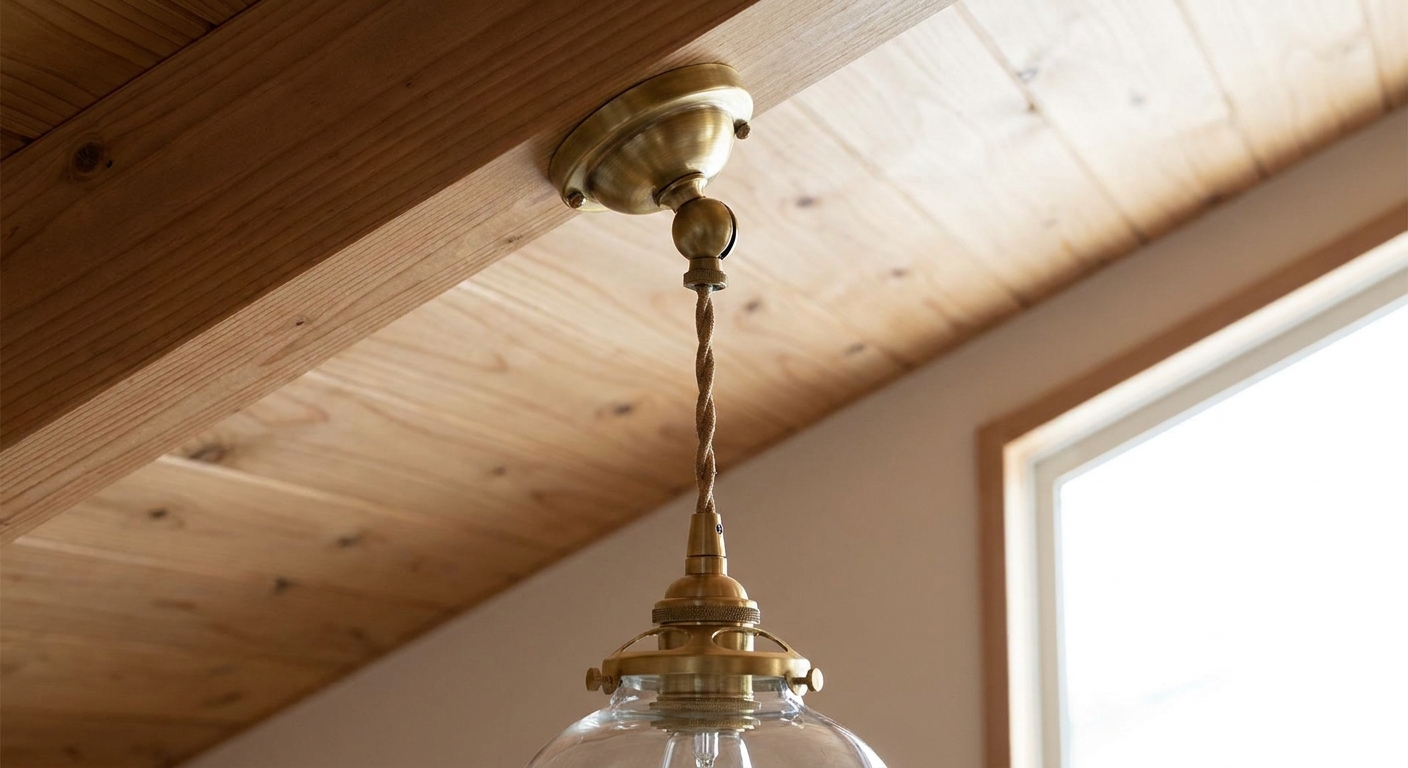
- Use a sloped ceiling adapter when your fixture canopy cannot sit flush on an angle. Many pendants and chandeliers offer a matching sloped ceiling canopy or adapter kit.
- Choose a swivel canopy if you want a cleaner look. Some fixtures have canopies that pivot to match the ceiling pitch.
- Consider suspension cables for vaulted ceilings where a chain drop would look busy. Cable systems can look tidier and, in some designs, help reduce sway on a long drop.
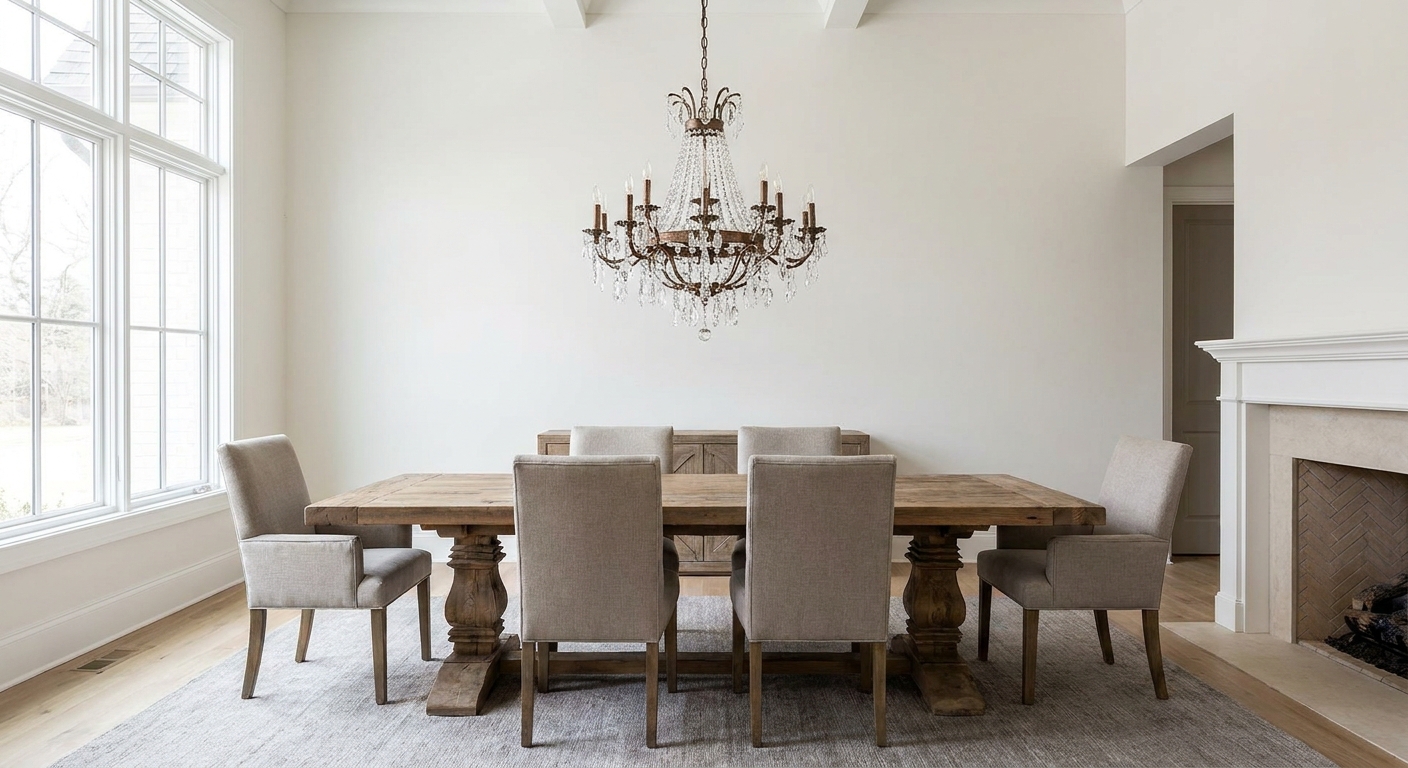
- Mind the hanging height. In walkways, a common rule of thumb is at least 7 feet (84 inches) of clearance from the floor to the bottom of the fixture. Over dining tables, pendants are often hung around 30 to 36 inches above the tabletop. With a slope, measure from the floor at the actual walking path or seating area, not from the peak.
For dining spaces, this sizing guide helps you keep the scale right even when the ceiling is dramatic: Sizing a Dining Room Chandelier or Pendant.
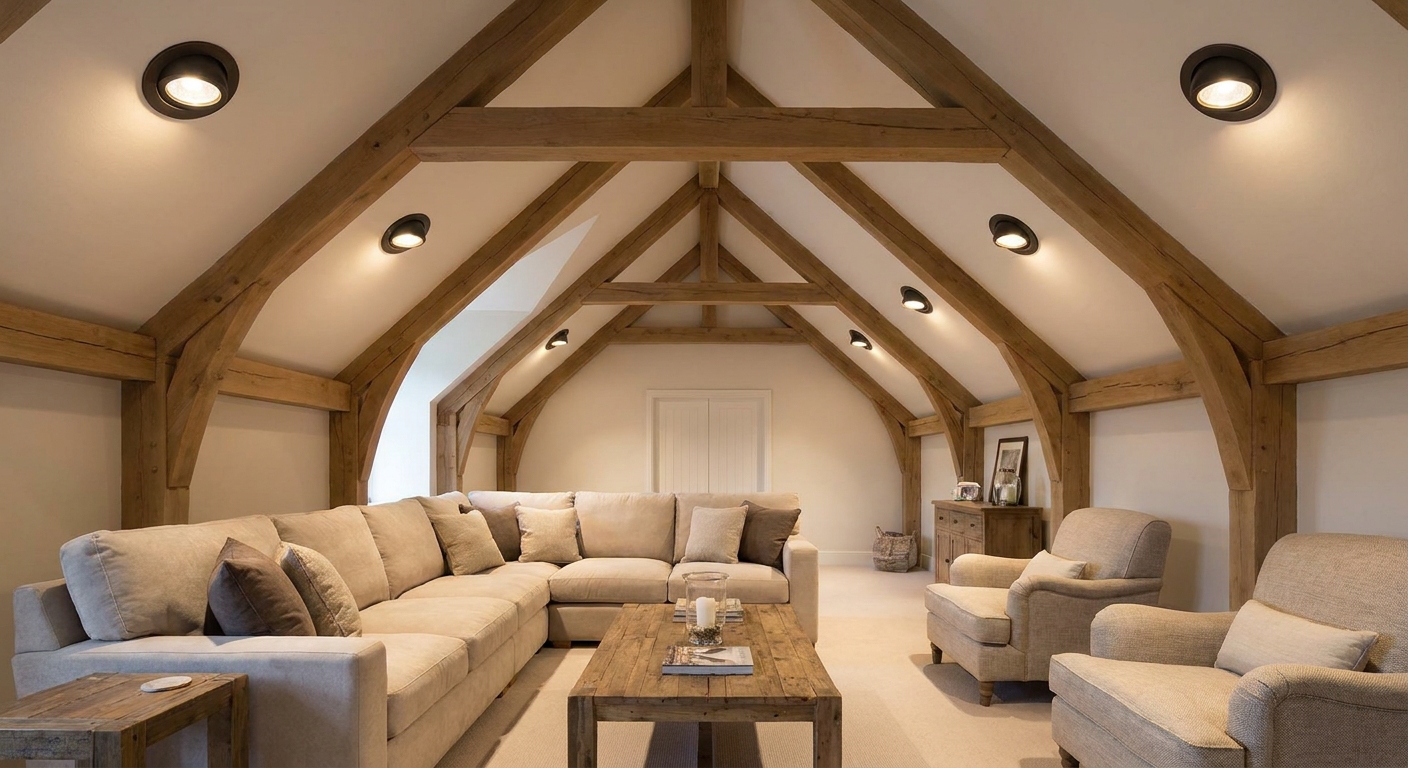
2) Recessed lights made for slopes
Recessed lighting can look wonderfully clean on an angled ceiling, but standard downlights can cause glare if they point the wrong way. Depending on the brand, you may see a few approaches:
- Sloped-ceiling recessed housings (or sloped-ceiling trims) designed to sit correctly on a pitch.
- Adjustable gimbal trims that let you aim the beam toward the floor and away from eyes (often used with standard housings, as long as the trim and housing are compatible).
- Appropriate housing ratings for your ceiling and insulation conditions (for example, IC-rated and airtight where needed).
Glare tip: in living areas, a wider, softer beam usually feels better than a narrow spotlight. If you have options, a diffused lens or baffle-style trim can help keep the ceiling from turning into a row of tiny suns.
Placement tip: on a slope, avoid lining lights in a perfect straight row down the peak unless you truly need it. Often, spacing lights over the use zones (seating, circulation paths, work surfaces) makes the room feel more evenly lit.
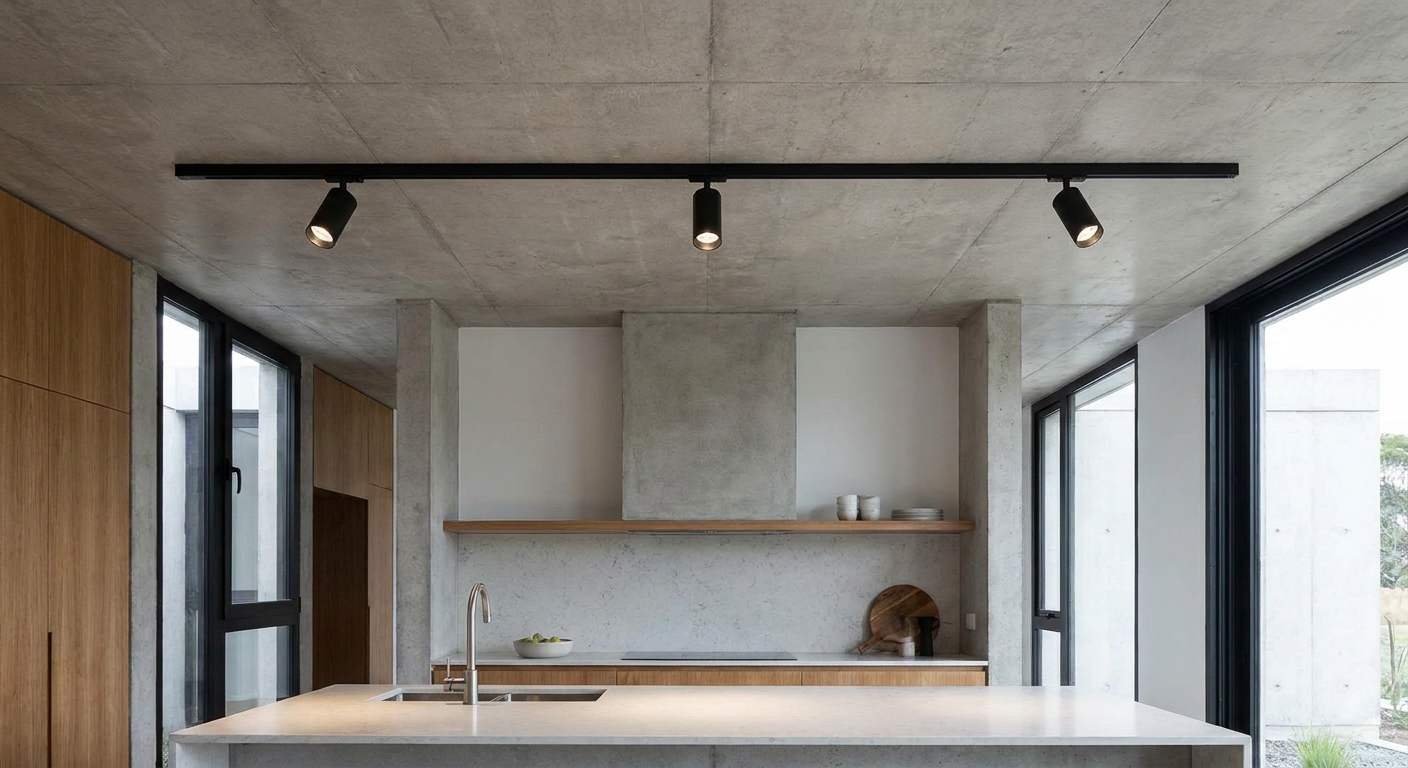
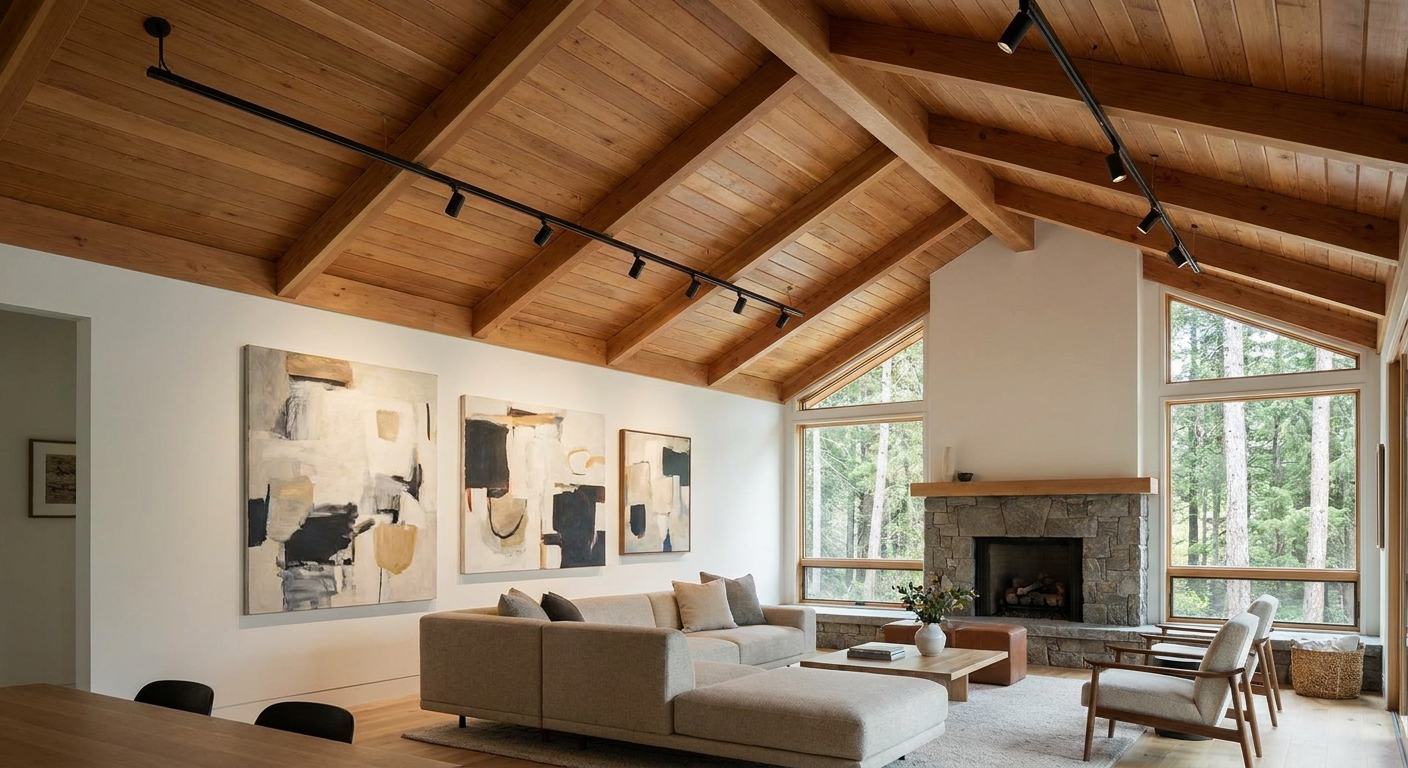
3) Track and rail systems for aimable light
If your room has multiple angles, beams, or changing ceiling heights, track or a rail system can be a flexible hero. Each head can aim exactly where you want.
- Choose adjustable heads with a good tilt range so you can aim away from glare.
- Use more heads at lower brightness instead of a few very bright heads. This helps the room feel soft and balanced.
- Plan for zones like art walls, reading chairs, shelves, or a fireplace feature.
If your home already has older track you dislike, you may still be able to modernize it without starting over: Modernizing Outdated Track Lighting.
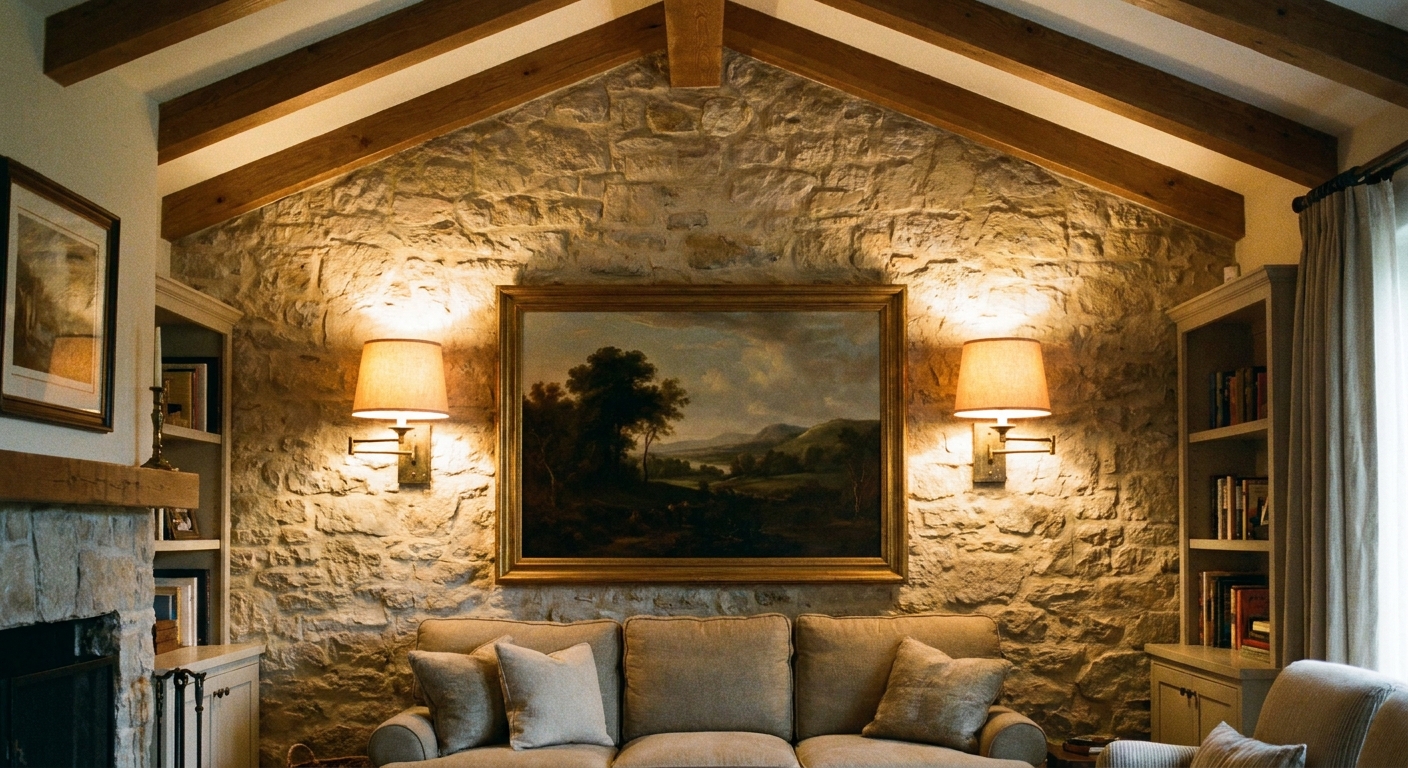
4) Wall lighting (the cozy shortcut)
In vaulted rooms, wall lighting is a cozy cheat code. It adds glow at eye level, reduces harsh contrast, and makes the room feel welcoming even when the ceiling is high.
- Wall sconces to wash walls with light and soften tall spaces.
- Picture lights for art walls and gallery moments.
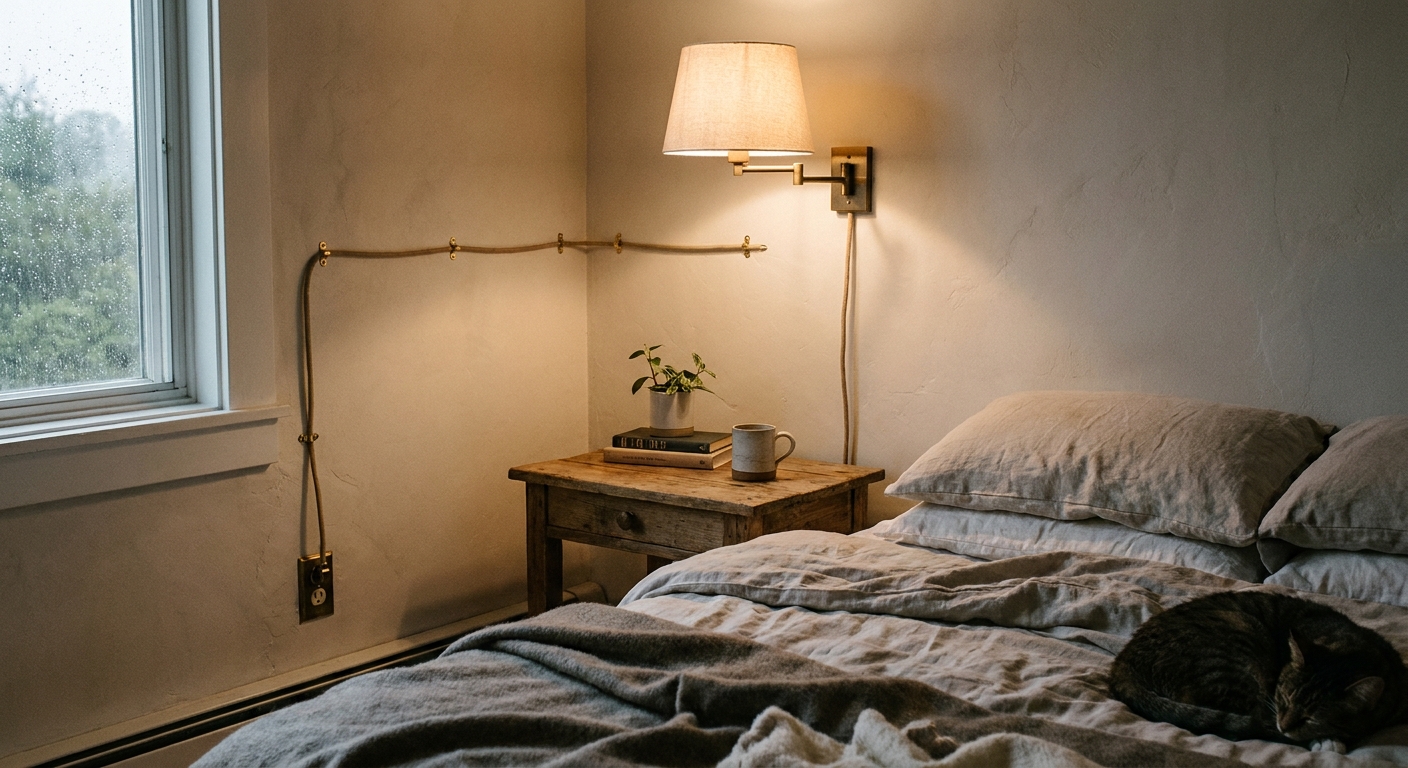
- Plug-in sconces when hardwiring is not realistic.
For renter-friendly options and cord hiding ideas, visit Renter-Friendly Plug-In Wall Sconces and Cord Hiding Tricks.
5) Floor and table lamps for layered comfort
When ceilings slope, lamps become even more important because they light the exact spots where life happens. A couple of lamps can erase gloomy corners that overhead light misses.
- Torchieres can bounce light upward, but choose diffused styles so the ceiling does not become a glare source.
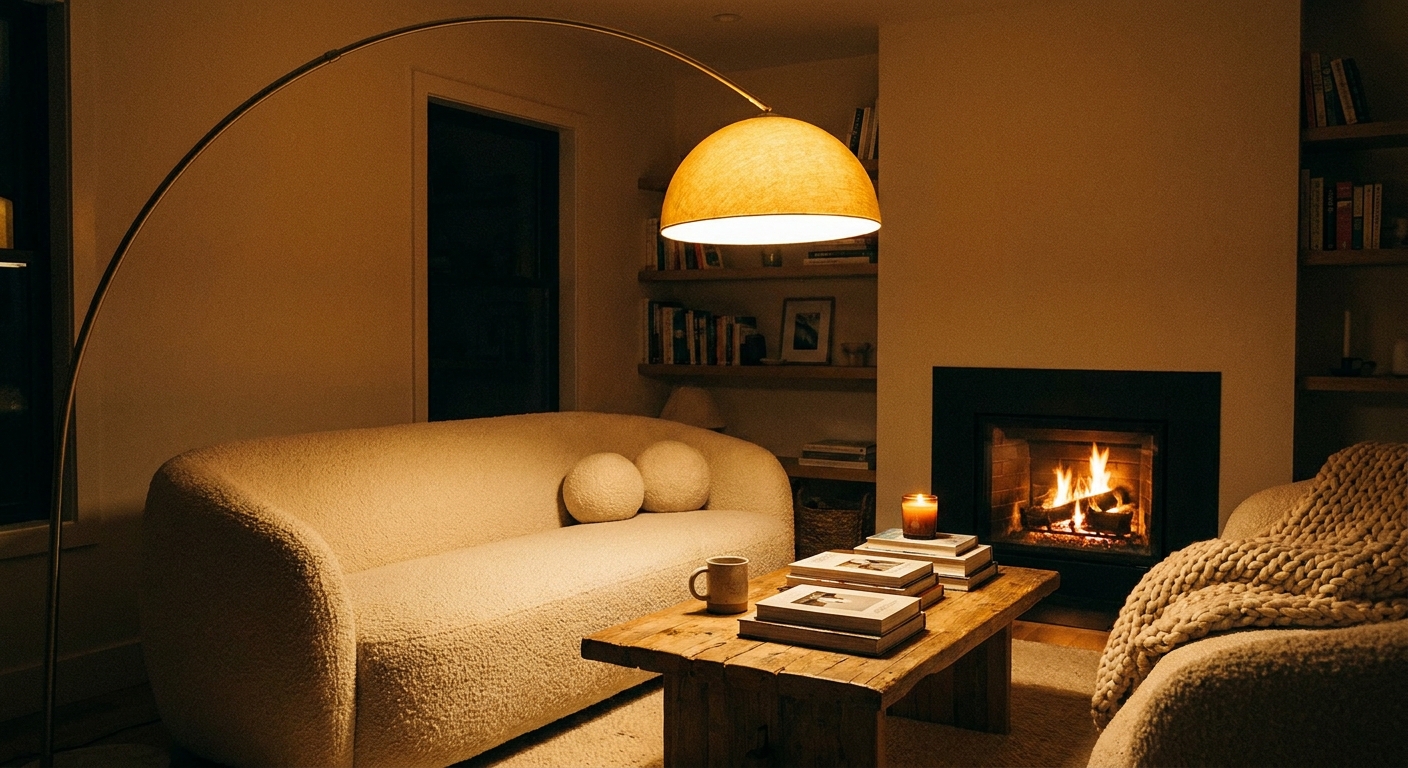
- Arc floor lamps can float light over seating without needing ceiling wiring.
- Task lamps keep reading and hobbies bright without blasting the whole room.
If you want help picking shapes and jobs, here’s a friendly guide: Choosing the Right Floor Lamp: Arc, Torchiere, and Task Styles.
6) Indirect lighting for a soft vaulted glow
If you want brightness without more ceiling holes, indirect lighting is your best friend in a vaulted room. It smooths out shadows and makes the whole space feel gently lit.
- Uplights tucked behind plants or furniture to bounce light up the walls and ceiling.
- LED tape on top of cabinets, on a beam ledge, or along a high shelf to create a floating glow (keep tape out of direct sight to avoid hot spots).
- Wall washing from sconces or track heads aimed at walls, not faces.
Adapters and mounts
These are the little helpers that make angled ceilings behave.
Sloped ceiling adapters
An adapter is a hardware piece that lets a fixture designed for flat ceilings mount safely to a slanted surface. Use one when the fixture canopy cannot sit flush on the angle. Many manufacturers make a matching adapter for their fixture families.
Swivel canopies
A swivel canopy pivots so the canopy hugs the slope while the pendant hangs straight down. This is ideal for a clean, finished look on a vaulted ceiling.
Suspension cables
Cable-hung fixtures are especially useful in tall vaulted rooms because they can feel lighter than heavy chains. They also help keep a long drop looking tidy. If you have a very steep pitch or a very long drop, cable systems can be a smart, modern choice.
Directional and adjustable fixtures
Look for words like “gimbal,” “tilt,” “aimable,” “pivot,” and “adjustable head.” In sloped rooms, aimability is comfort because it helps you keep light on surfaces, not in eyes.
Placement tips
Bring light down to human height
If the ceiling is high, a single flush fixture can feel like a distant star. Instead, use pendants over key areas and add lamps and sconces so the glow lives closer to you.
Light the walls, not just the floor
Walls are big reflectors. When you wash a wall with light, the whole room feels brighter and taller in a soft way, not a stark way.
Watch glare on slopes
A recessed light on a pitch can aim straight toward a sofa or bed. Choose adjustable trims or relocate the can line so the beam hits the floor and surfaces, not faces.
Use several smaller sources
Vaulted spaces love layered lighting. Several gentle sources usually feel warmer and more flexible than a single fixture trying to do everything.
Bulbs and color temperature
Angled ceilings can bounce light in surprising ways, so bulb choice matters. In most living spaces, warm light keeps tall rooms from feeling cold.
- Pick the right brightness. Use lumens, not watts, to plan the total glow. This guide helps you estimate what a room needs: Calculate the Right Lumens for Any Room.
- Choose a warm color temperature. For many living spaces, 2700K to 3000K is a cozy, flattering range. If your home leans very crisp and modern, you might prefer slightly cooler, and if it leans traditional and soft, you might stay on the warmer end.
- Use dimming when you can. Vaulted rooms can go from bright to cavernous quickly. Dimmers let you keep the same fixtures but change the mood. Make sure the bulb and dimmer type play nicely together (LED bulbs can be picky, and some fixtures specify ELV or TRIAC dimming).
And if you are matching LEDs to older habits, here’s a quick decoder: Lumens vs Watts for LED Bulbs.
Room scenarios
Vaulted living room
- Use a pendant or chandelier to anchor the seating zone, not the highest peak.
- Add at least two lamps and consider wall sconces to brighten vertical surfaces.
- If you use recessed lights, choose gimbals and aim them carefully to avoid glare on sofas.
If you have no overhead wiring or do not want ceiling fixtures, it is still possible to get a lovely layered result: Living Room Lighting Without Overhead Fixtures.
Sloped ceiling bedroom
- Avoid exposed bulbs that you can see from bed. Diffused shades and shielded downlights are gentler.
- Use bedside sconces or pendants to free up nightstands, especially when the ceiling angle crowds furniture.
- Choose warm, dimmable bulbs to keep the room sleep-friendly.
More bedside options here: Bedside Lighting: Lamps vs Sconces vs Pendants.
Hallway or stairs under a slope
- Prioritize even, glare-free light for safety.
- Wall lights can be more comfortable than bright downlights on a steep pitch.
- If using recessed lights, aim them away from the direction people travel.
For safety-focused layering ideas: Hallway and Staircase Lighting Ideas for Safety and Style.
Kitchen with a vaulted ceiling
- Use recessed or track for general light, then add strong task lighting for counters.
- Pendants over an island are excellent because they bring light down to the workspace.
- Keep finishes and bulbs consistent so the room feels unified.
For the layering plan room by room: How to Layer Kitchen Lighting.
Quick checklist
- Is the ceiling sloped where the fixture must mount, or can it mount on a flat section?
- Does the fixture specify it works on sloped ceilings, or does it require an adapter?
- Will the light land where you need it, or will you need adjustable heads or gimbals?
- Will anyone see the bulb directly from common spots like sofas, beds, or stairs?
- Do you have at least two layers beyond the ceiling, like lamps or sconces?
- Is the bulb warm (often 2700K to 3000K) and dimmable, and is it compatible with your dimmer?
- If it is a heavy fixture, is the junction box rated for the weight (and installed properly)?
FAQ
Can you hang a chandelier from a sloped ceiling?
Yes. Look for a chandelier rated for sloped ceilings or one that can use a sloped ceiling adapter or swivel canopy. The goal is a canopy that sits flush to the angle while the chandelier hangs straight.
Are recessed lights okay for vaulted ceilings?
They can be, especially when you use sloped-ceiling housings or adjustable gimbal trims with the correct compatible housing. Aim them toward the floor and key surfaces, and avoid placements that shine into eyes from seating or stair paths.
What is the easiest fix for a dark vaulted room?
Add light at wall and seating height. A pair of lamps and one or two wall fixtures often brightens the whole room more comfortably than adding a single, brighter ceiling fixture.
Do I need a special electrician for sloped ceiling lighting?
Most licensed electricians can install lighting on sloped or vaulted ceilings. The details that can change the plan are access (tall ceilings may require scaffolding or a lift), the mounting method on the slope, and whether your ceiling box is rated for the fixture’s weight. If you are hanging something heavy, it is worth confirming the box rating and support before the fixture arrives.
A gentle glow takeaway
Sloped ceilings are not a lighting limitation, they are a lighting opportunity. Aimable fixtures handle the angles, pendants and cables bring light down into the room, and wall lights and lamps add the cozy layers that make a space feel finished. Once you blend those pieces, the whole room can shine evenly, warmly, and beautifully.