Not sure which floor lamp to buy? Compare arc, torchiere, and task lamps with practical tips on reach, height, glare control, lumens, dimmers, and cozy 2700K...
Warm Lumen
Living Room Lighting Without Overhead Fixtures

Lumi
Lumi is the friendly little firefly host of Warm Lumen, with a heart that glows as brightly as a perfectly placed pendant lamp. He loves discovering how soft bulbs, warm color temperatures, and layered lighting can transform any dark room into a welcoming retreat. Lumi is always fluttering by to share bright ideas and cheer you on as you create a beautifully lit space.
Published · Last updated
Let’s find the perfect glowing touch for every corner of your living room, even if there isn’t a single overhead fixture in sight. With the right mix of lamps, plug-in sconces, and tucked-away LED strips, a living room without a ceiling light can feel warm, bright, and beautifully intentional.
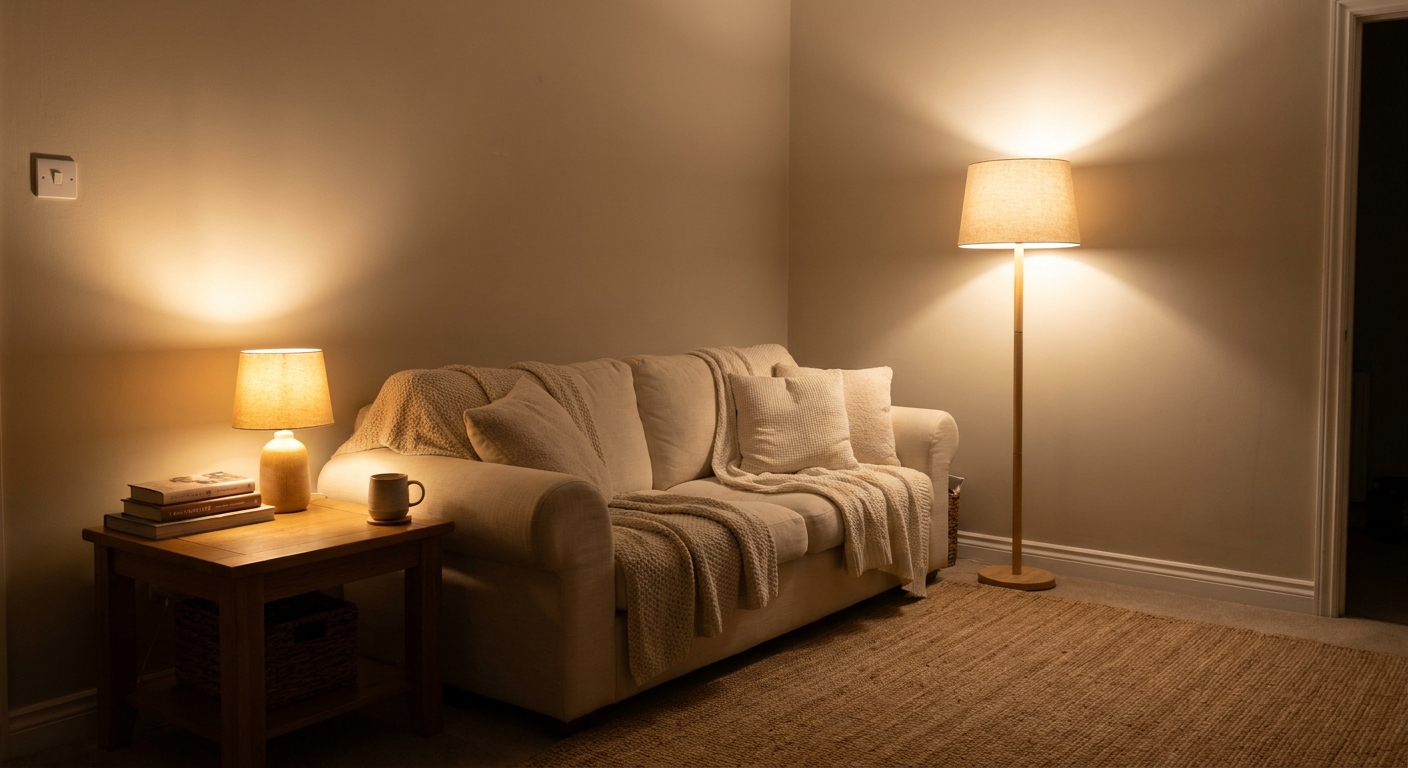
Start with a simple goal
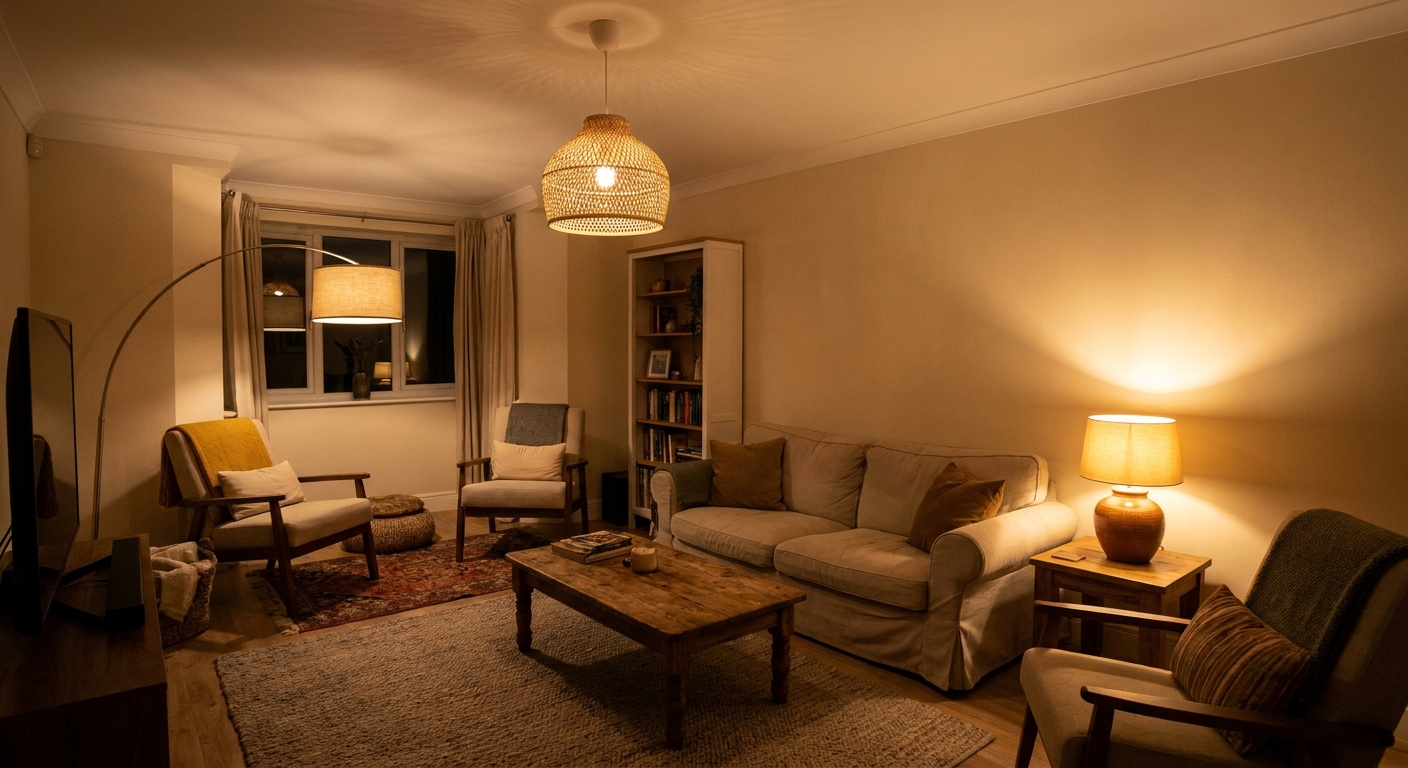
When there’s no ceiling light, the secret is to create layered lighting. That means you’ll combine:
- Ambient light: your main, overall glow
- Task light: focused light for reading, puzzles, laptop time, or crafts
- Accent light: soft highlights that add depth, sparkle, and calm
As a starting point for an average-size living room, aim for roughly 1,500 to 3,000 lumens total. Larger rooms, darker walls, high ceilings, or open-plan layouts often need more. If you prefer a quicker rule of thumb, many living rooms feel comfortable with about 10 to 20 lumens per square foot for general ambient light, then you layer task lighting on top where you need it.
For color, most living rooms look best in 2700K to 3000K (warm white). That’s the sweet spot for a welcoming glow that still feels clear. If you can, look for bulbs with CRI 90+ so skin tones, wood, and textiles look richer and more natural.
For more on the building blocks, stop by Lighting Basics & Education.
Floor lamps do the heavy lifting
If you do one thing first, make it a great floor lamp (or two). Floor lamps can act like a ceiling-light stand-in, especially when they bounce light off walls and ceilings.
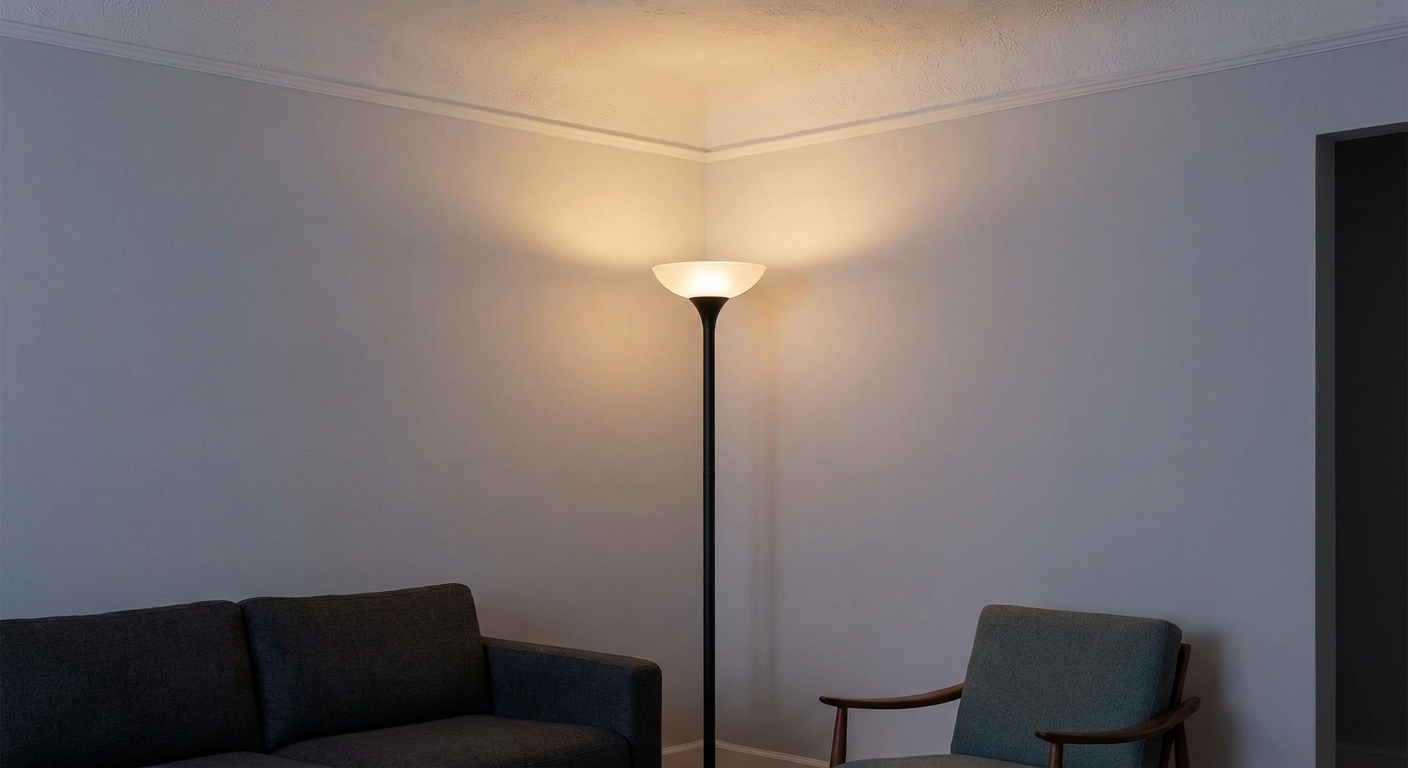
Pick the right type
- Torchieres (uplights): Aim light upward to imitate overhead brightness. Great for overall ambient light.
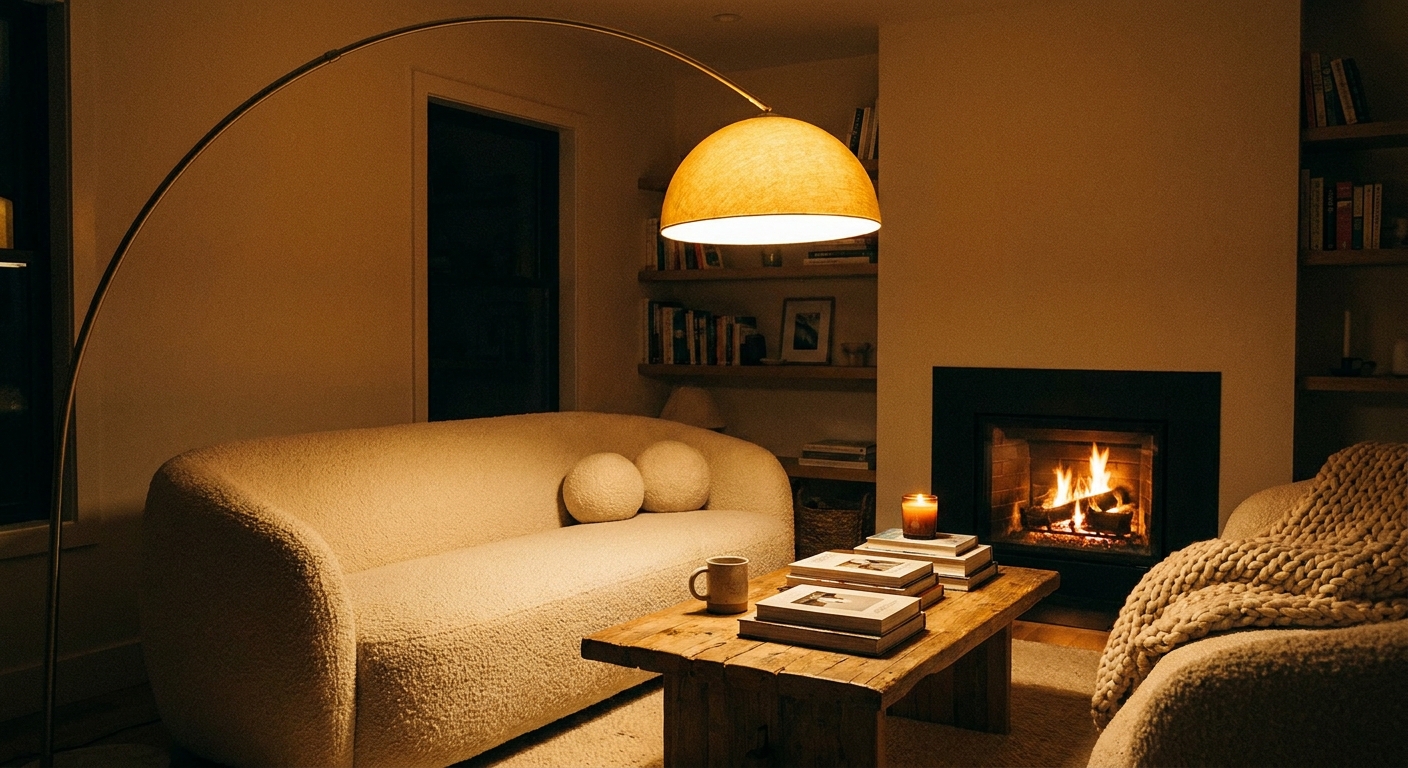
- Arc floor lamps: Reach over a sofa or coffee table to create a “center of room” glow without wiring.
- Reading floor lamps: Adjustable heads for a bright, focused pool of light next to seating.
- Tree floor lamps: Multiple heads can cover several zones, useful in open layouts.
Placement that makes the room brighter
- Brighten corners first: Put a floor lamp in a dark corner to lift shadows off the ceiling line.
- Light seating from two sides: One lamp near each end of the sofa (floor lamp on one side, table lamp on the other) creates balanced, flattering light.
- Avoid glare: Keep bare bulbs out of direct sightlines from the sofa. Shades and upward bounce are your friends.
Bulb tips (quick and glowy)
- Ambient floor lamp: try 800 to 1600 lumens (one or more bulbs) depending on the lamp style and room size.
- Reading lamp: aim for about 450 to 800 lumens at the page. Distance and beam angle matter: a tighter, focused beam can feel bright with fewer lumens than a wide, diffuse beam.
- Dimmers: A dimmable bulb plus an in-line dimmer or smart bulb makes one lamp work for movie night and game night.
Safety note: Check the lamp’s max wattage rating (especially torchieres). LEDs keep heat down compared with older bulbs, which is one reason they are such a good match for uplights.
If you’re choosing lamp shapes or shades, you may also enjoy Fixtures & Styles.
Table lamps soften everything
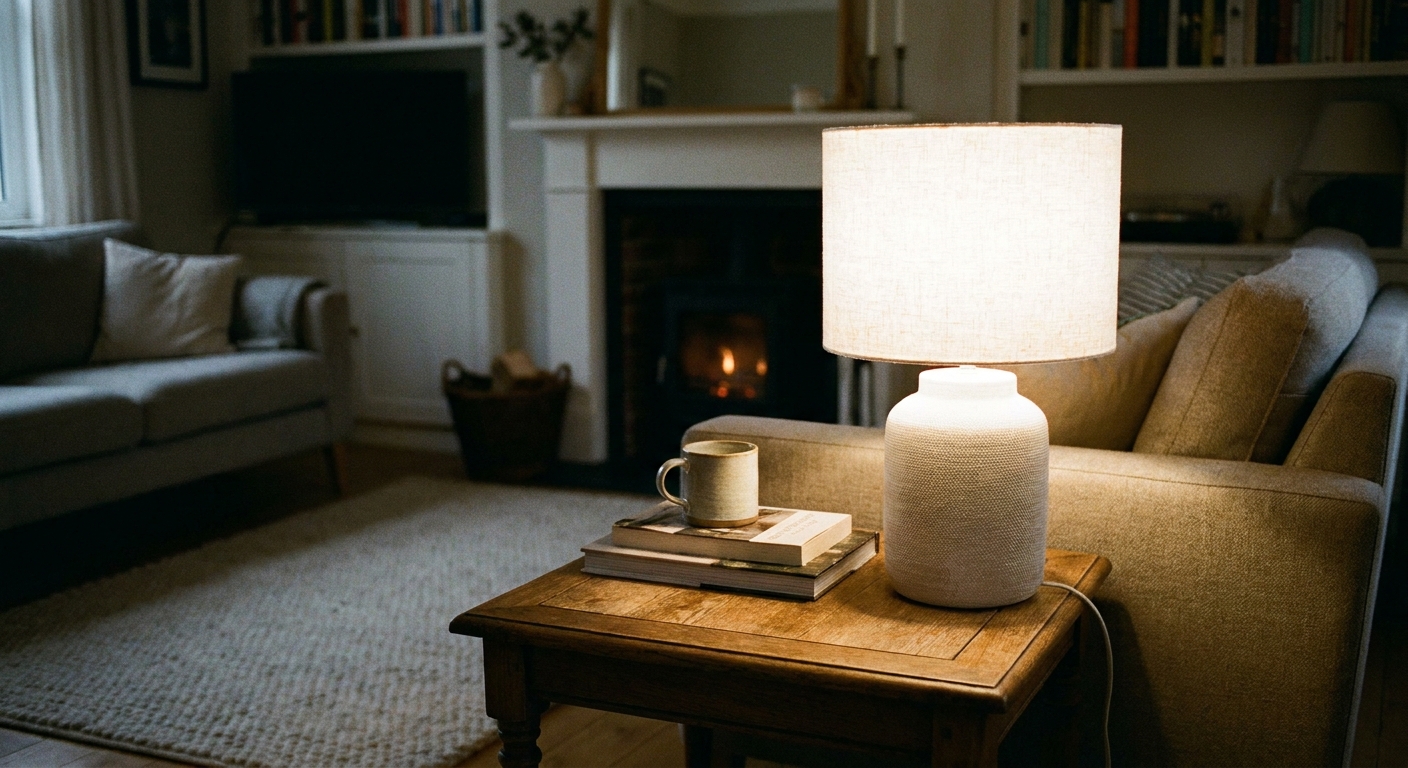
Table lamps add warmth at eye level, which is exactly what a living room without a ceiling light needs. They soften the room and make faces look lovely (no harsh shadows from above).
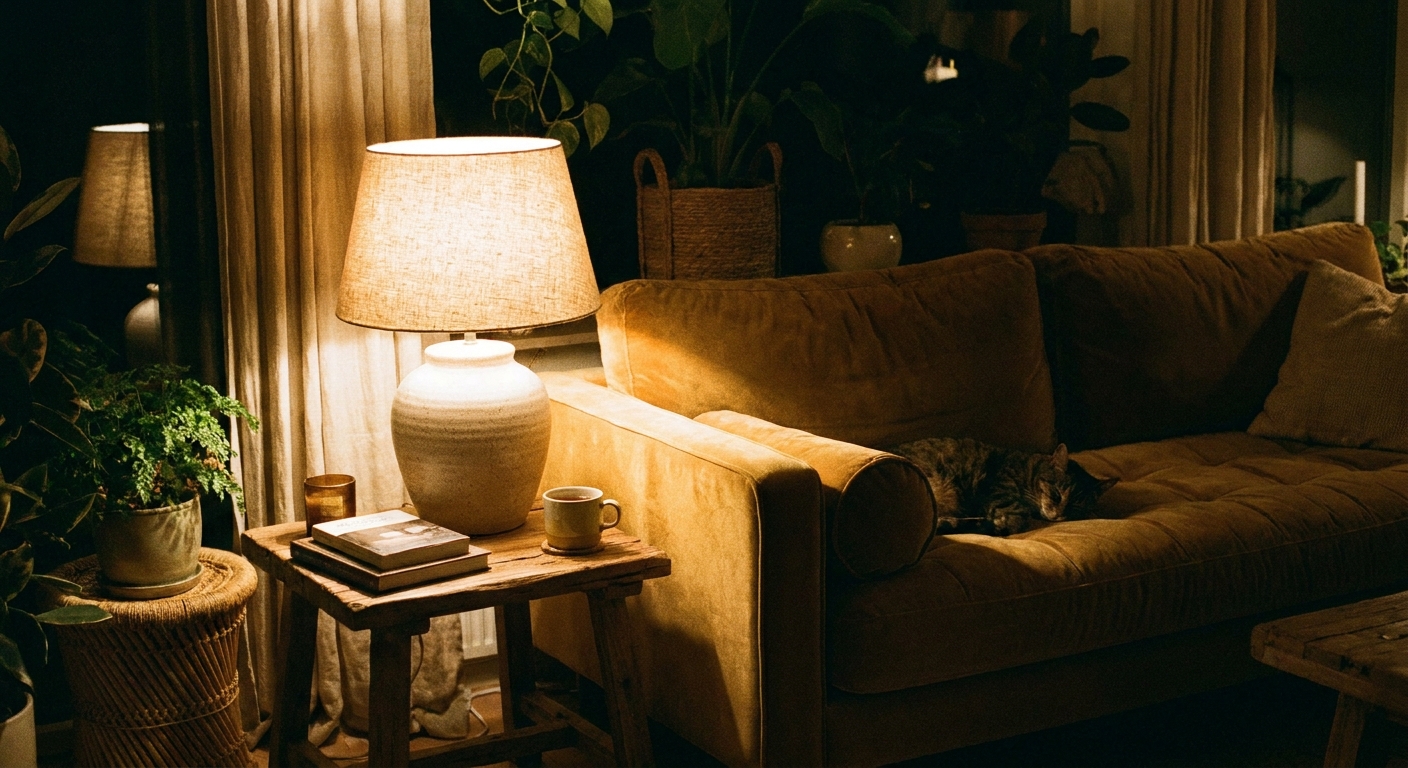
Where they work best
- On end tables at sofa arms for comfortable reading and conversation lighting
- On a console table behind the sofa to create a gentle back glow
- On a bookshelf (sturdy surface only) to brighten vertical space and add depth
Shade and height basics
- Put the bottom of the shade at or slightly below eye level when seated to reduce glare (you want the shade, not the bulb, in view).
- Opaque or linen shades soften the light and reduce harsh contrast.
- Use pairs when possible: Two lamps on a console or on matching end tables make a room feel intentionally designed and evenly lit.
Buying details (so the bulb fits)
- Most US table lamps use a medium base (E26) bulb.
- Common shapes: A19 fits most shades; globe bulbs can look pretty in open or clear shades but may increase glare if the bulb is visible.
Plug-in sconces look built-in
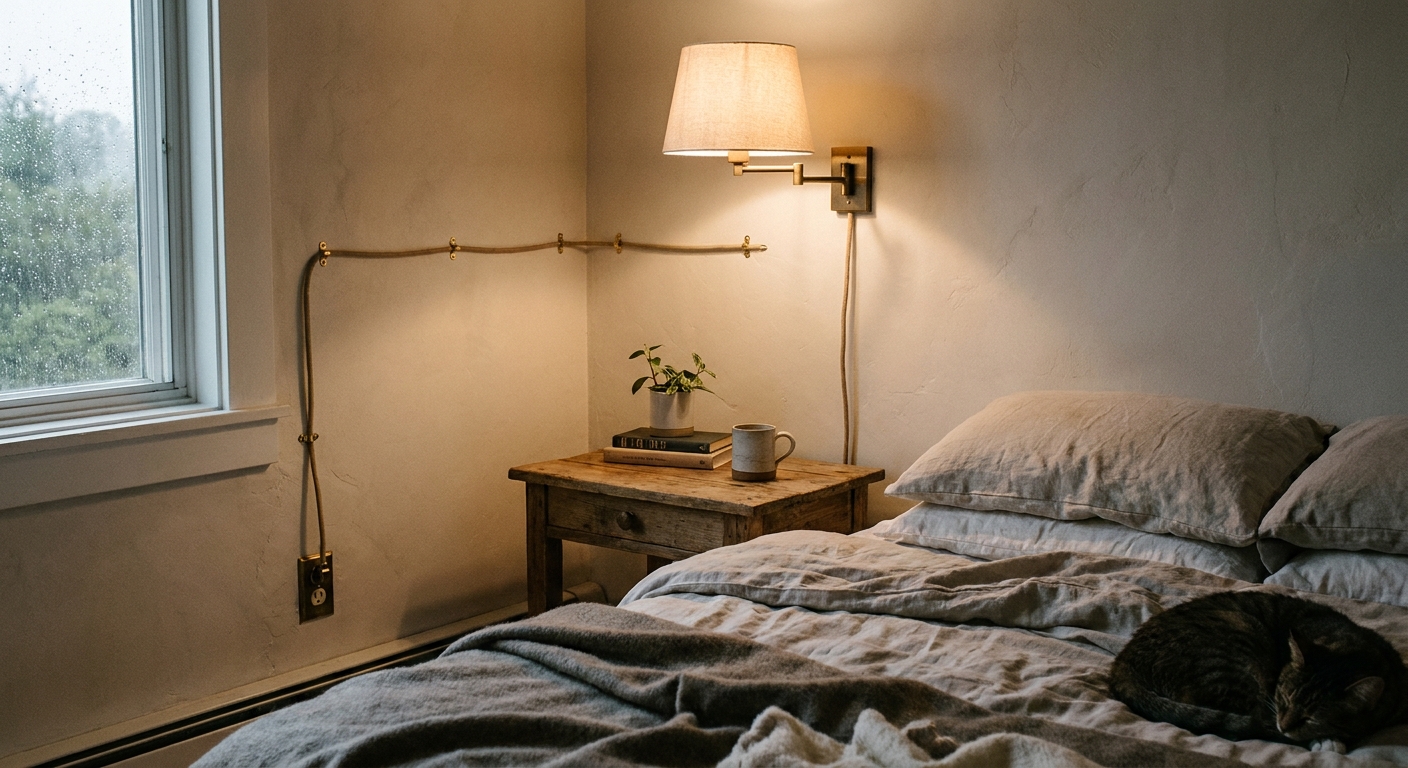
No junction box? No problem. Plug-in wall sconces can deliver that polished, architectural look without opening up walls. They are especially helpful when side tables are small, or when you want light above and beside seating.
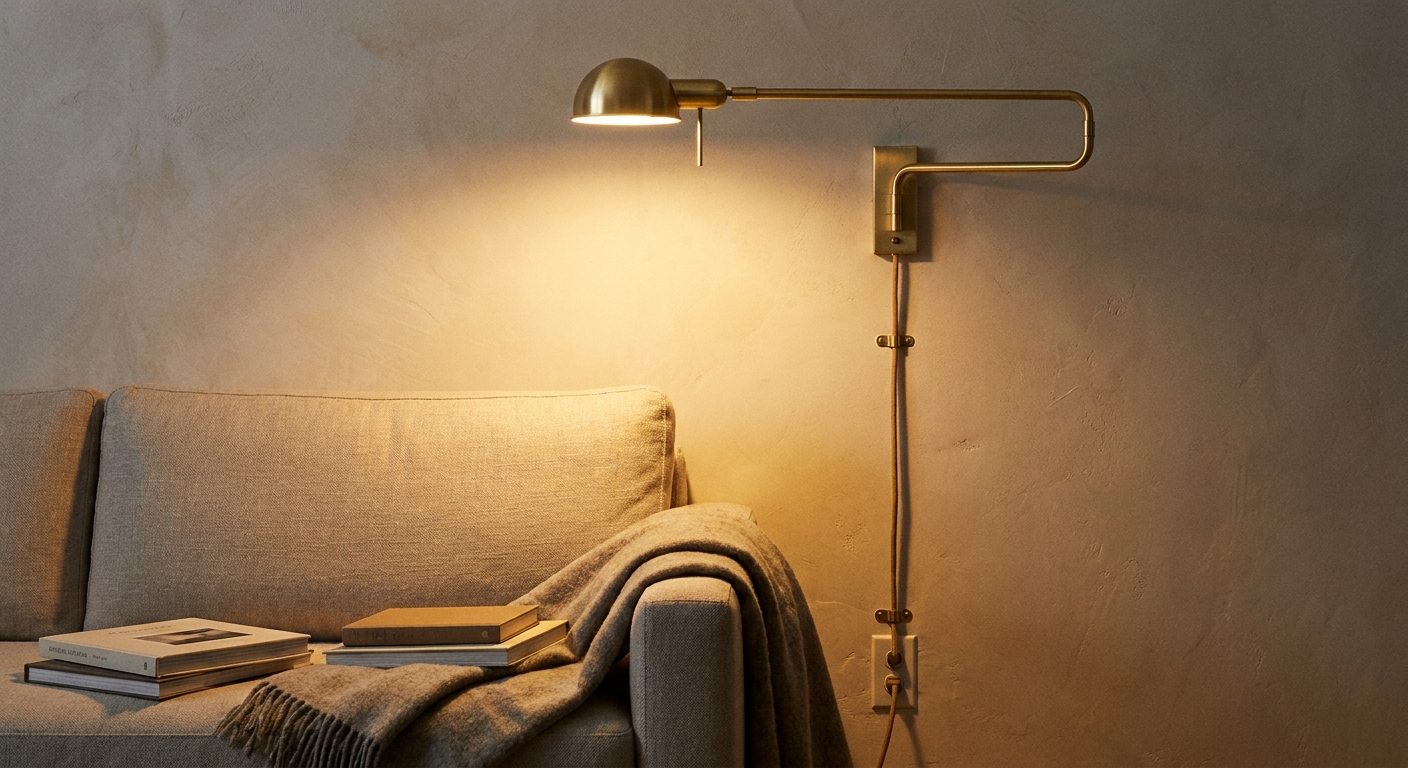
Smart places for sconces
- On either side of a sofa to frame the seating zone
- Beside a fireplace to balance the visual weight
- Along a long blank wall where the room feels flat or dim
- Near an art wall to add soft accent light (aim carefully to avoid glare)
Easy cord management
- Use paintable cord covers to create a tidy, “built-in” look.
- Route cords behind furniture and down to an outlet where possible.
- Choose sconces with on-sconce switches if the outlet is hard to reach.
If you’re planning a small weekend refresh, take a peek at DIY & Easy Upgrades.
Hidden LED strips add magic
LED strips are fantastic for living rooms without a ceiling light because they can create ambient glow without glare. The trick is to hide the strip so you see the light, not the dots.
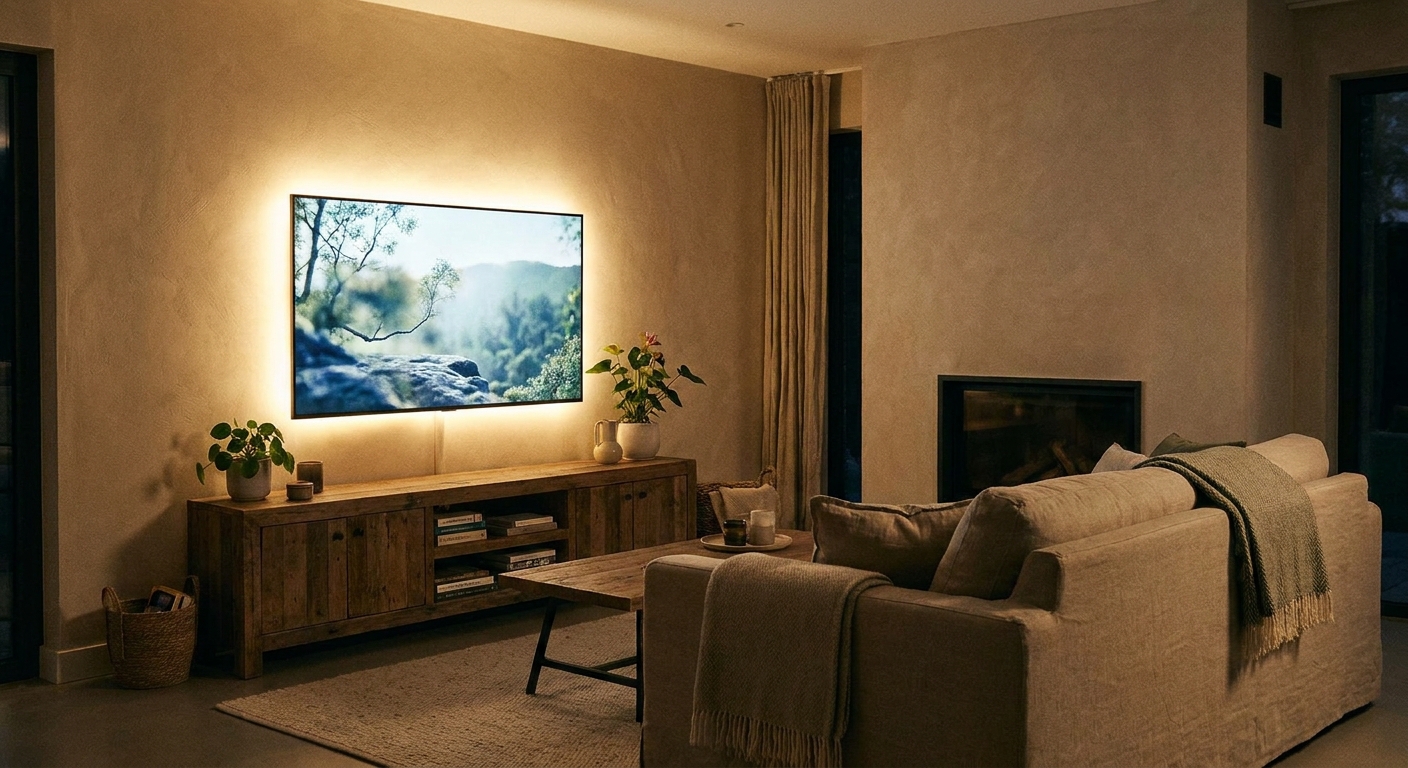
Where LED strips look best
- Behind the TV: reduces harsh contrast and adds a calm halo effect.
- Under a floating shelf: highlights decor and brightens the wall.
- On top of bookcases: bounces light up to the ceiling for a gentle “off-ceiling” glow.
- Under a console table: adds a subtle nighttime path light feel.
- Along crown molding or picture ledges (hidden from view): creates the closest thing to faux overhead ambience.
What to buy (so it looks smooth)
- Warm white strips in the 2700K to 3000K range for living rooms.
- High density strips (more LEDs per foot) for a more continuous line of light.
- Diffusion helps: If you can, use a diffuser channel or hide the strip behind a lip so the individual points are less visible.
- Dimmable control: Remote, in-line dimmer, or smart control makes LED strips far more useful.
Quick safety notes
- Keep strips on clean, dry surfaces so the adhesive holds.
- Do not run cords under rugs: it can trap heat, damage insulation through abrasion, and increase fire risk. If you must cross a walkway, use a proper floor cord cover.
- Do not overload power strips, and consider a surge protector for TV and LED power supplies.
Three simple layouts
1) Cozy conversation
- Torchiere floor lamp in a far corner for ambient glow
- Two table lamps at the ends of the sofa
- LED strip on top of a bookcase for soft ceiling bounce
2) Reader-friendly
- Adjustable reading floor lamp beside the main seat
- Plug-in sconce on the opposite side to balance brightness
- Small accent lamp on a shelf or console for depth
3) Small living room
- One slim torchiere or arc floor lamp to act as the “main” light
- One plug-in sconce above a side table to save surface space
- LED strip behind the TV for a gentle, low-glare layer
Make controls feel effortless
The fastest way to make multiple lights feel like one coordinated system is to control them together.
- Smart bulbs or smart plugs can group lamps so one tap sets the mood.
- In-line dimmers work well for plug-in lamps that do not have built-in dimming.
- Match color temperature across bulbs so the room doesn’t look patchy (for example, mixing 2700K and 5000K in the same space usually feels odd).
- Choose similar brightness levels so one lamp doesn’t shout while the others whisper.
If it still feels dim
If it is bright but gloomy
- Switch at least one lamp to a shade that sends light upward or add an uplight style.
- Add a light source in a far corner to reduce shadow pooling.
- Use lighter lamp shades or bulbs with slightly higher lumens.
If it feels harsh
- Avoid exposed bulbs in direct view from the sofa.
- Use diffused shades and dimmers.
- Move LED strips farther out of sight, or add diffusion so you don’t see individual points.
If it feels messy (cords everywhere)
- Prioritize two to four key lights rather than lots of tiny ones.
- Use cord covers and route cords behind furniture legs.
- Consider a console table as a “lighting hub” to keep plugs and cords contained.
Quick FAQ
How many lamps does a living room need without a ceiling light?
Often 3 to 5 light sources works well: at least one strong ambient lamp (like a torchiere), plus task and accent layers. Bigger rooms may want more, smaller rooms can feel great with three.
What bulb color is best for a cozy living room?
2700K is the classic warm, cozy glow. 3000K is still warm but a touch crisper. Keeping bulbs consistent across the room helps everything feel calm and intentional.
Are LED strips enough as the main light?
LED strips are wonderful for ambiance, but most living rooms still need at least one brighter lamp for everyday tasks. Think of strips as the “glow layer” that makes everything else feel more comfortable.
One last warm-lumen tip
If you only remember one thing, make it this: light the walls and corners, not just the coffee table. When the room’s edges glow, the whole space feels brighter, taller, and more welcoming, even without overhead fixtures.
For more ideas by space, head to Room-by-Room Lighting. If you ever need to reach the team at Warm Lumen, you can find the right doorway at Contact.