A simple dining chandelier sizing guide: match fixture width to table size, hang it 30–36 inches above the tabletop, adjust for tall ceilings, and avoid comm...
Warm Lumen
Mid-Century Modern Lighting: Sputniks, Globes, and Brass

Lumi
Lumi is the friendly little firefly host of Warm Lumen, with a heart that glows as brightly as a perfectly placed pendant lamp. He loves discovering how soft bulbs, warm color temperatures, and layered lighting can transform any dark room into a welcoming retreat. Lumi is always fluttering by to share bright ideas and cheer you on as you create a beautifully lit space.
Published
Let’s find the perfect glowing touch for every corner of your home. Mid-century modern lighting has a special kind of sparkle: clean lines, playful geometry, and warm metals that make a room feel both crisp and cozy. If you love sputnik chandeliers, opal globes, and that sunny brass sheen, this guide will help you use them with confidence in today’s spaces.
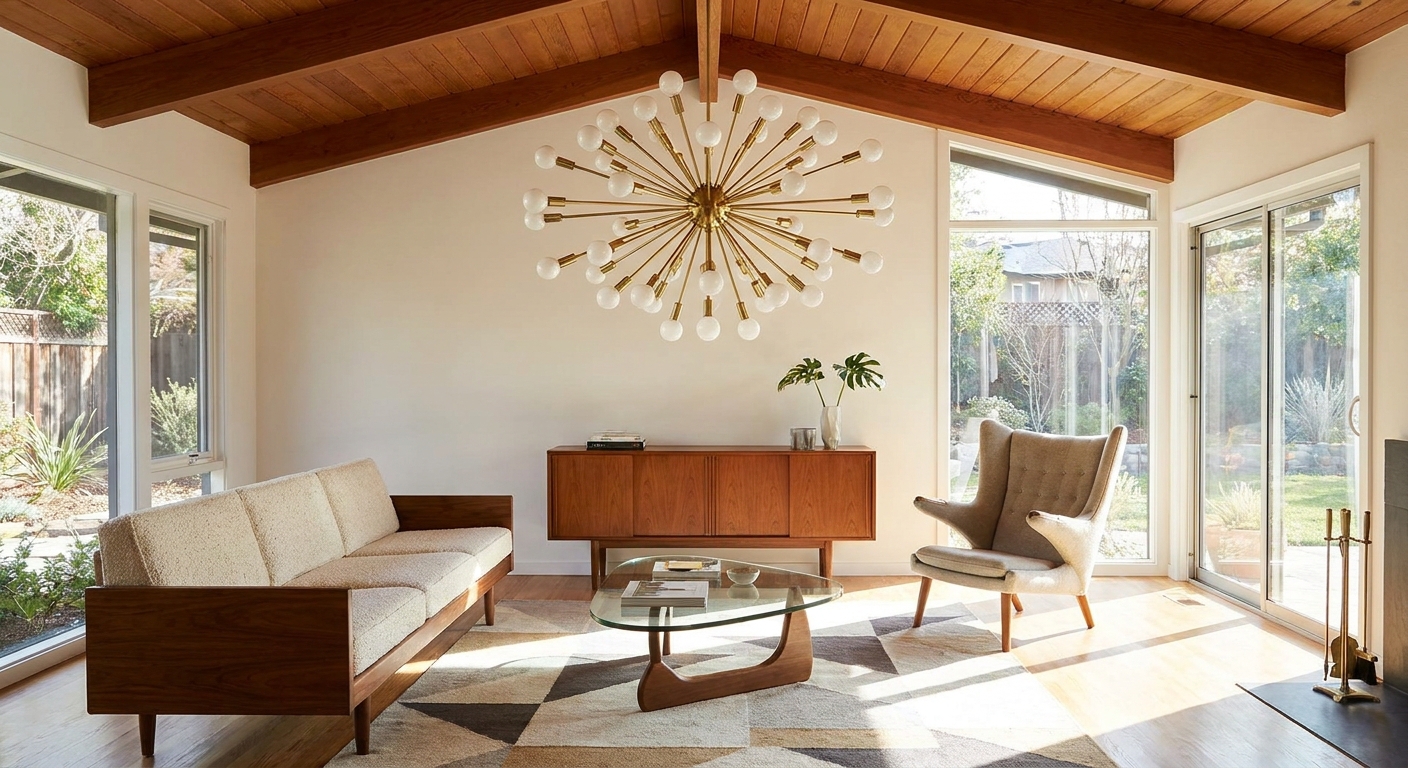
What makes lighting feel mid-century modern
Mid-century modern style (often inspired by designs from the mid-1940s through the late 1960s) tends to balance function and fun. In lighting, that shows up as:
- Geometric shapes: spheres, cones, cylinders, and starburst silhouettes.
- Visible structure: arms, stems, and fittings become part of the look, not something to hide.
- Warm metals: brass, aged brass, champagne, and sometimes black or walnut accents.
- Glass that softens light: opal (milk) glass globes are a signature because they can help diffuse the bulb and reduce glare.
- A “floating” feeling: many fixtures feel airy, with negative space around them.
That mix is why mid-century fixtures can feel bold without being heavy.
Sputnik chandeliers: the starburst statement
If mid-century lighting had a mascot moment, it might be the sputnik. It’s a chandelier with multiple arms radiating from a central sphere, often with exposed bulbs at the tips.
Where a sputnik works best
- Living rooms: Perfect when you want a centerpiece that doubles as modern sculpture.
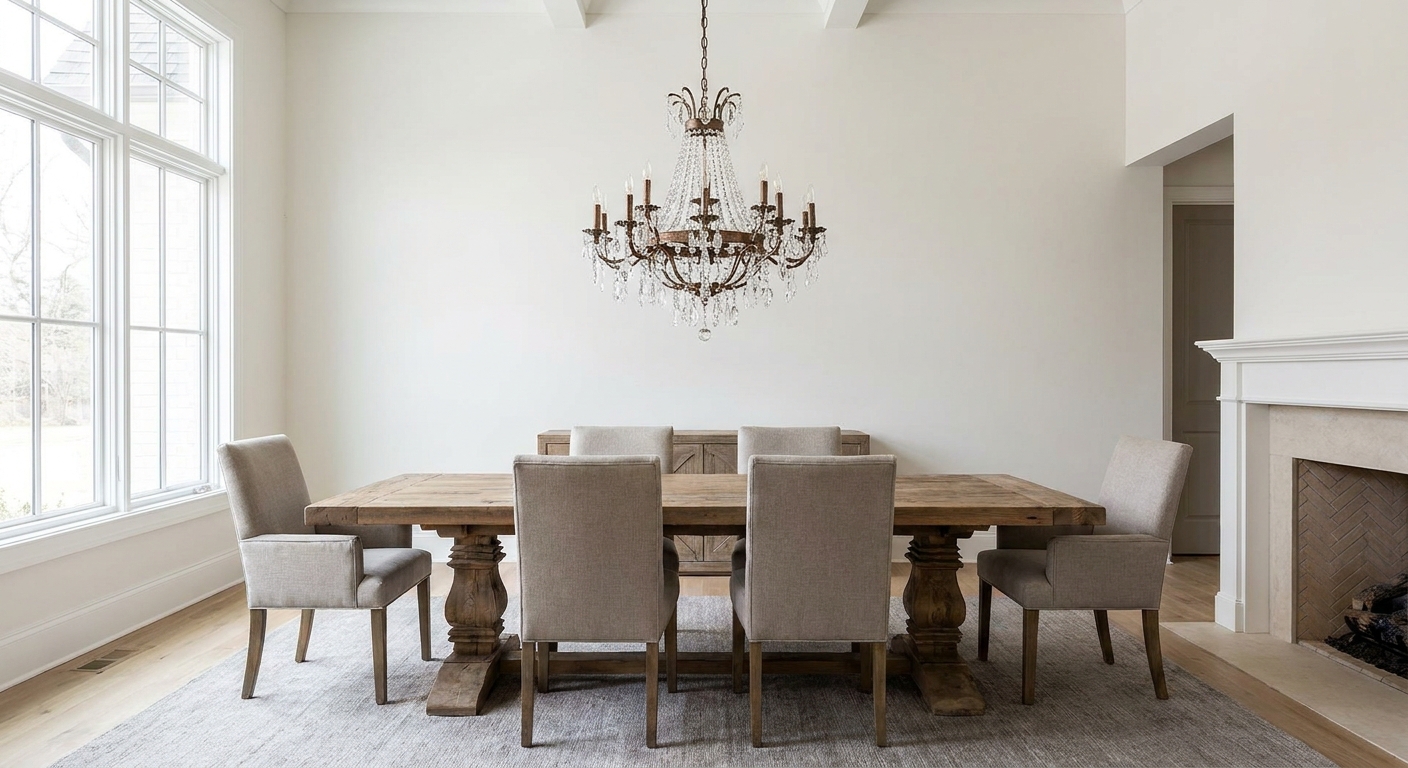
- Dining rooms: A sputnik can replace a traditional chandelier for a more playful look.
- Entryways: It creates instant personality the moment you walk in.
How to choose the right size
Sputniks can read larger than their diameter because the arms reach out into space. A helpful approach is to start with chandelier sizing basics and then choose the smaller of two options if your room is visually busy.
For a deeper sizing walkthrough, head to Sizing a Dining Room Chandelier or Pendant. The same principles help with sputniks, too.
Bulb choice matters more than you think
Many sputnik fixtures use exposed bulbs, which means the bulb is the “shade.” To keep the look warm and comfortable:
- Choose warm color temperature: 2700K is a classic cozy pick; 3000K can look a bit crisper while still warm.
- Use frosted or opal bulbs if bare clear bulbs feel glary.
- Put it on a dimmer whenever possible so the fixture can shift from sparkle to soft glow. If you are using LEDs, make sure the bulb and dimmer are compatible to avoid flicker.
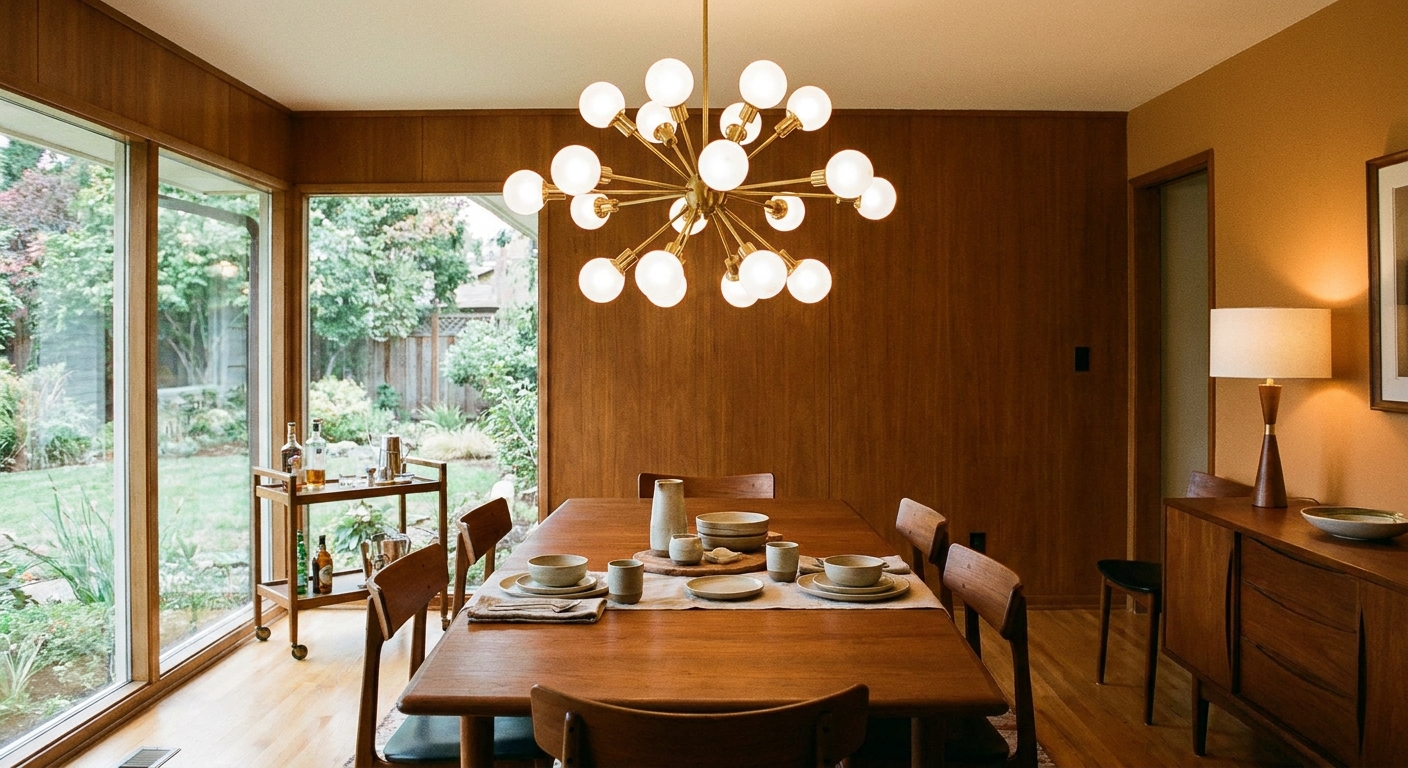
Common sputnik mistakes to avoid
- Too much bare-bulb brightness: A sputnik with many bulbs can get bright fast. Plan for dimming or lower-lumen bulbs.
- Too low over a table: A common target is about 30 to 36 inches above the tabletop for an 8-foot ceiling, then adjust slightly for comfort and sightlines.
- Competing shapes: If your room already has lots of angular decor, consider a globe-based sputnik or fewer arms to calm things down.
Globe lighting: the soft, flattering glow
Opal globe shades are one of the easiest mid-century elements to blend into modern homes because they play so nicely with everyday life. Globes diffuse the bulb, soften shadows, and create that gentle, even glow. (They can still feel bright if the bulb is very high-lumen, so dimming helps here too.)
Globe pendants
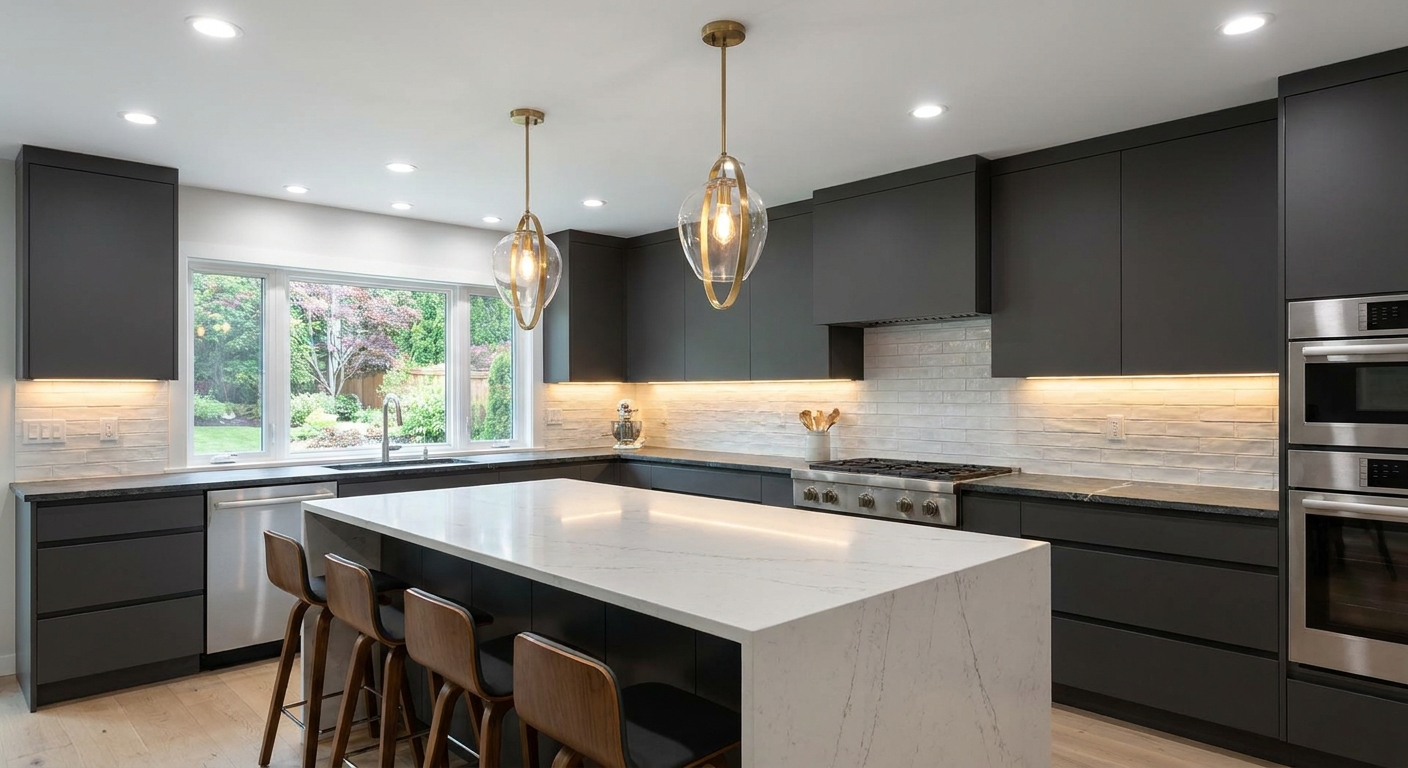
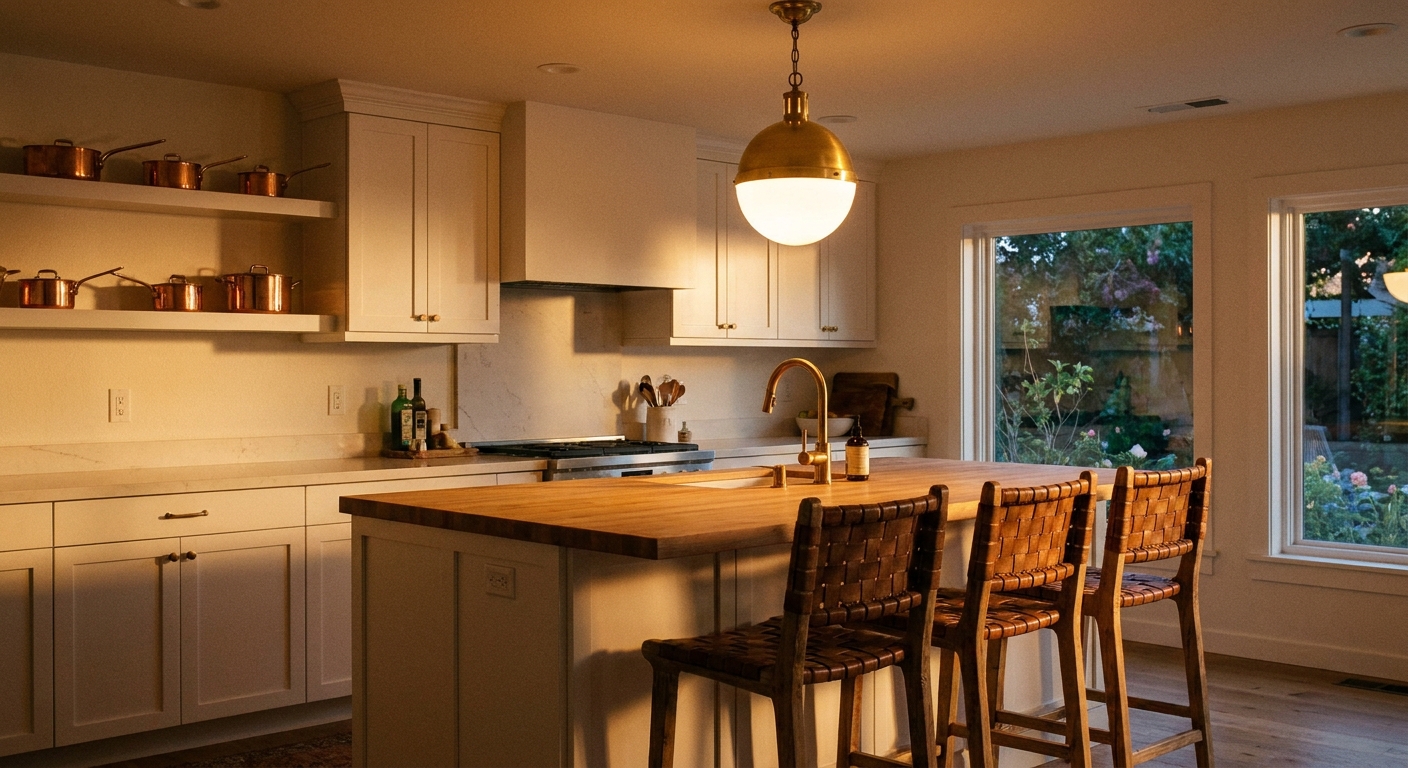
Globe pendants look especially good when used in repeats. Think two over a small dining table, three over an island, or a single larger globe in a reading nook.
- Clearance tip: In walkways, aim for about 80 inches from the floor to the bottom of the pendant so no one has to duck.
- Glare tip: Opal glass helps, but bulb choice still matters. Warm-white bulbs keep globes creamy rather than icy.
Globe sconces
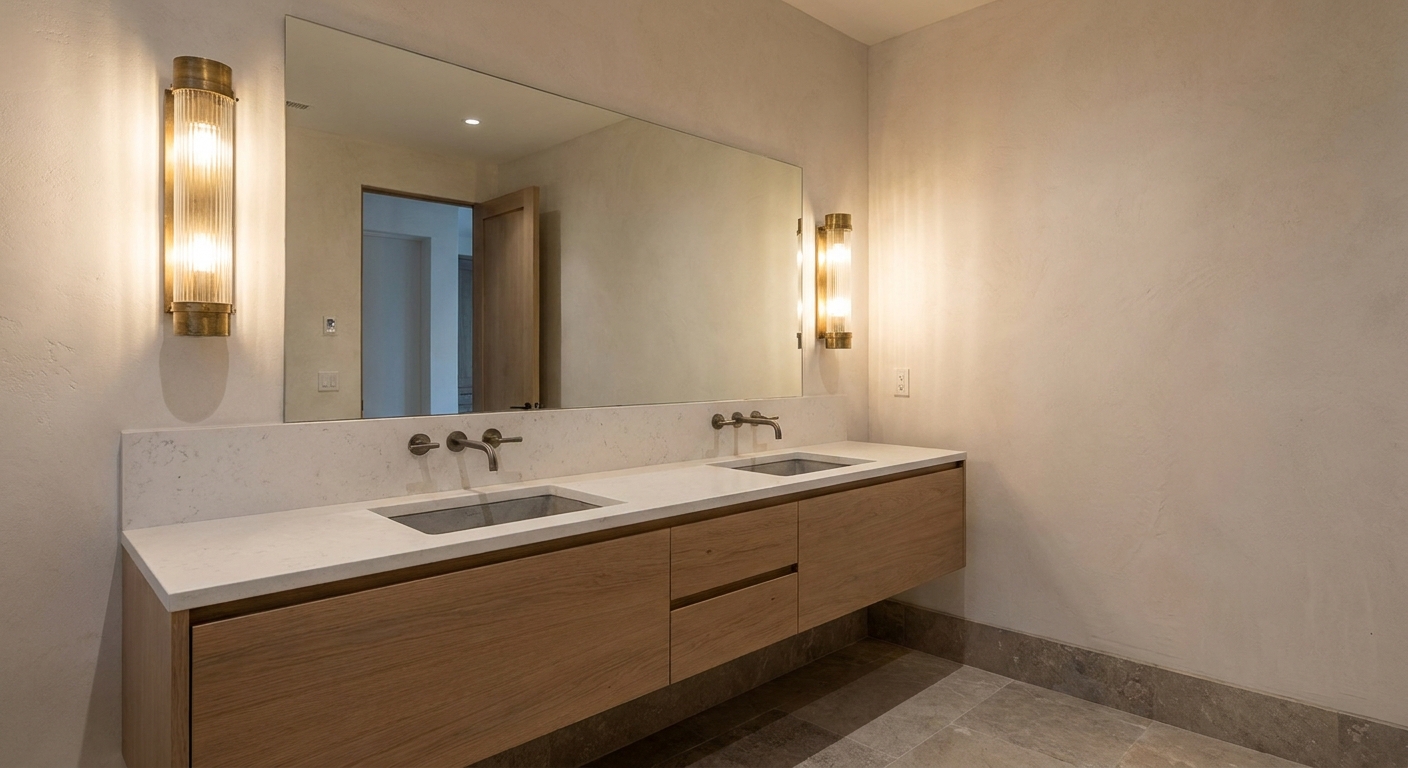
Wall-mounted globe sconces are a mid-century favorite because they add ambient light without taking up floor or surface space. They’re especially handy in:
- Hallways and stairs: soft guidance lighting
- Bedrooms: bedside reading and glow
- Bathrooms: balanced face lighting when placed well
If you’re deciding between lamps, sconces, and pendants at the bedside, this comparison can help: Bedside Lighting: Lamps vs Sconces vs Pendants.
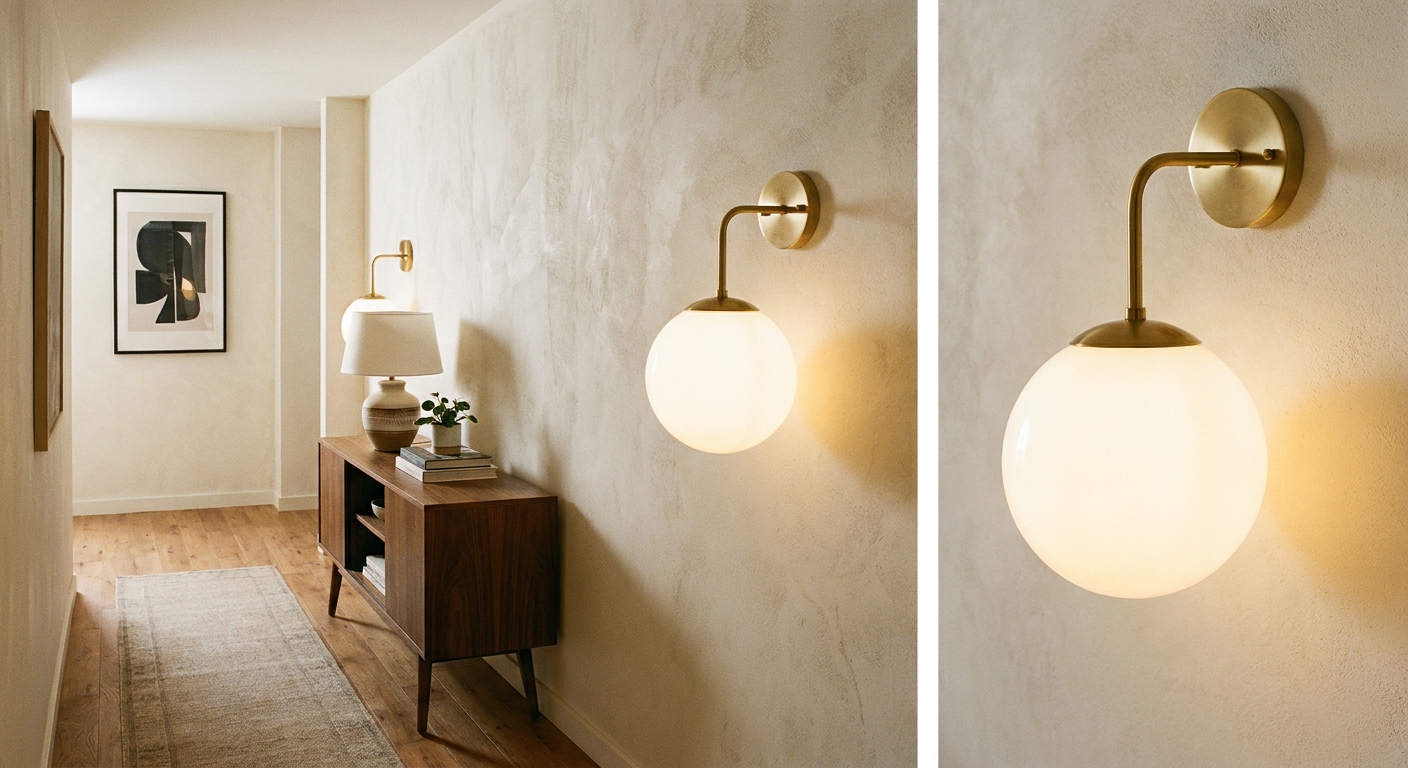
Brass finishes: warm metal that makes everything feel sunnier
Brass is a mid-century classic because it adds warmth without feeling rustic. But “brass” can mean several different looks, and choosing the right one helps your fixture feel intentional.
Common brass finish types
- Polished brass: bright, reflective, and bold. Great for glamorous mid-century vibes.
- Satin brass: softer shine, modern-friendly, and less prone to looking flashy.
- Aged or antique brass: slightly darker, more mellow, and forgiving with fingerprints.
- Champagne brass: lighter, often a bit more neutral.
How to mix brass with other metals
Mid-century rooms often combine warm and cool elements, so mixing metals can look perfectly at home. A simple approach:
- Pick a “lead” metal (like brass) for the big statement fixtures.
- Use a “supporting” metal (like matte black or nickel) for smaller pieces like cabinet pulls or picture lights.
- Repeat each metal at least twice in the room so it feels planned.
How to use mid-century lighting in a contemporary home
Mid-century lighting can lean retro, but it doesn’t have to turn your space into a time capsule. Here are a few easy, modern-friendly ways to incorporate it.
1) Let one fixture be the star
Choose one strong mid-century piece (like a sputnik in the living room) and keep surrounding fixtures simpler. This keeps the room from feeling theme-y.
2) Pair curves with clean lines
Globes look especially fresh with contemporary straight lines: slim sofas, simple cabinetry, modern trim. The contrast feels intentional and calm.
3) Layer the light, not just the style
Mid-century fixtures are often decorative, but the best rooms still need layered lighting: ambient, task, and accent. If you want a friendly step-by-step approach, visit Lighting Basics & Education and then hop to Room-by-Room Lighting for targeted ideas.
4) Use warm color temperature for that vintage glow
Even the prettiest brass can feel a little flat under cool, bluish bulbs. For most living areas, warm-white light is the cozy sweet spot.
If you’re choosing bulbs for a bathroom vanity, color temperature is extra important for skin tones. This guide can help: Best Color Temperature for Bathroom Vanity Lighting.
5) Shop smart for comfort and safety
When you are buying a statement piece online, look for a safety certification mark like UL or ETL in the listing. And if the fixture uses exposed bulbs, plan ahead for comfort: dimming plus warm, lower-lumen bulbs usually looks more intentional than full blast brightness.
Room-by-room ideas
Entryway
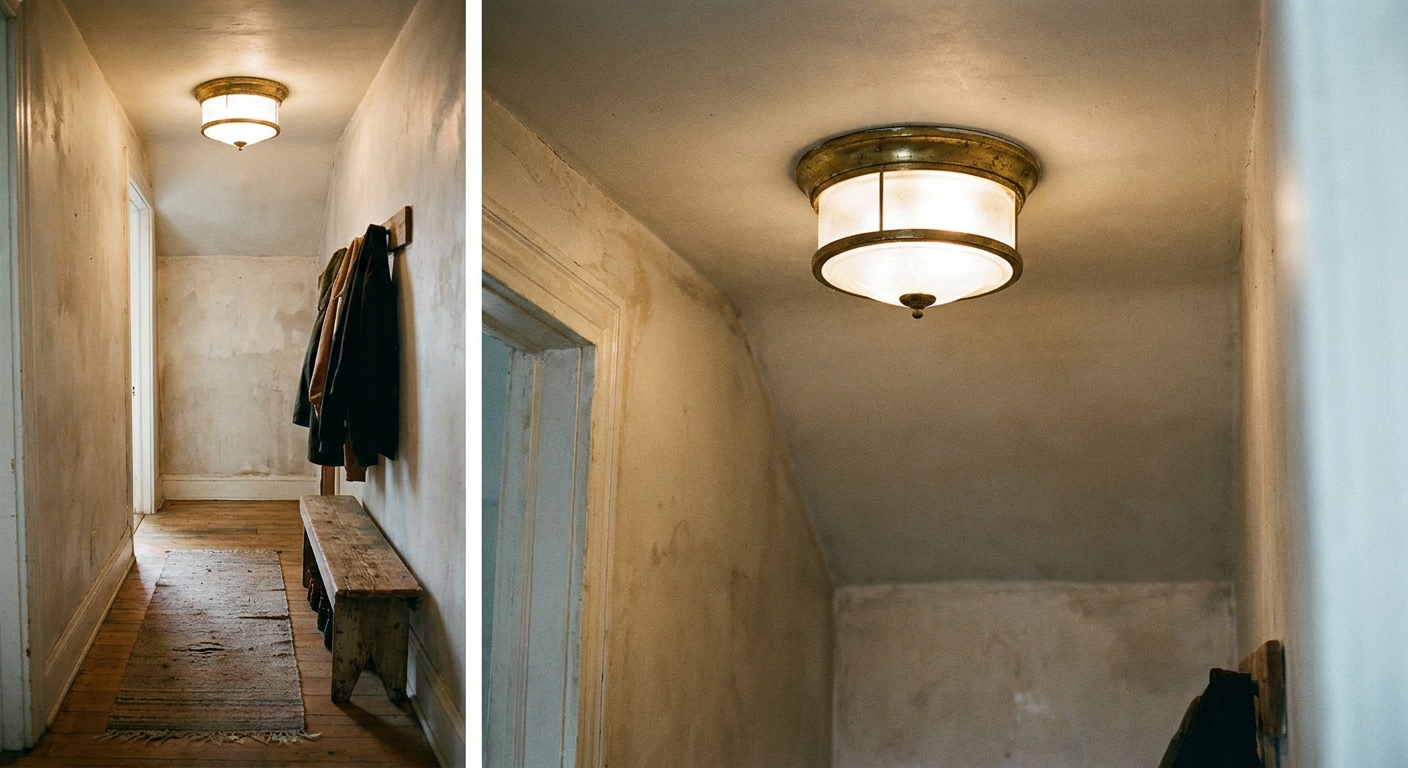
A brass semi-flush or a compact sputnik gives you that mid-century “hello!” without overwhelming a smaller space. For more layout help, visit Entryway Lighting.
Living room
If you do not have overhead wiring or want to avoid it, you can still bring mid-century vibes through plug-in sconces, arc floor lamps, and globe table lamps. This is a great companion read: Living Room Lighting Without Overhead Fixtures.
Kitchen
Globes over an island are a classic. Keep the glass opal if you want a softer look and fewer harsh reflections on counters. For a layered plan, see How to Layer Kitchen Lighting.
Hallway and stairs
Globe sconces can create gentle, even light for safer footing while keeping the look stylish and timeless. More ideas here: Hallway and Staircase Lighting Ideas for Safety and Style.
Home office
A brass task lamp or a globe fixture with a diffuser can feel mid-century while still supporting focus. If screens are part of your day, lighting placement matters for glare control: Home Office Lighting Setup: Reduce Screen Glare and Eye Strain.
Quick checklist before you buy
- Ceiling height: Taller ceilings can handle longer drops and bigger silhouettes.
- Glare control: Exposed bulbs look crisp but can feel harsh. Consider frosted bulbs, opal shades, or a dimmer.
- Finish match: Decide if you want brass to match other hardware, or intentionally stand out.
- Bulb base and limits: Check socket type and max wattage, especially on multi-arm sputniks.
- Total brightness: Multi-bulb fixtures add up quickly. As a rough comfort check, many rooms feel good with a few thousand total lumens on a dimmer, rather than locked at maximum output.
- Light direction: Downlight for tasks, outward glow for ambiance, and mixed for balance.
Mid-century modern lighting FAQ
Is mid-century modern lighting still in style?
Yes, and part of the reason is that the shapes are simple and flexible. Globes and warm metals mix well with contemporary, Scandinavian, transitional, and even minimalist rooms.
What color temperature looks best with brass?
Warm white (often 2700K to 3000K) usually brings out brass’s cozy, golden tone. Cooler light can make brass look flatter and, depending on the finish and the bulb’s spectrum, slightly less true-to-color.
Can you mix mid-century lighting with modern furniture?
Absolutely. Try one signature mid-century fixture, then keep the rest of the room modern and uncluttered. The contrast is what makes it feel current.
Do sputnik chandeliers provide enough light?
They can, but it depends on bulb count, lumen output, and whether the bulbs are exposed. A sputnik can be bright, sometimes too bright, so dimming is your best friend.
A cozy ending glow
Mid-century modern lighting is all about shape, warmth, and a little bit of sparkle. Choose a sputnik when you want a statement, reach for opal globes when you want soft glow, and use brass finishes to keep the whole space feeling sunlit and welcoming. If you’d like more style inspiration across fixture types, take a look at Fixtures & Styles.