Confused by bulb codes? Learn the difference between E26 and E12 screw bases and A19 and B11 bulb shapes, plus quick tips to avoid fit, glare, and dimmer iss...
Warm Lumen
How 3-Way Lamps Work

Lumi
Lumi is the friendly little firefly host of Warm Lumen, with a heart that glows as brightly as a perfectly placed pendant lamp. He loves discovering how soft bulbs, warm color temperatures, and layered lighting can transform any dark room into a welcoming retreat. Lumi is always fluttering by to share bright ideas and cheer you on as you create a beautifully lit space.
Published · Last updated
Let’s find the perfect glowing touch for every corner of your home! If you have a lamp that clicks from cozy to brighter to brightest, you’re holding one of lighting’s most useful little tricks: the 3-way lamp. Once you understand how it works, it becomes much easier to choose the right bulb, fix annoying “only one setting works” problems, or upgrade a favorite lamp for flexible brightness.
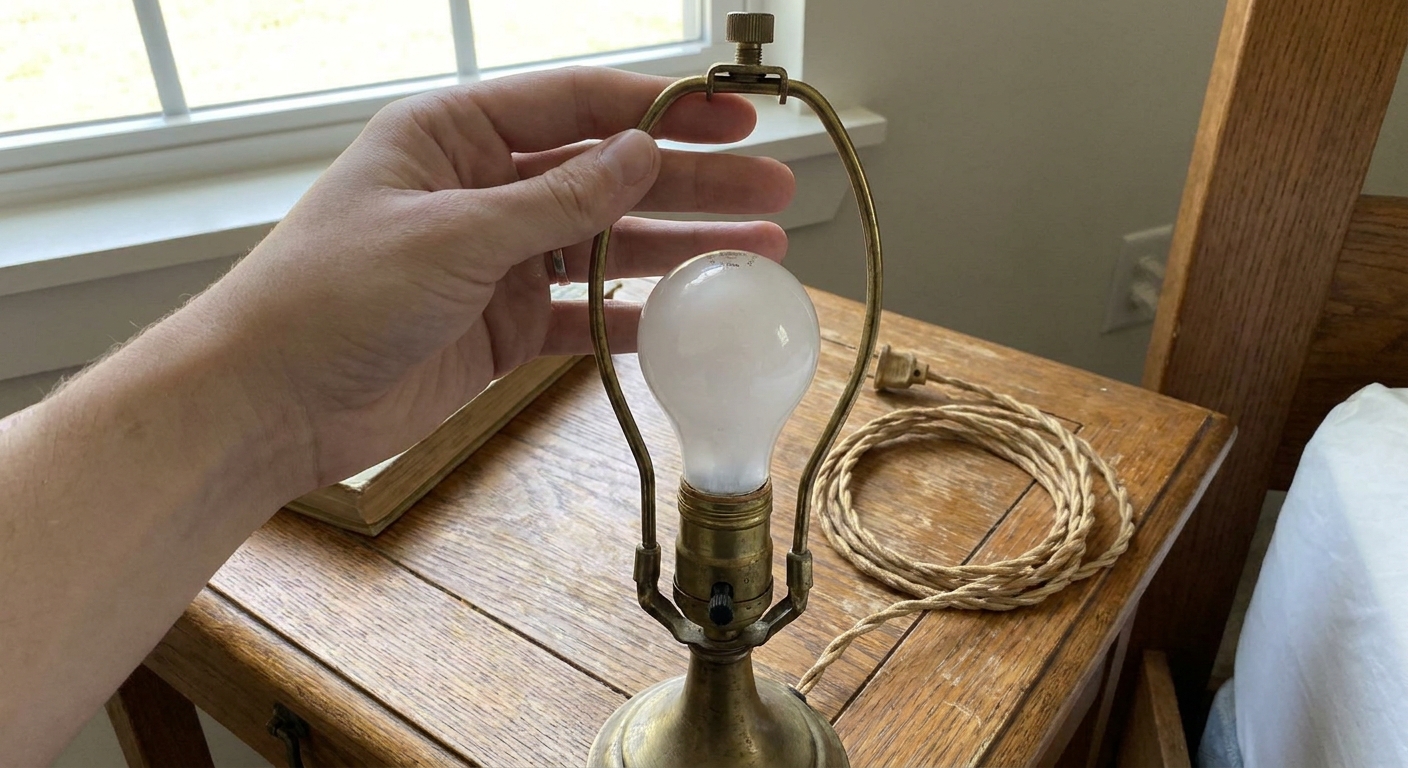
What a 3-way lamp actually does
A true 3-way lamp gives you three brightness levels plus off, usually in this click pattern:
- Off
- Low
- Medium
- High
- Off again
It’s not dimming in the smooth-slider sense. It’s switching between different internal circuits so the bulb can run at three different outputs.
Small quirk: Most lamps start at low and step up, but every once in a while you’ll meet a lamp that starts on high or feels like it “reorders” the steps. That’s usually down to the specific socket/switch design or wiring, not anything you’re doing wrong.
The simple mechanics: socket, switch, and a special bulb
Most 3-way table and floor lamps use three key parts working together:
- A 3-way socket with an internal switch that routes power in different ways.
- A 3-way bulb designed to provide two separate “steps” of light that can be used one at a time or together.
- A standard plug and cord, typically no different from a regular lamp’s cord. The real difference is in the socket.
How the bulb makes three levels
A classic incandescent 3-way bulb contains two filaments inside one bulb:
- One filament (example: 50W)
- The other filament (example: 100W)
- Both together for the high setting (50W + 100W = 150W)
LED 3-way bulbs mimic this behavior with internal electronics to create distinct steps. (Incandescent and LED are the most common today. 3-way CFLs exist but are less common, and they may have warm-up time or less crisp step changes.)
Why 3-way bulbs have a “weird” base
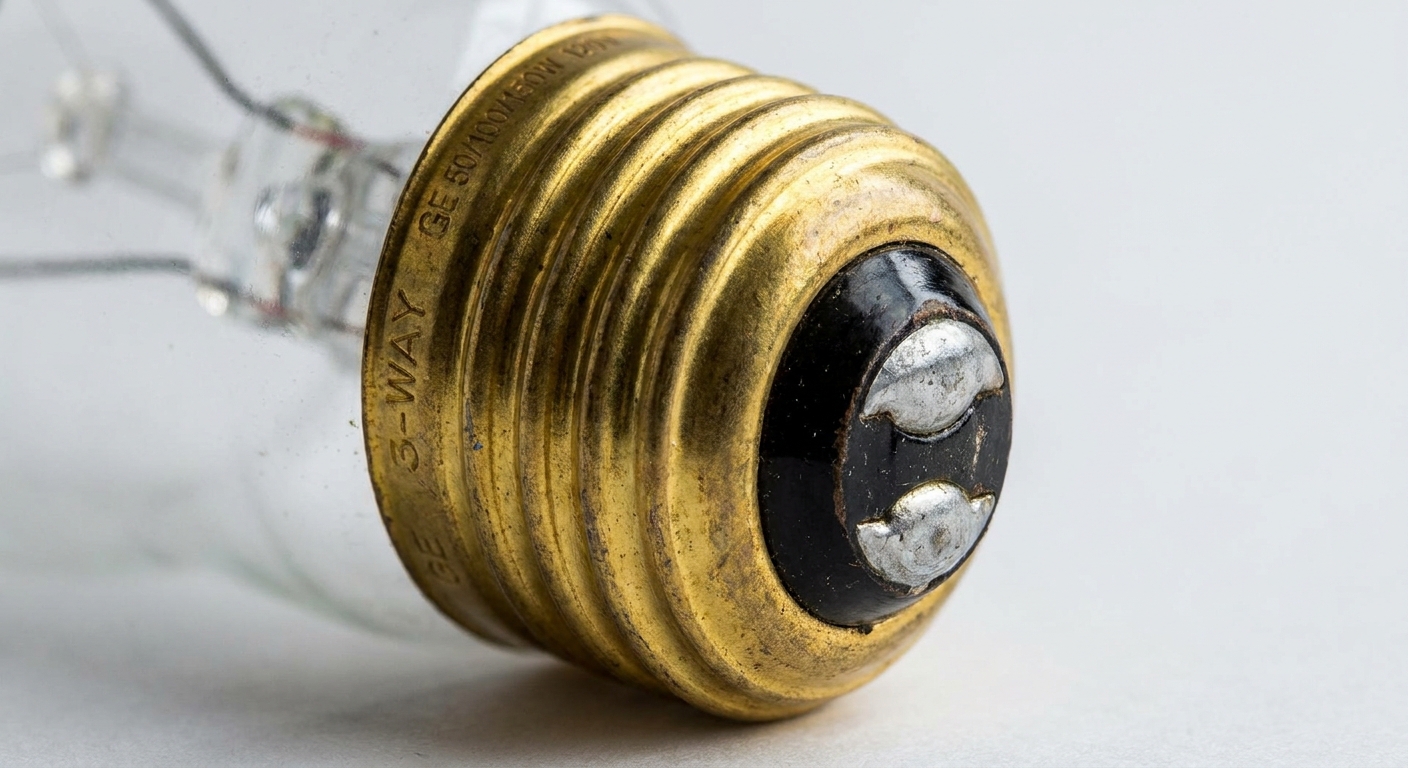
A 3-way bulb uses a special base with two separate contacts on the bottom plus the threaded shell. That allows the socket to energize one circuit, the other circuit, or both.
3-way vs dimmable: what’s the difference?
A 3-way lamp gives you three fixed brightness steps. A dimmable lamp (with a dimmer switch) can adjust across a range. They are not interchangeable systems.
- 3-way switch + 3-way bulb: low, medium, high steps.
- Dimmer switch + dimmable bulb: smooth up and down (when compatible).
Also, watch out for confusing packaging language. A bulb marketed as “3-way” should mean it has the two-contact base and works with a 3-way socket. “3-way dimmable” is sometimes used loosely in marketing and may just mean it dims, not that it’s a true 3-way bulb.
If you are dealing with flicker or buzzing on dimmers, the fix is usually about compatibility between LED bulbs and dimmers. Warm Lumen has a full guide here: How to Fix LED Flicker With the Right Dimmer.
How to tell if your lamp is truly 3-way
These quick clues usually reveal what you have:
- The socket clicks 3 times before returning to off.
- The old bulb is labeled with three wattages, like “50/100/150W” or sometimes “30/70/100W.”
- The socket is labeled “3-WAY” near the switch or inside the socket shell (not always visible).
If your lamp has a 3-way bulb but only gives one brightness, either the bulb is failing, the socket is worn, or the lamp is not actually a 3-way socket.
Choosing the right 3-way LED bulb
Picking a 3-way LED bulb is mostly about base size, brightness steps, color temperature, and shade comfort.
1) Match the base: E26 is most common
Most table and floor lamps use a standard medium base (E26 in North America). If you are unsure, this guide helps decode the most common bulb bases and shapes: Light Bulb Shapes and Bases (E26, E12, A19, B11).
2) Understand brightness on the package
Incandescent packages often show wattages like 50/100/150W. LED packages may show:
- Lumens per step (best case), for example 400/800/1200 lm
- Incandescent equivalent for each step
Lumens are the clearest way to compare brightness across bulb types. If you want help choosing a target brightness for a room, see: Calculate the Right Lumens for Any Room and Lumens vs Watts for LED Bulbs.
3) Pick a warm color temperature for cozy lamp light
For most living spaces, 3-way lamps shine best in 2700K to 3000K. That range keeps low mode relaxing instead of gloomy, and high mode bright without looking harsh.
4) Keep an eye on heat and socket ratings
Most fabric shades are not “sealed,” but airflow can still be restricted by tight glass, a globe shade, or a very snug drum that traps heat. If your lamp has very limited ventilation, look for LED packaging that says suitable for enclosed fixtures (it’s a helpful thermal rating).
If you’re using incandescent 3-way bulbs in an older lamp, check the socket’s maximum wattage label and do not exceed it.
5) Pay attention to flicker and color quality
If you notice shimmer, eye strain, or odd color rendering, check for better LED quality specs. High color accuracy can make fabrics, wood tones, and artwork look more natural. Warm Lumen’s guide: CRI Explained: Why Color Accuracy Matters in Home Lighting.
Common 3-way lamp problems (and what usually fixes them)
3-way lamps are simple, but the symptoms can be confusing. Here are the most common issues and likely causes.
Problem: Only one brightness level works
- Most likely: the bulb is not a real 3-way bulb (it is a standard bulb).
- Also common: one “step” inside the bulb failed.
- Possible: the 3-way socket switch is worn and no longer connects all settings.
Try: Test with a new known 3-way LED bulb first. If the problem remains, suspect the socket.
Problem: The lamp skips a setting (low to high, no medium)
- Common cause: one circuit inside the bulb is dead.
- Another cause: the socket’s internal contacts are bent, dirty, or worn.
Problem: The lamp works, but the switch feels loose or inconsistent
- Likely: the socket’s rotary switch mechanism is reaching end of life.
Problem: The bulb turns on, but it flickers on some settings
- Often: a low-quality LED 3-way bulb driver.
- Possible: a loose bulb in the socket (not fully seated).
- Possible: a worn socket contact that is not making firm connection.
Try: Unplug the lamp, let the bulb cool, then reseat it snugly. If flicker persists, swap to a better-quality 3-way LED bulb or replace the socket.
Problem: Nothing turns on
- Check first: outlet power, plug fit, and that the bulb works in another lamp.
- Then: inspect the cord for damage and the socket for scorching or melting.
If you see heat damage or smell burning, stop and repair or replace the lamp before using it again.
Upgrading a lamp to 3-way
Sometimes a lamp body is perfect, but it only gives on and off. Upgrading to 3-way brightness is possible in many traditional table and floor lamps, as long as the lamp is in good condition and has space for a standard replacement socket.
Option A: Smart bulb alternative (not true 3-way)
Use a standard lamp and add a smart bulb. This can be a great “no tools” way to get adjustable brightness, but it usually will not behave like a true 3-way lamp because a regular socket only supplies one circuit. You can still get app-based brightness control, but you will not click through three distinct steps at the socket.
If you are weighing smart bulbs versus wall controls in general, this guide helps: Smart Bulbs vs Smart Switches.
Option B: True 3-way upgrade (socket replacement)
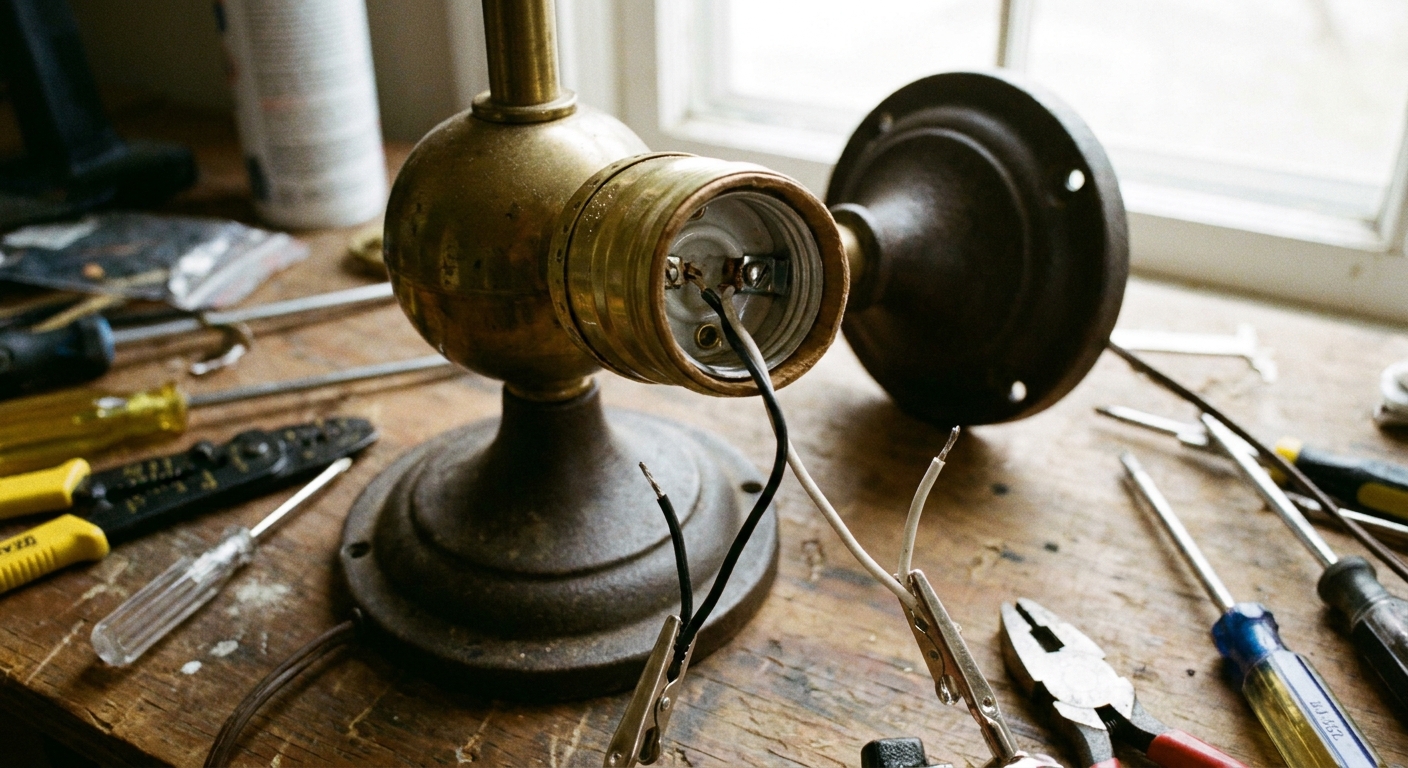
A true 3-way upgrade typically means replacing the lamp socket with a 3-way socket and then using a 3-way bulb.
- What changes: the socket and sometimes the harp or shade hardware if it is incompatible.
- What stays the same: most lamp bodies, cords, and plugs (unless worn).
Safety note: Any lamp rewiring involves household voltage. If you are not fully comfortable identifying hot and neutral conductors and making secure connections, it is safer to have a qualified repair shop or electrician handle the upgrade.
Troubleshooting checks first
Before assuming the lamp needs repair, try these gentle checks:
- Confirm the bulb: Make sure it is labeled 3-way and fits the correct base.
- Try a different 3-way bulb: One failed step inside the bulb can mimic a socket problem.
- Wipe external contact points: Unplug the lamp and wipe dust from the bulb base and the accessible socket shell area with a dry cloth. Do not spray cleaner into the socket and do not insert anything into the socket.
- Reseat the bulb: Many “random” issues are simply a bulb that is not fully threaded in.
- Test the outlet: Plug in a different device to confirm the outlet is live.
3-way bulb shopping tips that prevent glare
A 3-way lamp is all about comfort. A few choices can make the high setting useful without turning the room into a spotlight.
- Choose a shade that diffuses: A well-chosen lampshade can soften high mode dramatically. See: Choosing the Right Lampshade.
- Use warm white: 2700K is a classic “lamp glow” that keeps the room welcoming.
- Avoid bare bulb exposure: Clear glass with a visible LED array can feel sharp at eye level. If you love the clear look, consider bulbs designed for softer sparkle. See: LED Edison Bulbs: Vintage Glow Without Glare.
FAQ: quick answers about 3-way lamps
Can you use a regular bulb in a 3-way lamp?
Yes. It will work, but you will usually only get one brightness level (plus off), even though the switch still clicks through multiple positions.
Can you use a 3-way bulb in a regular lamp?
Yes. It will light, but typically only one of the bulb’s circuits will be powered, so you will get only one of the three levels.
Do 3-way LED bulbs work in older lamps?
Usually yes, as long as the lamp has a true 3-way socket and the base size matches. If the lamp’s socket is worn, an LED bulb may expose the issue more clearly because LEDs are sensitive to poor electrical contact.
Is a 3-way lamp the same as a dimmable lamp?
No. 3-way lamps switch among fixed steps. Dimmers vary brightness smoothly and rely on compatible dimmable bulbs and switches.
What brightness should a 3-way lamp be?
It depends on the job. Many people like something like:
- Low: soft ambient glow for winding down
- Medium: comfortable room light
- High: reading, puzzles, cleaning, or balancing a room with no overhead light
If you want a more precise target, use lumens as your guide and match the lamp’s role in the room: Calculate the Right Lumens for Any Room.
A gentle final glow
3-way lamps are one of the easiest ways to add layers to a space, especially in living rooms and bedrooms where the same corner needs to feel cozy at night and bright enough for real life during the day. With the right 3-way LED bulb and a healthy socket, that familiar click-click-click becomes a tiny lighting superpower.
For more glow-building basics, take a look at Lighting Basics & Education.