Stop guessing by watts. Learn what lumens really mean, use an easy 40W–100W replacement chart, and get quick tips on Kelvin color temperature, CRI, dimming, ...
Warm Lumen
Light Bulb Shapes and Bases: E26, E12, A19, and B11

Lumi
Lumi is the friendly little firefly host of Warm Lumen, with a heart that glows as brightly as a perfectly placed pendant lamp. He loves discovering how soft bulbs, warm color temperatures, and layered lighting can transform any dark room into a welcoming retreat. Lumi is always fluttering by to share bright ideas and cheer you on as you create a beautifully lit space.
Published · Last updated
Let’s find the perfect glowing touch for every corner of your home. Bulb boxes love to toss around codes like E26, E12, A19, and B11 like everyone speaks fluent lighting. The good news is these labels are simple once you know what you are looking at.
Here is the cozy secret: bulbs have two “identities” that must match your fixture. One is the base (the screw part). The other is the shape (the glass part). Get the base right first, then make sure the shape physically fits and looks right.
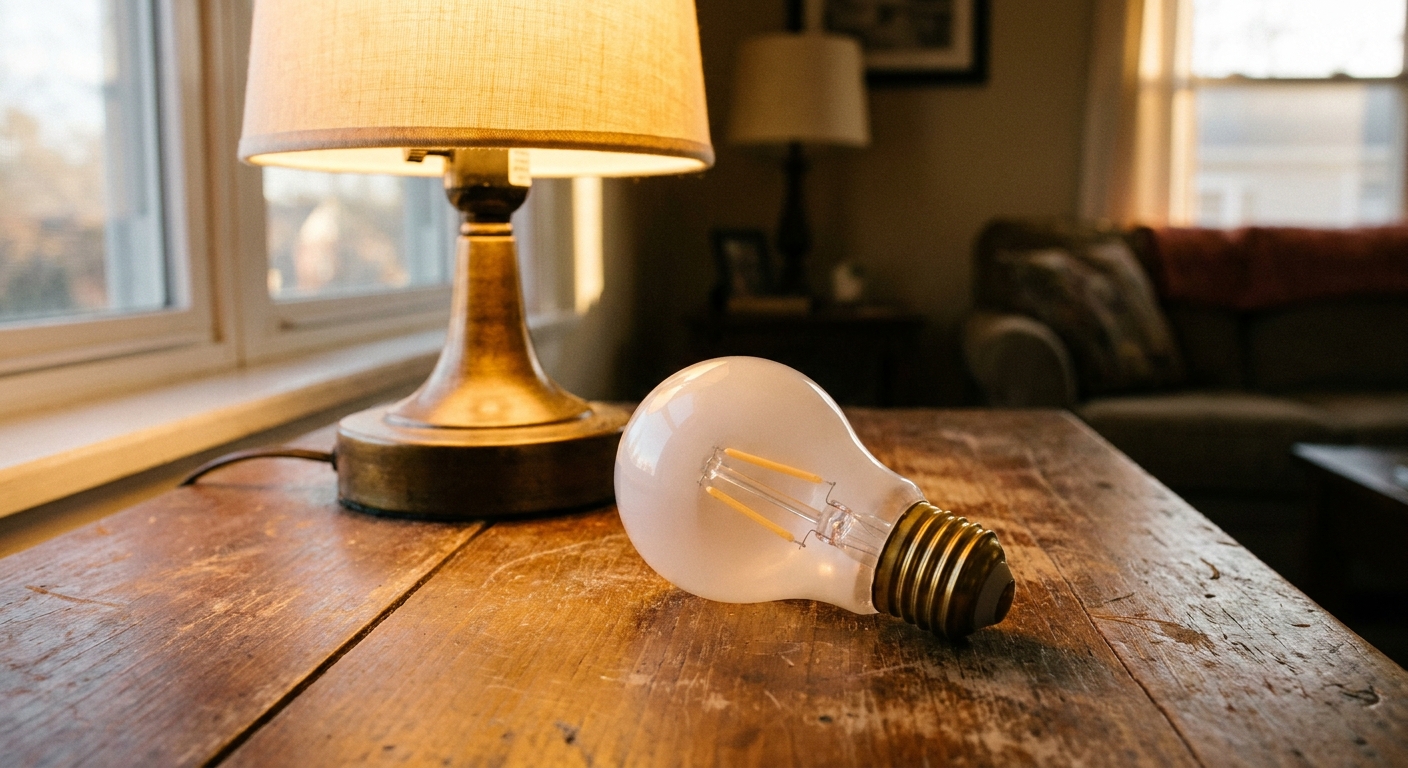
Start here: base vs shape
What “E” means (E26, E12)
E stands for Edison screw, the most common screw-in bulb base style in North America. The number is the diameter of the base in millimeters.
- E26: about 26 mm across. This is the standard medium base used in most table lamps, floor lamps, many ceiling fixtures, and many pendant lights.
- E12: about 12 mm across. This is the candelabra base used in candle-style chandeliers, wall sconces, some ceiling fans, and decorative fixtures.
Quick note: You may occasionally see E27 on packaging. It is extremely close to E26, but it is not identical. Do not force a bulb that does not thread in smoothly, and always follow your fixture label.
What A19 and B11 mean
These describe the glass shape and a standard sizing convention.
- A is the classic household bulb shape (the common “general service” profile). The number is the bulb’s maximum diameter in eighths of an inch. So A19 is about 19/8 inch wide (about 2.4 inches).
- B is a smaller decorative shape often used in chandeliers and sconces, including blunt tip and flame tip styles. The number is also the maximum diameter in eighths of an inch. So B11 is about 11/8 inch wide (about 1.4 inches).
The key: the shape code tells you how the bulb looks and whether it fits under a shade or inside a globe. The base code tells you whether it will screw in at all.
E26: the everyday screw base
E26 is the base you will see most often around a home. If a fixture says “medium base,” it is almost always E26.
Common fixtures that use E26
- Table lamps and floor lamps
- Many flush mounts and semi-flush ceiling lights
- Pendants and some chandeliers
- Some vanity lights (especially with standard sockets)
What to watch for with E26
- Shade clearance: the bulb can be the right base and still be too wide or too tall for the shade.
- Enclosed fixtures: enclosed fixtures trap heat. Even when a bulb fits, heat can shorten LED lifespan or cause early failure. If your fixture fully surrounds the bulb, look for bulbs labeled “suitable for enclosed fixtures” and follow the fixture rating.
- Dimmers: if the fixture is on a dimmer, choose a bulb labeled dimmable.
If you are also deciding how bright to go, visit Calculate the Right Lumens for Any Room and pair the correct base with the right brightness.
E12: the smaller candelabra base
E12 bases are slim and elegant, designed for fixtures where the bulb is part of the look.
Common fixtures that use E12
- Chandeliers with candle-style sockets
- Wall sconces with decorative bulbs
- Some ceiling fans and accent fixtures
What to watch for with E12
- Bulb width matters more: chandelier arms and candle cups can be tight, so bulb diameter is not just aesthetics, it is fit.
- Glare and sparkle: clear bulbs show the filament and look crisp, while frosted bulbs soften the glow. If your fixture uses glass globes, Clear vs Frosted Glass Globes can help you choose a comfortable look.
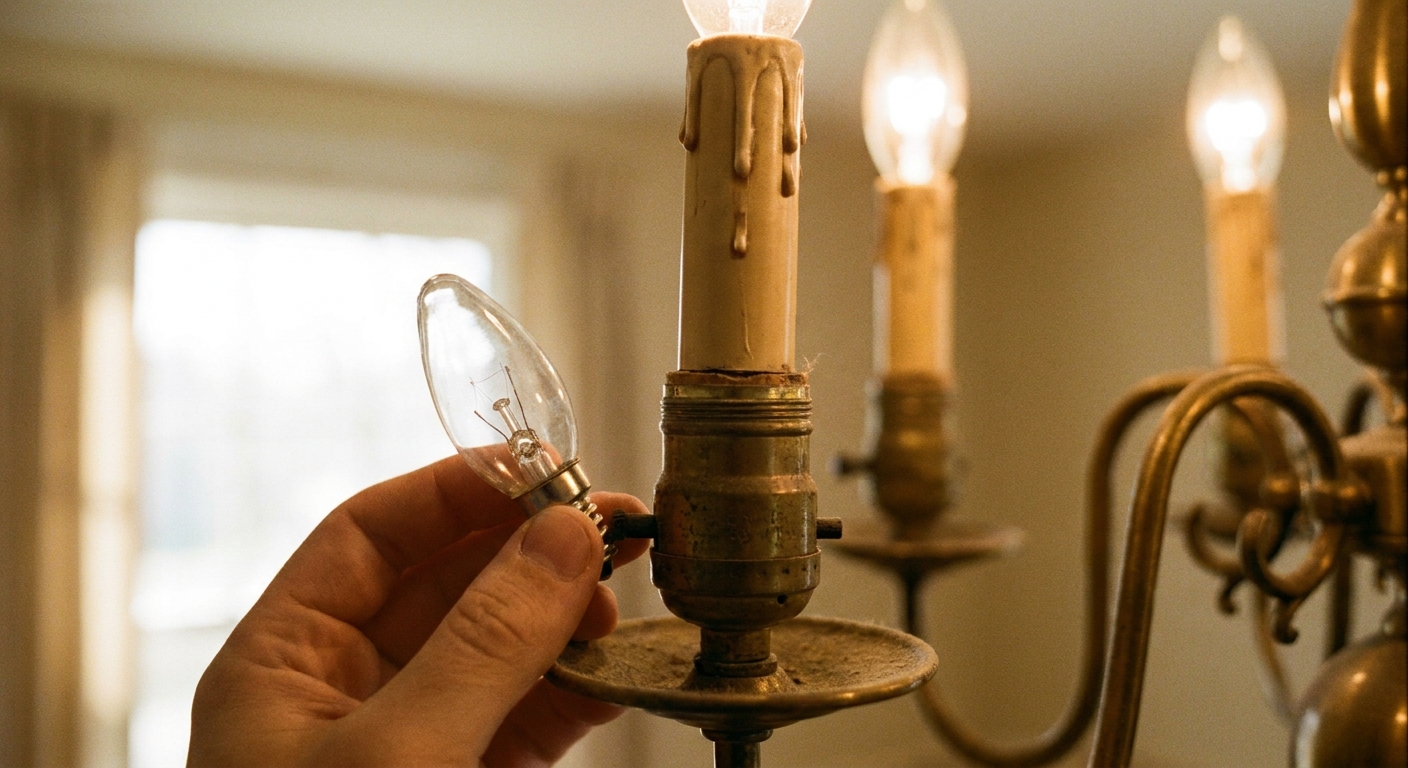
A19: the classic bulb shape
A19 is the familiar pear-shaped bulb. It is incredibly common, especially paired with an E26 base.
What A19 usually means in real life
- Most A19 bulbs are E26, so you will often see packaging that reads A19 E26.
- A19 is a friendly fit for many lampshades and open-bottom fixtures.
- A19 bulbs come in many finishes: clear, frosted, “soft white,” vintage-style filament, and more.
A19 and light quality
Many people accidentally buy an A19 that “fits” but feels wrong because of the light quality.
- Lumens = brightness (how much light you get).
- Kelvin (K) = color temperature (how warm or cool the light looks).
If you want a cozy, welcoming glow, warmer temperatures are usually a good starting point. For a deeper walkthrough, visit Lumens vs Watts for LED Bulbs.
B11: the candle-style bulb shape
B11 bulbs are common in chandeliers and sconces because they look graceful and decorative. Many B11 bulbs use an E12 base, so you will often see B11 E12 together.
When B11 is the best choice
- Open chandeliers where you can see the bulbs
- Sconces where the bulb is part of the style
- Fixtures with narrow shades or small glass sleeves
Flame tip vs blunt tip
Some B-style bulbs have a pointed flame tip. Others are more rounded or blunt. Your fixture does not usually require one or the other, but the style can change the whole mood of a chandelier.
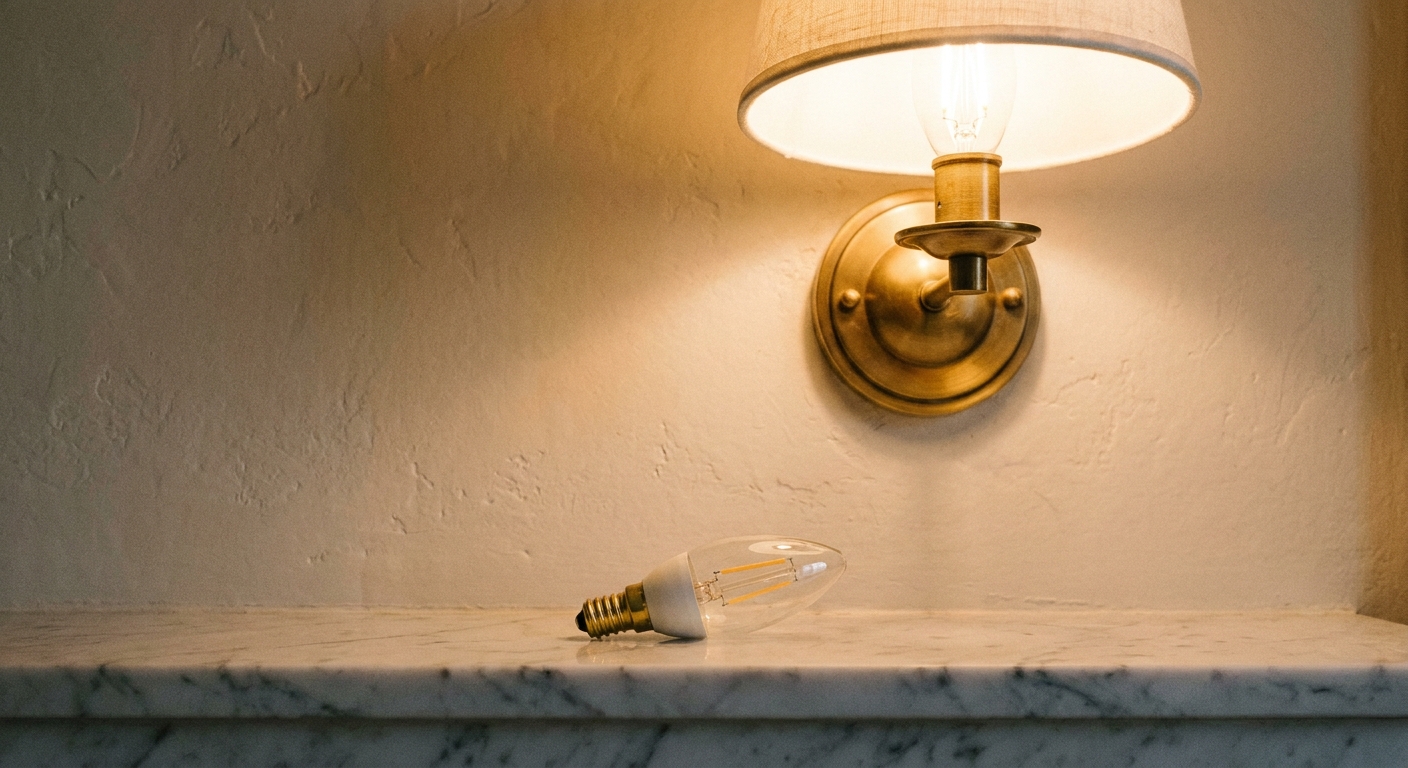
Quick cheat sheet
Use this as a simple translation when you are standing in the bulb aisle or scrolling online.
| Code | What it describes | What to remember |
|---|---|---|
| E26 | Base type and size | Standard medium screw base for most lamps and many ceiling fixtures |
| E12 | Base type and size | Smaller candelabra screw base for chandeliers and many sconces |
| A19 | Bulb shape and size | Classic household bulb shape, about 19/8 inch wide, often paired with E26 |
| B11 | Bulb shape and size | Decorative candle-style bulb, about 11/8 inch wide, often paired with E12 |
Buy the right replacement
Step 1: Match the base first
Look at the old bulb or the fixture label. You are looking for E26 or E12 most of the time.
- If the socket is the “standard” size, it is likely E26.
- If the socket is slim like a candle bulb, it is likely E12.
Step 2: Confirm the shape will fit
Even with the correct base, the bulb can be:
- Too wide for a narrow shade or small glass globe
- Too tall for a covered fixture or short shade
- Too bright when the bulb is exposed at eye level
Step 3: Check fixture limits and bulb notes
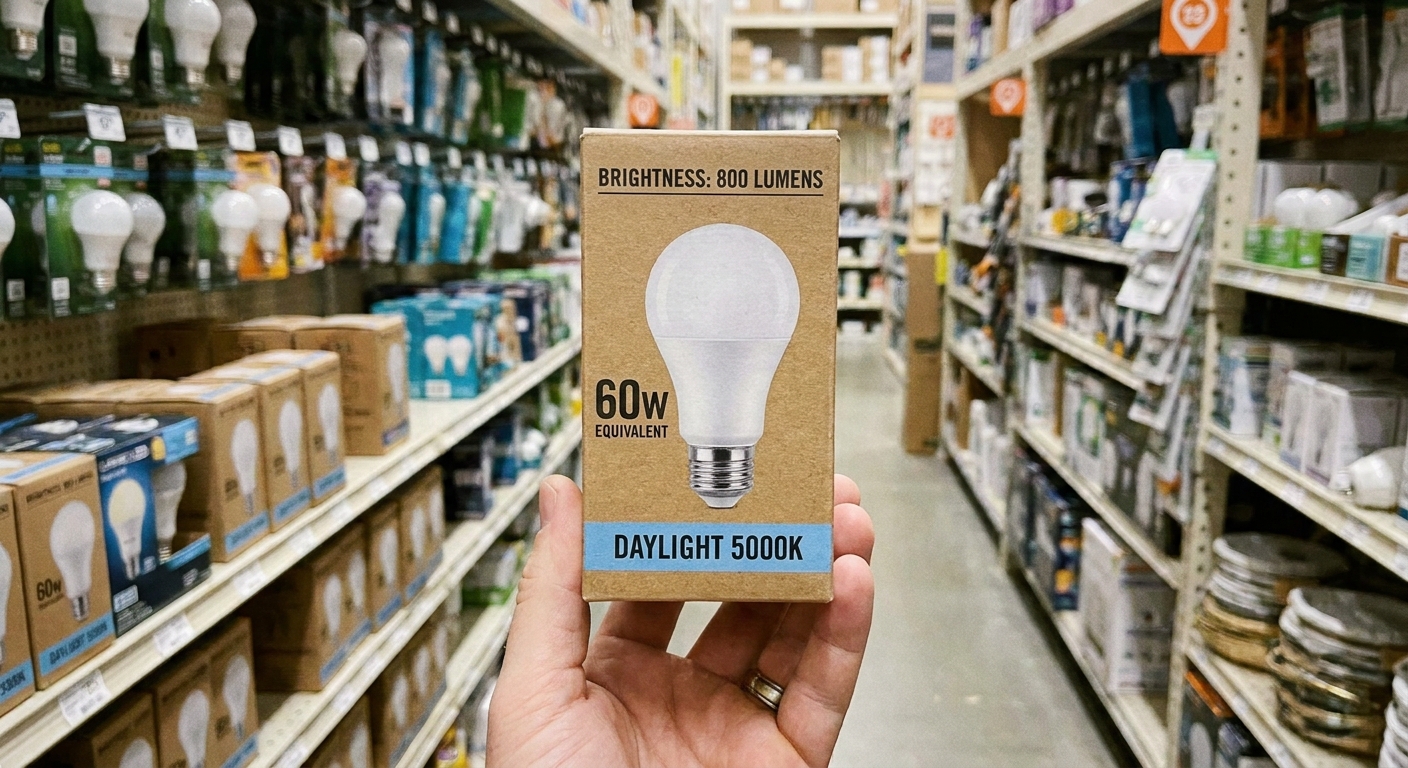
- Max wattage: follow the fixture label and compare using the bulb’s actual watts, not the “60W equivalent” marketing line.
- Enclosed fixture compatibility if applicable
- Dimmable if you have a dimmer switch
Step 4: Choose the glow you want
For living spaces, many people enjoy warm white light. For task-heavy areas, you may prefer something a bit cleaner and brighter. If you want help balancing comfort and clarity in specific rooms, Lighting Basics & Education is a helpful next stop.
Common mix-ups
“I bought A19 but it does not screw in.”
A19 is a shape, not the base. You can find A-shaped bulbs with different bases. Make sure the box also says E26 if your fixture needs a medium base.
“My chandelier uses E12 but the bulb looks wrong.”
E12 is the base, but the shape might need to be B11 (decorative candle-style) or another slim decorative shape to match the fixture’s look and spacing.
“The bulb fits, but the shade glows harshly.”
That is often a bulb finish issue. A clear bulb can create sharper points of brightness. A frosted bulb can soften the shade glow and reduce sparkle.
“My new LED flickers on a dimmer.”
Make sure the bulb is dimmable and compatible with your dimmer type. If you are deciding between smart bulbs and smart switches for better control, Smart Bulbs vs Smart Switches can help you choose.
FAQ
Is E26 the same as “standard”?
In many homes, yes. “Standard” or “medium” base usually means E26 in North America.
Is E12 the same as “candelabra”?
Yes. If a fixture says “candelabra base,” it is almost always E12.
Are A19 and B11 measurements?
They are shape families with a sizing convention. In U.S. naming, the number typically refers to the bulb’s maximum diameter in eighths of an inch. In everyday shopping, the most important thing is that the bulb physically fits your fixture.
Can I use an adapter to change E12 to E26 or vice versa?
Adapters exist, but they can create clearance issues, extend the bulb length, and sometimes conflict with fixture ratings. For the simplest, safest match, it is best to use the base type the fixture was built for.
What if my fixture label is missing?
Use the old bulb as your guide. Read the markings near the base, and match the base and shape. If the fixture is enclosed or recessed in a way that traps heat, look for bulbs labeled suitable for enclosed fixtures.
A gentle final glow
When bulb packaging gets bossy with codes, remember this simple rule: base first, then shape. E26 and E12 tell you what screws in. A19 and B11 tell you what profile you are bringing to the room. Match those two, then pick the brightness and warmth that makes your space feel welcoming.