Create a kitchen that feels both bright and welcoming. Learn how to combine recessed ambient light, under-cabinet task lighting, and pendants—with spacing, h...
Warm Lumen
LED Edison Bulbs: Vintage Glow Without Glare

Lumi
Lumi is the friendly little firefly host of Warm Lumen, with a heart that glows as brightly as a perfectly placed pendant lamp. He loves discovering how soft bulbs, warm color temperatures, and layered lighting can transform any dark room into a welcoming retreat. Lumi is always fluttering by to share bright ideas and cheer you on as you create a beautifully lit space.
Published · Last updated
Let’s find that vintage Edison sparkle without the squinting. LED Edison bulbs can deliver the cozy filament look you love, but the secret is choosing the right glass tint, brightness, and color temperature, especially when the bulb is fully visible.
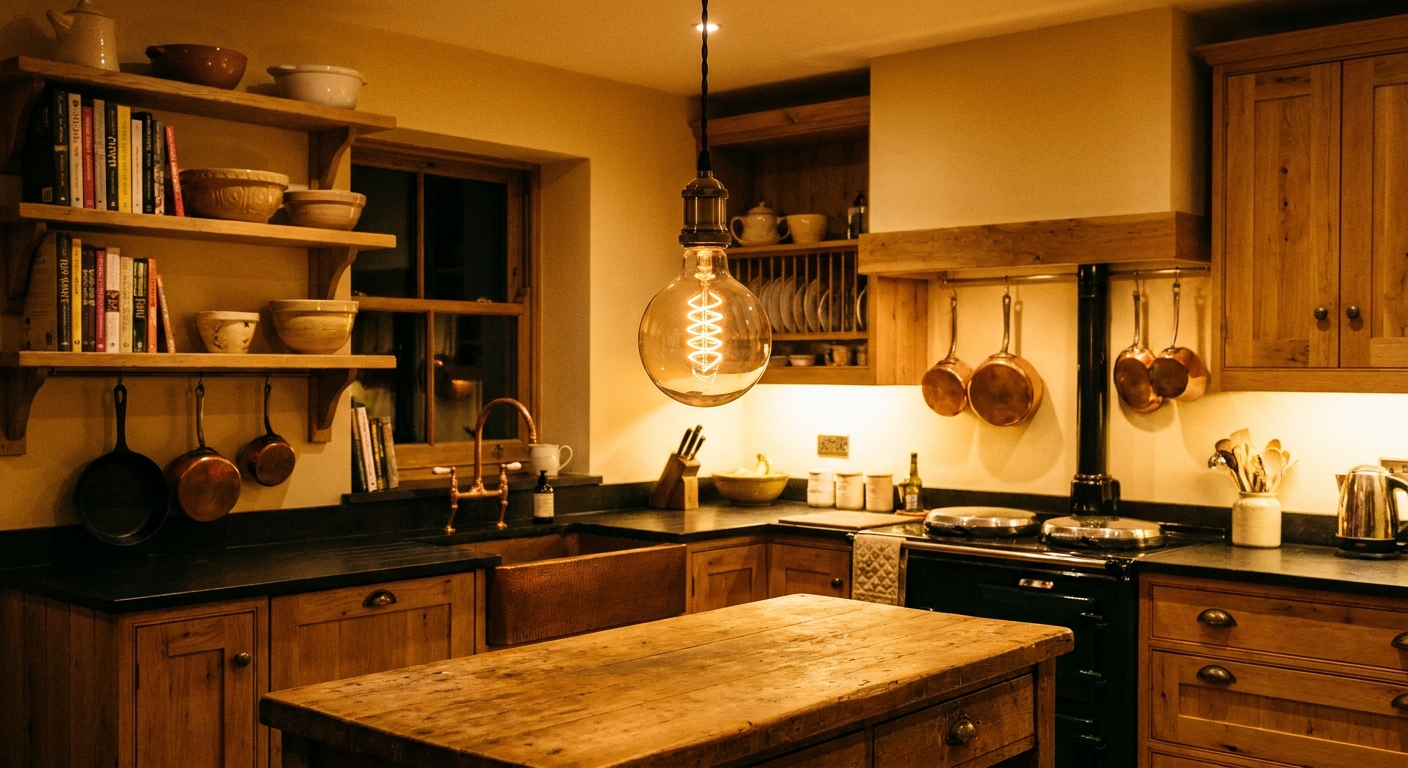
What makes an LED Edison bulb feel vintage
Classic Edison style comes from a few visual cues, even when the bulb is modern LED:
- Visible filaments (usually LED filament strips) that look like glowing threads.
- Warm, golden light that flatters wood, brass, and cozy paint colors.
- Clear or amber glass that changes how intense the filament appears to your eyes.
- Decorative shapes like ST19, ST64, G25 globe, or tubular styles that suit exposed sockets.
Because these bulbs are designed to be seen, comfort matters as much as style. A gorgeous filament can still feel harsh if the bulb is too bright, too cool, or aimed right at eye level.
Amber vs clear glass
Amber-tinted (or smoked) glass
If you want maximum cozy and minimum glare, amber glass is usually the safest pick for exposed-bulb fixtures.
- Best for: open pendants, bare-bulb sconces, statement chandeliers, and fixtures at eye level.
- Look: richer, candlelike glow. Filaments look softer and less piercing.
- Watch for: many amber-tinted models are designed with lower delivered lumen output than similar clear versions, so they often read dimmer and gentler in real life.
Clear glass
Clear glass is crisp, classic, and bright, but it is also more likely to show glare in exposed fixtures.
- Best for: fixtures with shades, globes, cages, or positions where you do not look directly at the bulb.
- Look: sharper filament definition and higher perceived brightness.
- Watch for: the “bare spotlight” feeling if lumens are too high or the bulb sits at eye level.
Firefly tip: If the fixture is truly bare and at eye height, start with amber. If the bulb is partially shielded or higher up, clear can work beautifully.
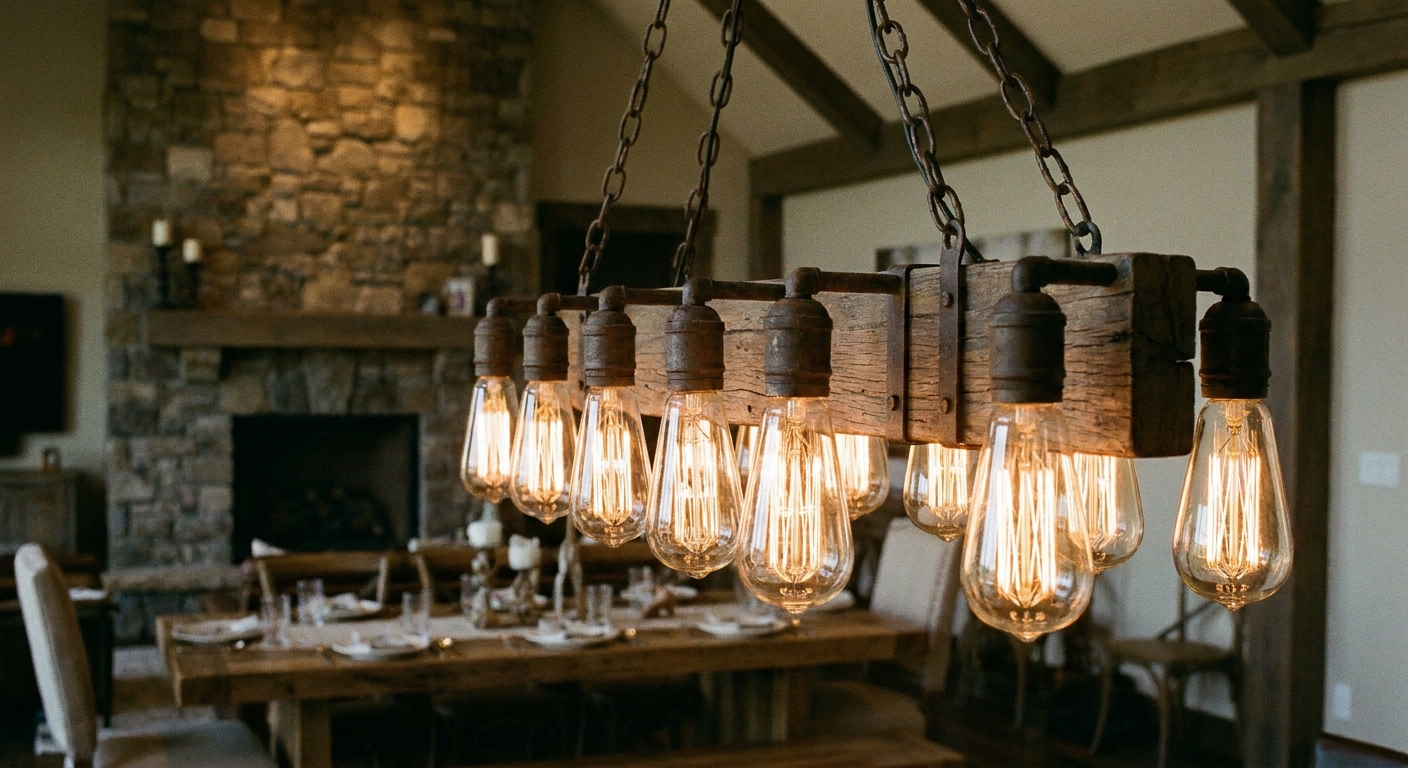
The biggest mistake: too bright
When a bulb is exposed, brightness that would feel fine behind a shade can feel intense. Instead of shopping by watts, shop by lumens (brightness).
Quick note: The “right” lumen number depends on the room size, the fixture height, whether the bulb is shaded, and how many bulbs you are using together.
Quick lumen guide
- 150 to 250 lumens: soft mood lighting, restaurants-at-home vibe, bedside glow.
- 300 to 450 lumens: gentle ambient light for a small room or a cluster of pendants.
- 500 to 800 lumens: can feel glaring when exposed unless the bulb is well-shielded or dimmed.
If you love the look of multiple exposed bulbs (a linear chandelier, a sputnik fixture, or a multi-pendant bar), choose lower lumens per bulb and let the group create the total glow.
Choose the right warmth
For vintage style, aim warm. Most Edison-style LEDs are designed around warm tones, but labels vary.
- 2200K to 2400K: very warm, candlelike, strong vintage mood.
- 2700K: warm white, still cozy, often easier to live with for everyday use.
- 3000K and up: can start feeling more modern than vintage, especially in clear glass.
For more help dialing in warmth across a home, flutter over to Lighting Basics & Education. If you are choosing bulbs specifically for grooming and accurate color, this guide on bathroom vanity color temperature is a handy companion.
Want cozy when dimmed
Some LED Edison bulbs are labeled Warm Dim (or “dim-to-warm”). That means as you dim them, the color temperature shifts warmer, similar to old-school incandescent.
- Great for: dining rooms, living rooms, bedrooms, and anywhere you want a golden evening glow.
- Important: Any dimmable LED works best with an LED-rated dimmer. Warm dim is the same, and it is worth checking compatibility notes if dimming is jumpy or flickery.
If you are building a layered lighting plan where dimming matters, you may also enjoy how to layer kitchen lighting, even if your “kitchen” is really just your favorite gathering zone.
Match the bulb shape
Edison bulbs look best when the shape feels intentional with the fixture. Here are common shapes and where they shine:
- ST19 or ST64 (teardrop): the classic Edison silhouette for pendants, sconces, and lantern-style fixtures.
- G25 globe: wider, rounder bulb that looks balanced in vanity lights and globe-friendly sockets.
- T10 or T14 tubular: sleek and modern-vintage, great for linear bars and minimalist exposed sockets.
- A19 “standard” shape: can work, but often looks less special in exposed fixtures unless the filament is gorgeous.
Also check the base size. Most home fixtures use E26 (standard). Some chandeliers and petite sconces use E12 (candelabra), where you can find mini Edison styles too.
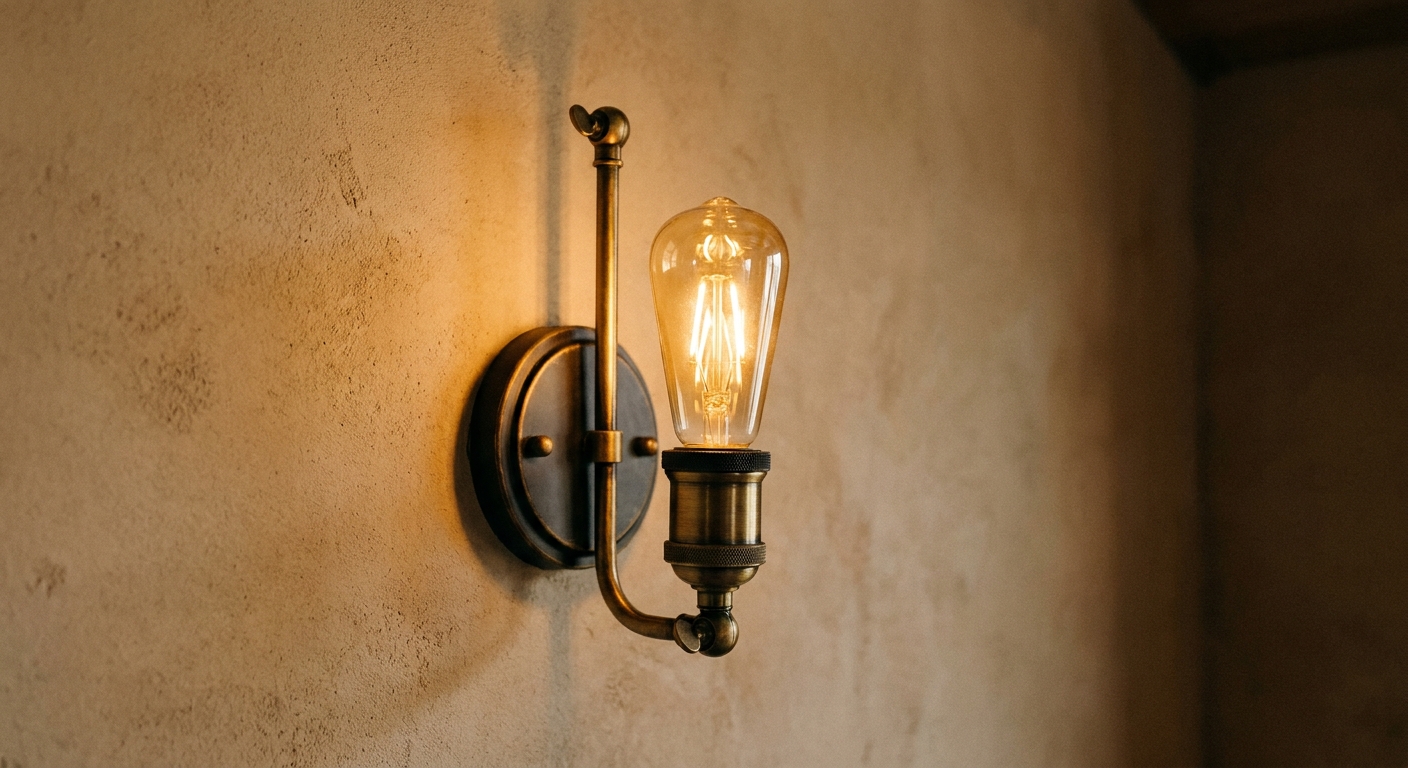
Beam and glow shape
For that authentic “bulb as decor” look, it helps if the light spreads evenly. Many filament-style LEDs are close to omnidirectional (they throw light around the bulb), but not all. If the box mentions a wide beam angle or “omnidirectional,” clear-glass bulbs tend to look more naturally vintage, especially in open fixtures.
Glare control
If glare has ever made you avoid turning on a light, these details help a lot with Edison-style LEDs:
- Choose lower lumens when bulbs are at eye level.
- Pick amber glass for softer filament sparkle.
- Use shades, globes, or cages if you love clear glass but want comfort.
- Position matters: a bare bulb next to a couch or beside a bed will feel brighter than one above a walkway.
- Consider matte finishes (sometimes labeled “frosted” or “satin”) if the fixture style allows it. You will lose some filament crispness, but gain comfort.
For rooms where you are often looking up while moving around, explore safety-focused ideas in hallway and staircase lighting.
Dimming
Not all LEDs dim the same way. For Edison bulbs, dimming is part of the charm.
What to look for
- “Dimmable” clearly stated.
- “Compatible with LED dimmers” or a compatibility note.
- Warm dim if you want the color to get cozier as it gets dimmer.
Common problems and fixes
- Flicker: often a dimmer mismatch. An LED-rated dimmer usually helps.
- Not dimming low enough: try a different bulb or a dimmer with low-end trim adjustment.
- Uneven glow between bulbs: use the same model and batch if possible, especially in multi-bulb fixtures.
Color quality
To keep that warm glow from looking muddy, check for CRI (color rendering). Higher CRI usually means colors look more natural under the light.
- Good target: CRI 90+ for areas where you care about how wood tones, textiles, and skin tones look.
- Fine for pure ambience: CRI 80+ can still feel lovely for mood lighting.
Bulbs for common fixtures
Open pendants
- Amber glass + 2200K to 2700K
- 150 to 450 lumens, depending on how many pendants and how high they hang
- Dimmable, ideally warm dim
Sputnik chandeliers and multi-bulb statement lights
- Lower lumens per bulb (often 150 to 300) to avoid a “starburst glare” effect
- Clear glass can look stunning if the bulbs point away from eye level or if you dim them
Wall sconces near beds or sofas
- Amber or smoked glass to reduce direct glare
- Warm dim is especially cozy for evenings
If the goal is comfortable bedside lighting, this comparison of lamps vs sconces vs pendants can help you decide what style of light belongs next to the pillow.
Quick checklist
- Fixture exposure: Bare bulb at eye level? Start with amber.
- Brightness: Choose lumens first, not watts.
- Warmth: 2200K to 2700K for vintage feel.
- Dimming: Dimmable, and warm dim if you want that golden fade.
- Shape: Match the bulb silhouette to the fixture style.
- Color quality: Aim for CRI 90+ when you want colors to look their best.
- Beam: Wider, more even distribution looks more “real” in open fixtures.
FAQ
Are LED Edison bulbs bright enough to light a room?
They can be, but many are designed for ambience first. In exposed fixtures, a better strategy is often layered lighting: use Edison bulbs for the warm visible glow, then add hidden or shaded lighting for real task brightness. The layering approach is explained in Lighting Basics & Education.
Why do my Edison LEDs look harsh even though they are warm?
Warm color temperature does not always mean comfortable. Harshness usually comes from too many lumens, clear glass with direct line of sight, or a fixture position that shines straight into your eyes.
Do amber bulbs make everything look orange?
Amber glass can add a golden tint, especially at higher brightness. If you want vintage style with more neutral color rendering, try a clear bulb at 2400K to 2700K in a fixture that shields the bulb, or use amber glass with lower lumens and dimming.
Can I use LED Edison bulbs in enclosed fixtures?
Only if the bulb packaging says it is rated for enclosed or semi-enclosed fixtures. Many filament-style LEDs are not, because heat buildup can shorten their life.
A cozy ending glow
LED Edison bulbs are at their best when the filament is part of the decor, not a spotlight in your eyes. Choose a warm color temperature, keep lumens gentle for exposed fixtures, and let amber glass or warm-dim tech do the softening. Vintage style can be inviting and comfortable at the same time.
More fixture-focused ideas are always waiting over in Fixtures & Styles.