Say hello to Lumi, Warm Lumen’s friendly firefly guide. Explore warm color temps, glare-free diffusion, and layered, room-by-room lighting ideas for a calmer...
Warm Lumen
Nursery and Kids' Room Lighting: Safe, Dimmable, Sleep-Friendly

Lumi
Lumi is the friendly little firefly host of Warm Lumen, with a heart that glows as brightly as a perfectly placed pendant lamp. He loves discovering how soft bulbs, warm color temperatures, and layered lighting can transform any dark room into a welcoming retreat. Lumi is always fluttering by to share bright ideas and cheer you on as you create a beautifully lit space.
Published
Let’s find the perfect glowing touch for every corner of your child’s room. A nursery and a kids’ room ask for a special kind of light: gentle at bedtime, bright enough for story time, and designed with safety in mind. The goal is simple: comfy, dimmable layers you can control without fuss.
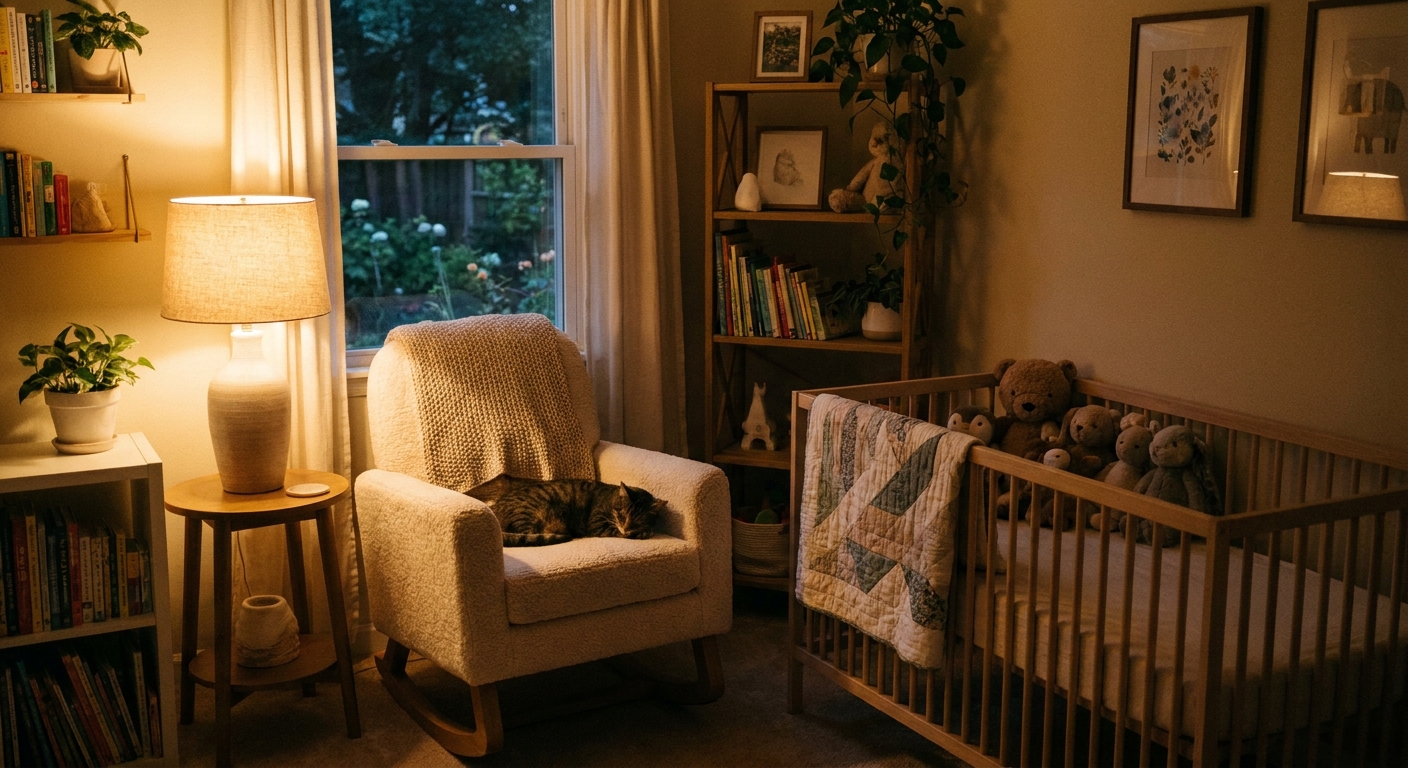
Start with a sleep-friendly plan
Instead of relying on one bright ceiling light, aim for layered lighting. Layers let you use the least amount of light needed for the moment, which helps keep the room calm, especially in the evening.
- Ambient light: the main room light, usually a ceiling fixture.
- Task light: a focused light for diaper changes, reading, or homework.
- Night light: a low glow for midnight check-ins and hallway trips.
If you want a quick primer on layering, flutter by Lighting Basics & Education. It helps make sense of brightness, placement, and why a room feels cozy or harsh.
Go warm for evenings
For nurseries and kids’ bedrooms, warm light often feels the most soothing. In the hours before sleep, keeping light warm and gentle can help the room feel more restful. (Every child is different, so treat these as friendly starting points and adjust.)
- Bedtime range that works well for many families: 2200K to 2700K (soft, candle-warm to warm white)
- All-around warm range: 2700K to 3000K (still warm, slightly brighter and clearer)
- Often best to avoid at night: cool white and daylight tones (commonly 4000K and higher) since they can feel crisp and energizing
Some bulbs and smart lights let you shift from brighter warm white in the daytime to extra-warm at night. That flexibility can be handy as your child grows and the room’s needs change.
Pick kid-safe fixtures
Safety comes from both the fixture choice and where you place it. In a kids’ room, the best lighting is the kind you do not have to worry about when little hands explore.
Fixture choices that fit real life
- Flush mounts and close-to-ceiling fixtures: great for active rooms because there is less to bump into.
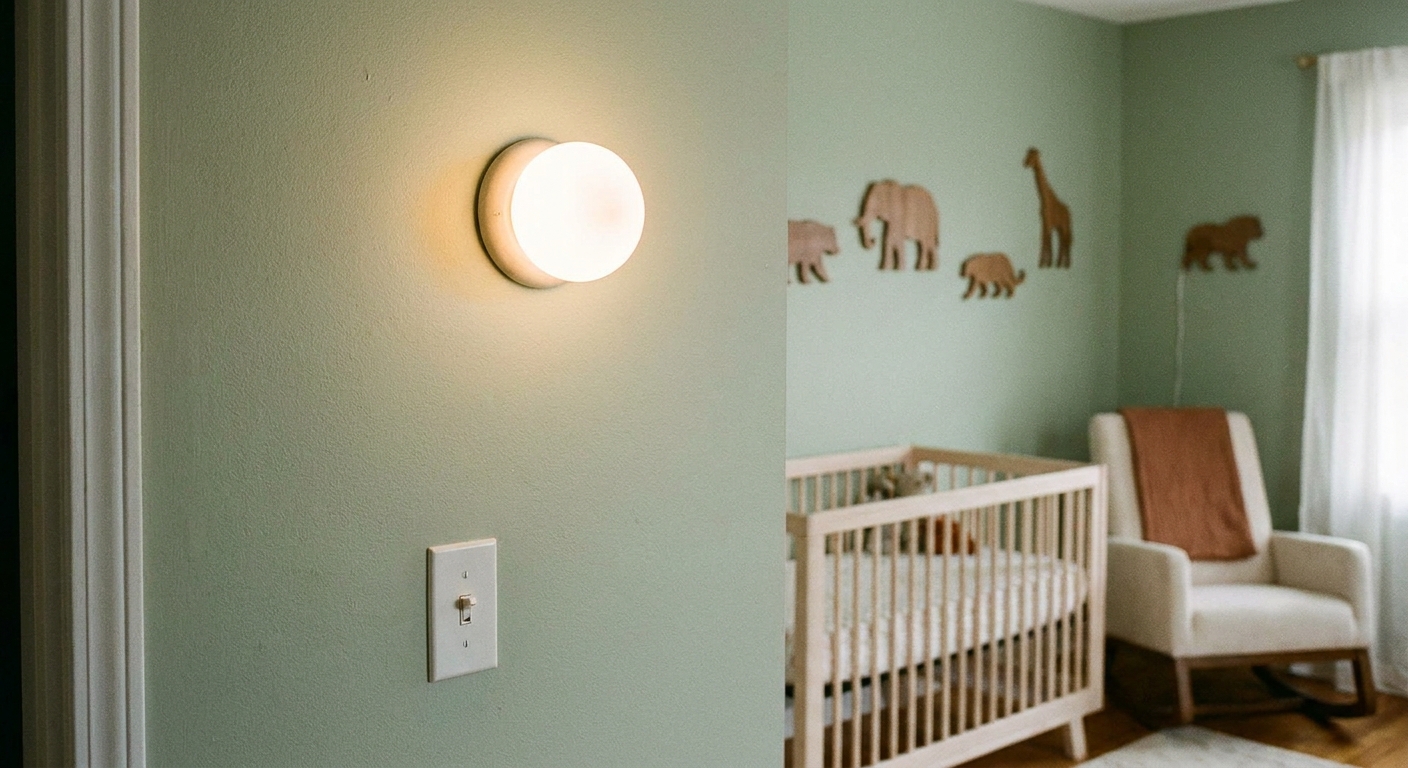
- Wall sconces: helpful for keeping surfaces clear and cords out of reach.
- Floor lamps: use only if they are heavy, stable, and placed where they cannot be climbed or tipped.
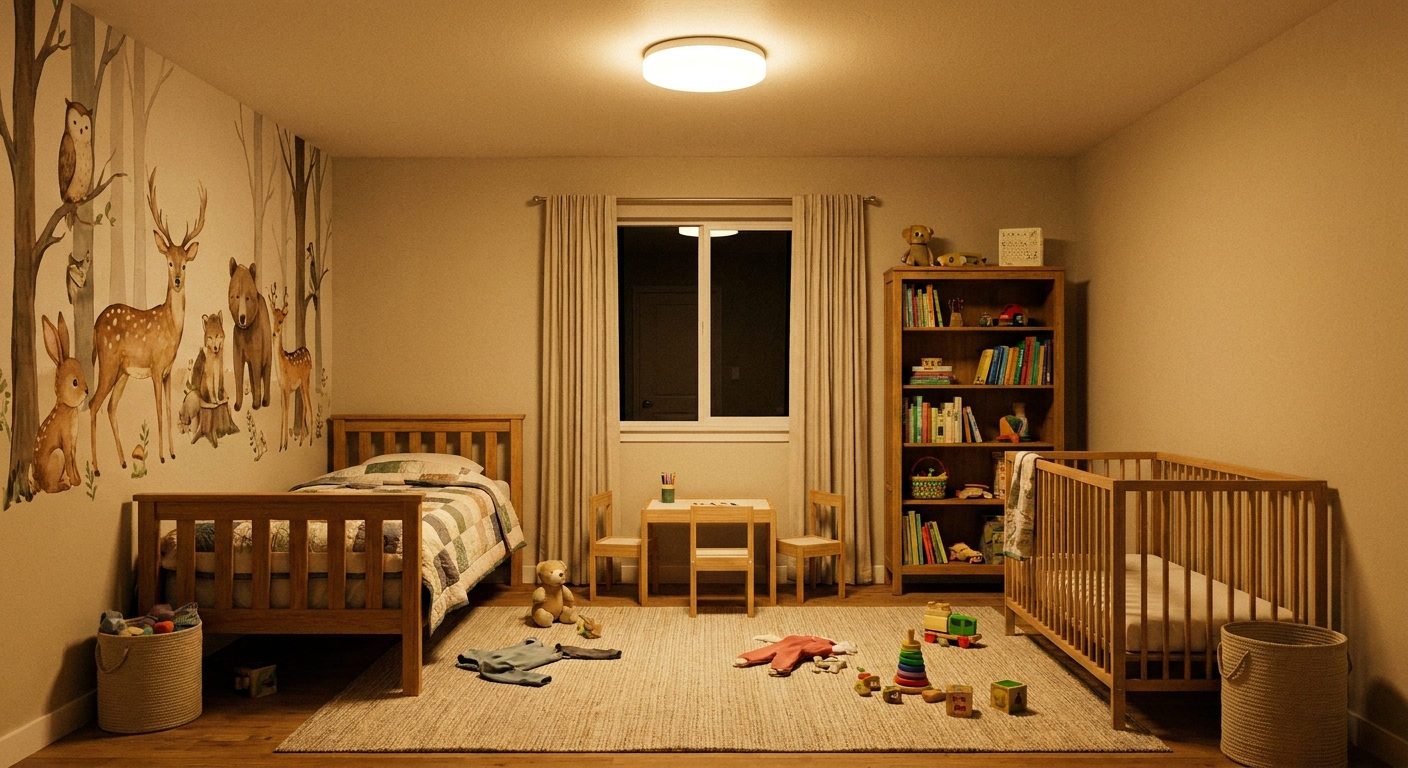
Details that matter
- Shade material: choose sturdy, non-fragile shades (metal, fabric, or durable plastic) over delicate glass in play zones.
- Stable bases: for table lamps, pick a wide, weighted base that does not wobble.
- LEDs run cooler: LED bulbs typically feel cooler on the bulb surface than incandescent bulbs. The base and fixture can still warm up, so keep shades clear and follow the fixture’s bulb limits.
- Cords: keep cords short, routed behind furniture, and secured so they are not a tugging temptation.
Prevent glare at kid height
Kids see the room from a lower angle, which means glare can become a bigger deal than you expect. A simple rule: avoid bare bulbs in their line of sight.
- Use shades and diffusers: especially for bedside lamps, reading corners, and any fixture mounted low.
- Avoid exposed bulbs near beds: even a warm bulb can feel sharp when it is directly visible.
- Place lights slightly behind and to the side: for reading chairs and desks, this helps reduce shadows and squinting.
- Watch mirror-like surfaces: glossy dressers and framed art can bounce light into little eyes. A small reposition often fixes it.
Use shatter-resistant bulbs
Kids are wonderfully energetic, and so is everything they throw, roll, bounce, and swing. In rooms where a lamp could be knocked or a ball could fly, a shatter-resistant bulb can add peace of mind.
- Look for: LED bulbs labeled shatter-resistant or plastic-coated. These are designed to reduce shard risk if the bulb breaks, not guarantee that breakage is impossible.
- Best spots: bedside lamps, playroom lamps, lower fixtures, and any exposed bulb location.
- Also helpful: choose fixtures with an enclosed shade or globe so the bulb is protected.
If you are switching from older bulbs, match the brightness you need by checking lumens on the box. As a starting point, many nurseries feel comfortable with about 800 to 1500 lumens of ambient light available (then dimmed down as needed), while a night light is usually best when it stays very low, often 1 to 20 lumens depending on the child and how dark the room is.
Add dimmers for instant calm
If there is one upgrade that makes a nursery feel magically more peaceful, it is a dimmer. Dimmers let you keep bedtime routines soft, do late-night check-ins without blasting the room, and ramp up brightness for cleaning or play.
Match the dimmer to the bulb
- LED bulbs need LED-rated dimmers. A mismatch can cause flickering, buzzing, or a dimmer that does not dim very low.
- Check bulb notes: the bulb should say “dimmable.”
- If you use smart bulbs: many brands recommend keeping the wall switch on full power and dimming in the app, but this is not universal. Check your specific bulb, dimmer, or smart switch instructions before pairing smart with smart.
Where dimmers help most
- Main ceiling light (so you are not stuck with on or off)
- Wall sconces by a reading chair or bed
- Any light you use during nighttime wake-ups
For more simple, confidence-boosting lighting upgrades, visit DIY & Easy Upgrades.
Night lights that stay gentle
Night lights are tiny, but they do important work. They help kids feel secure, help grown-ups move safely, and reduce the temptation to turn on bright overhead lighting at 2 a.m.
What to look for
- Very warm color: amber or extra-warm white is gentler for sleep routines.
- Dimmable: a night light should be able to go truly low. If it lights up the whole room, it is too much.
- Motion or light sensor: handy for hallways and bathrooms so it only turns on when needed.
- Cool to the touch: LED night lights are usually best.
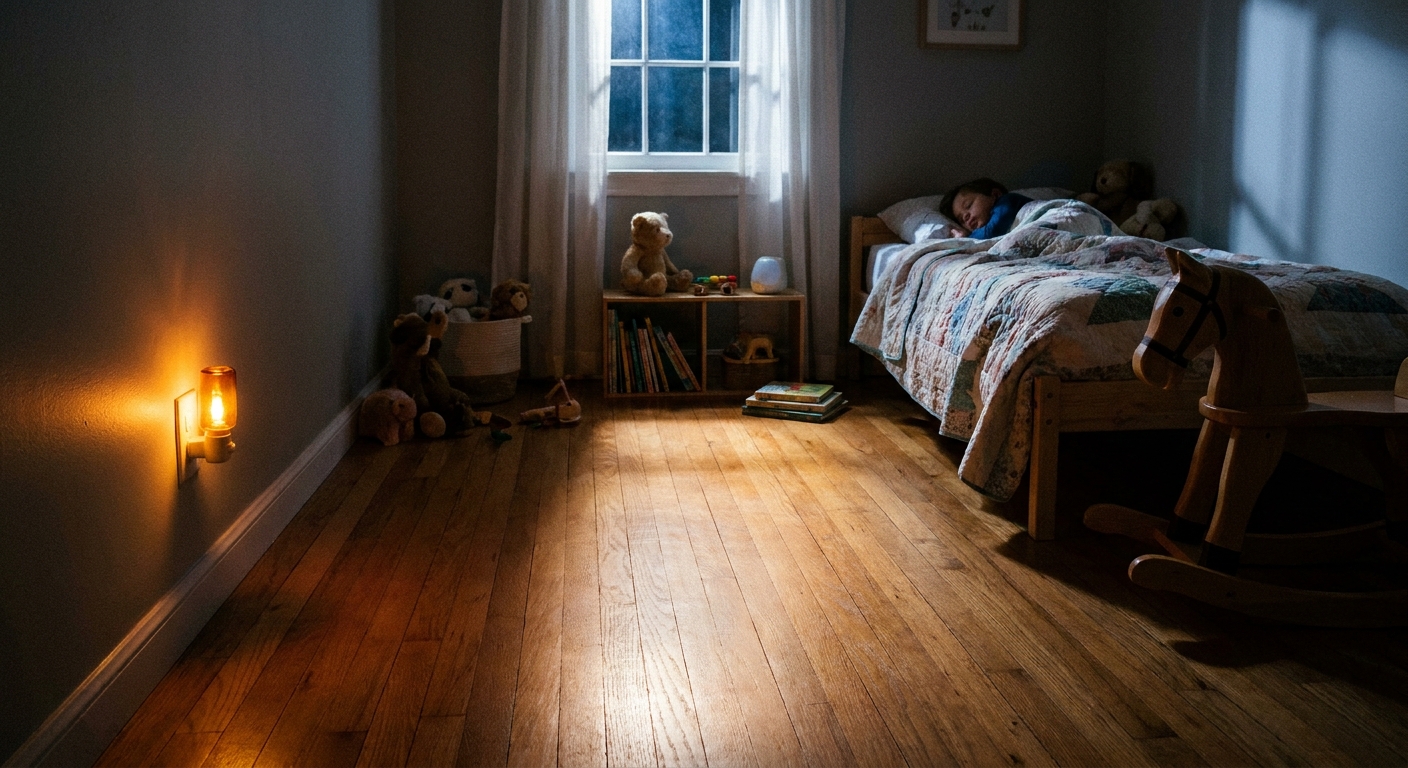
Placement tips
- Low and indirect: closer to the floor reduces glare and helps guide feet.
- Aim away from the bed: place it so the glow is not shining straight into sleepy eyes.
- Try two small lights instead of one bright one: one near the door and one near the bathroom route can feel smoother than a single stronger night light.
Setups for real moments
Late-night diaper changes
- Use a dimmable lamp or sconce, set low.
- Aim light at the changing area, not across the whole room.
- Choose warm color temperature to keep the vibe sleepy.
Story time and cuddles
- Use a shaded lamp near a chair, or a wall sconce with a soft shade.
- Keep the overhead light dimmed or off to reduce shadows and glare.
Playtime and cleanup
- Turn on brighter ambient lighting for safety and clarity.
- If possible, use a higher light level earlier in the day, then lower it as bedtime approaches.
Homework (for older kids)
- Add a desk task light aimed at the work surface.
- Keep the room’s ambient light on as well, so the desk is not the only bright spot.
If screen time is part of homework, the glare tips in Home Office Lighting Setup: Reduce Screen Glare and Eye Strain also apply to kids’ desks.
A note on darkness and sleep
Lighting is only part of the sleep picture. If early morning sun or streetlights are waking your child, darkening the room with curtains or shades can help, and it lets you keep nighttime lighting very low. Even with a dark room, a tiny, warm night light for safe footsteps can still be a good compromise.
Quick safety checklist
- Use LED bulbs for cooler operation.
- Choose enclosed fixtures or sturdy shades in play zones.
- Pick shatter-resistant or plastic-coated bulbs for lamps and lower fixtures.
- Keep cords secured and out of reach.
- Use dimmers on the main light and bedside lighting.
- Choose warm color temperatures for evenings and night lights.
- Reduce glare at kid height with shades and smart placement.
FAQ
How bright should a nursery be?
Bright enough to move safely and do tasks, but not so bright it feels like a kitchen at midnight. As a starting point, many nurseries do well with roughly 800 to 1500 lumens of ambient light available on a dimmer, plus a separate, focused task light where you need it most.
Are smart bulbs safe for kids’ rooms?
Smart bulbs can be a great tool for dimming and scheduling. The key is to keep the basics safe: stable fixtures, protected bulbs, and cords managed neatly. Many smart bulbs want steady power from the wall switch, but some systems are designed to work with compatible smart dimmers. Check your specific brand’s instructions.
What is the best night light color for sleep?
Many families prefer amber or very warm white at night. It feels gentle and cozy, and it keeps the room from feeling like daytime. If a child seems more alert with any night light on, try dimming lower or moving it farther from the bed.
Should the overhead light be on a dimmer?
Yes, when possible. It is one of the simplest ways to turn a too-bright room into a soft, sleepy space in seconds.
A final cozy glow
Nursery and kids’ room lighting works best when it is flexible: bright for real life, dim for rest, and built from sturdy, kid-friendly choices. With warm bulbs, a reliable dimmer, and a night light that stays truly low, bedtime can feel calmer for everyone.
For more ideas room by room, see Room-by-Room Lighting.