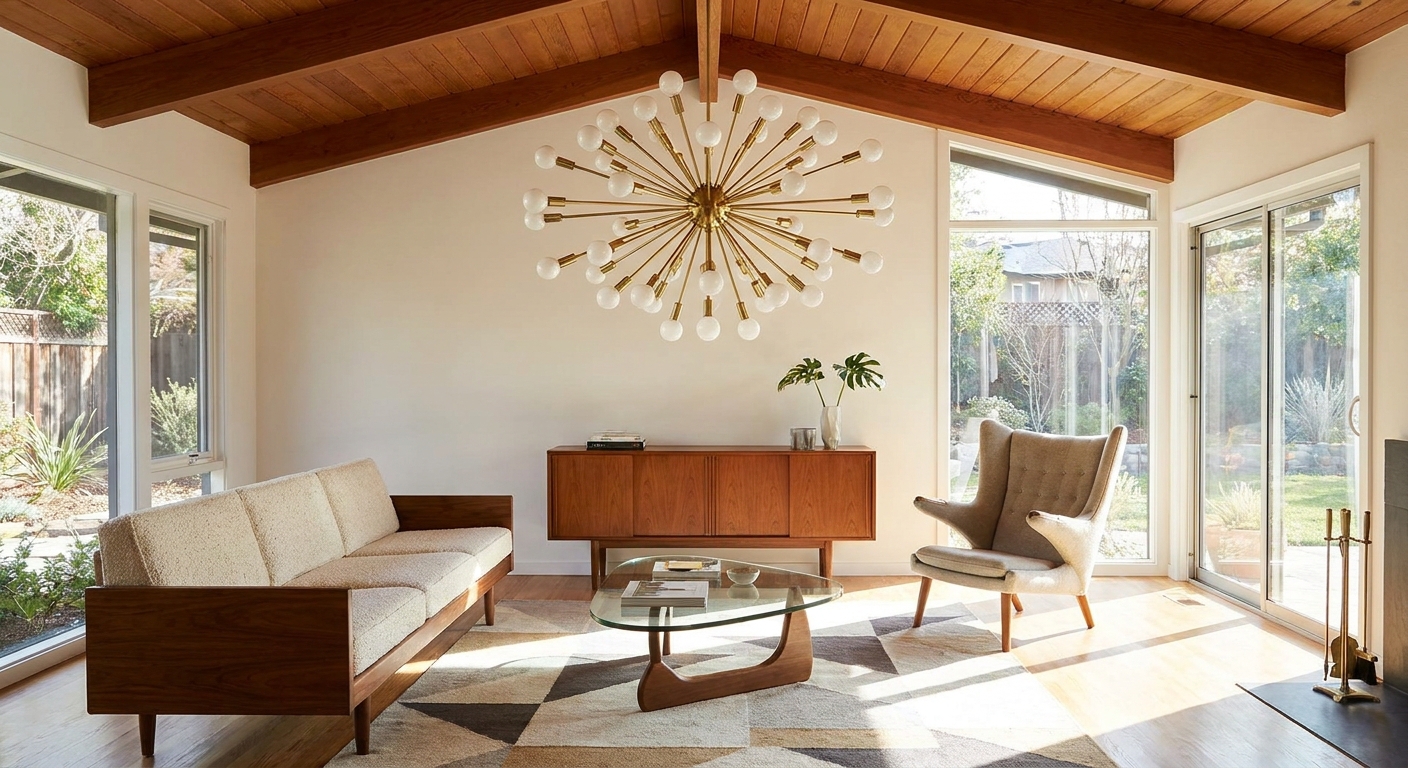
Learn what makes lighting feel mid-century modern—then choose sputnik chandeliers, opal globe pendants/sconces, and brass finishes with practical tips on siz...
Warm Lumen
Mixing Metal Light Fixtures

Lumi
Lumi is the friendly little firefly host of Warm Lumen, with a heart that glows as brightly as a perfectly placed pendant lamp. He loves discovering how soft bulbs, warm color temperatures, and layered lighting can transform any dark room into a welcoming retreat. Lumi is always fluttering by to share bright ideas and cheer you on as you create a beautifully lit space.
Published · Last updated
Let’s find the perfect glowing touch for every corner of your home! Mixing metal finishes can look effortlessly designer when it feels intentional. The trick is to choose a “lead” finish, support it with one or two helpers, and repeat each metal in a few places so your eye reads it as a plan, not a mismatch.
The three-finish sweet spot
For most rooms, the easiest formula is 2 to 3 metals total. With matte black, brass, and brushed nickel in the same space, you are already at three, so success depends on balance and repetition.
- Pick a dominant finish (about 60%): the one you see most often in the room.
- Add a secondary finish (about 30%): the “bridge” that supports the main one.
- Use an accent finish (about 10%): a sparkle or contrast, used sparingly but on purpose.
These numbers are not exact math. They are just a helpful “feel” for how to anchor the room so one finish is clearly in charge.
If everything is equal, nothing looks grounded. Giving one finish the starring role instantly makes mixing feel calm.
Start with the room’s fixed metals
Before choosing new light fixtures, look at what is hardest to change. These pieces quietly set the rules.
- Plumbing: faucets, shower trim, sink strainers
- Appliances: stainless steel often reads similarly to brushed nickel, but it can vary in sheen and undertone (and finishes like fingerprint-resistant or black stainless are their own category)
- Door hardware: knobs, hinges, levers
- Built-ins: fireplace screens, railings, stair balusters
If your kitchen already has stainless appliances and a brushed nickel faucet, brushed nickel is often a natural dominant or secondary finish. Then brass becomes warmth, and matte black becomes structure. If your stainless is shinier or a different undertone, you can still mix, just pay closer attention to sheen so it looks intentional.
How each finish behaves
Matte black: the outline
Matte black works like ink in a drawing. It defines shapes, adds contrast, and keeps a room from feeling too shiny.
- Best use: statement fixtures, window frames, railings, mirror frames
- Pairing strength: excellent with both brass and brushed nickel
- Common pitfall: too many black items scattered around can feel busy. Repeat it in fewer, bolder moves.
Brass: the glow
Brass brings warmth and a candlelit feel, especially in cozy color temperatures. It can read vintage, modern, or mid-century depending on the fixture shape.
- Best use: pendants, sconces, decorative hardware, picture lights
- Pairing strength: great with matte black; also works with brushed nickel when you manage sheen
- Common pitfall: mixing brassy golds that do not match. Choose one brass tone (satin, aged, unlacquered “living finish,” and so on) and keep it consistent.
If you love warm metals, you may also enjoy the style notes in Mid-Century Modern Lighting: Sputniks, Globes, and Brass.
Brushed nickel: the quiet blender
Brushed nickel is the peacekeeper. It is neutral, cool-leaning, and typically lower-glare than polished chrome, which makes it ideal for “background” hardware.
- Best use: faucets, hinges, door levers, functional pieces
- Pairing strength: strong with matte black; good with brass when you repeat each finish
- Common pitfall: combining brushed nickel with highly polished chrome. The difference in shine can look accidental.
Chrome, polished nickel, and where they fit
This is where a lot of people get stuck:
- Chrome is cool and very reflective. It reads crisp, modern, and high-shine.
- Polished nickel is also shiny, but it often feels a little softer and warmer than chrome.
- Brushed nickel is the calmer sibling, with less sparkle and more “background” energy.
If you want to mix chrome into a room that already has brushed nickel, treat chrome like an accent and repeat it at least twice. Or keep everything in the same shine family (mostly brushed, mostly polished) so the contrast feels like a choice, not a collision.
Rules that make mixed metals feel intentional
Rule 1: Repeat every finish at least twice
If a metal appears only once, it looks like a leftover. Aim for two to four touchpoints per finish, per room.
- Matte black: pendants + cabinet knobs
- Brass: chandelier + a pair of sconces
- Brushed nickel: faucet + door hardware
Rule 2: Match undertones, not exact metals
Think warm and cool:
- Warm metals: brass, bronze, copper
- Cool metals: brushed nickel, chrome, stainless
- Neutral “ink”: matte black
Warm and cool can absolutely mix. The key is giving the room a bridge, either matte black, wood tones, or a consistent lighting style (for example, all globe shades or all simple cones).
Rule 3: Keep sheen consistent within each finish family
A room feels more cohesive when finishes share a similar shine level.
- If your black is matte, choose mostly matte or satin black, not glossy.
- If your nickel is brushed, keep it brushed across faucets and levers when possible.
- If your brass is aged or satin, avoid one bright polished brass piece that steals attention unless it is the intentional accent.
Rule 4: Unify with shape and glass
Even with mixed metals, a room looks “collected” when fixture shapes relate.
- Choose similar shade materials (clear glass, opal glass, linen).
- Echo curves or straight lines across fixture types.
- Repeat a detail, like knurled knobs, tapered arms, or exposed bulbs.
Easy pairings
These combos are popular because they naturally balance warm, cool, and neutral.
Option A: Black leads, brass accents
- Use matte black for most light fixtures (pendants, chandelier, flush mounts).
- Use brushed nickel for functional hardware (faucet, door levers).
- Add brass in two small moments (cabinet pulls and one decorative sconce pair, or a mirror frame).
This looks crisp and modern, with just enough warmth.
Option B: Brass leads, black frames
- Use brass for the main statement fixture (dining chandelier, entry pendant) and a secondary piece (sconces).
- Use matte black as the grounding outline (table lamp base, curtain rod, or one set of knobs).
- Keep brushed nickel for items you already have, especially stainless appliances and faucets.
This feels inviting and glowy, especially with warm bulbs.
Option C: Nickel leads, brass warms
- Use brushed nickel for most hardware and at least one fixture.
- Use brass for a focal point (two pendants or a chandelier).
- Use matte black sparingly (one bold fixture or framing element).
This is a calm approach for homes with lots of stainless steel and cooler stone.
Warm alternatives: bronze and antique brass
If bright brass is not your thing, oil-rubbed bronze, aged bronze, and antique brass can give you that same warmth with a softer, moodier finish. The same rules apply: keep the sheen consistent, and repeat the finish so it reads as part of the plan.
Room-by-room tips
Kitchen
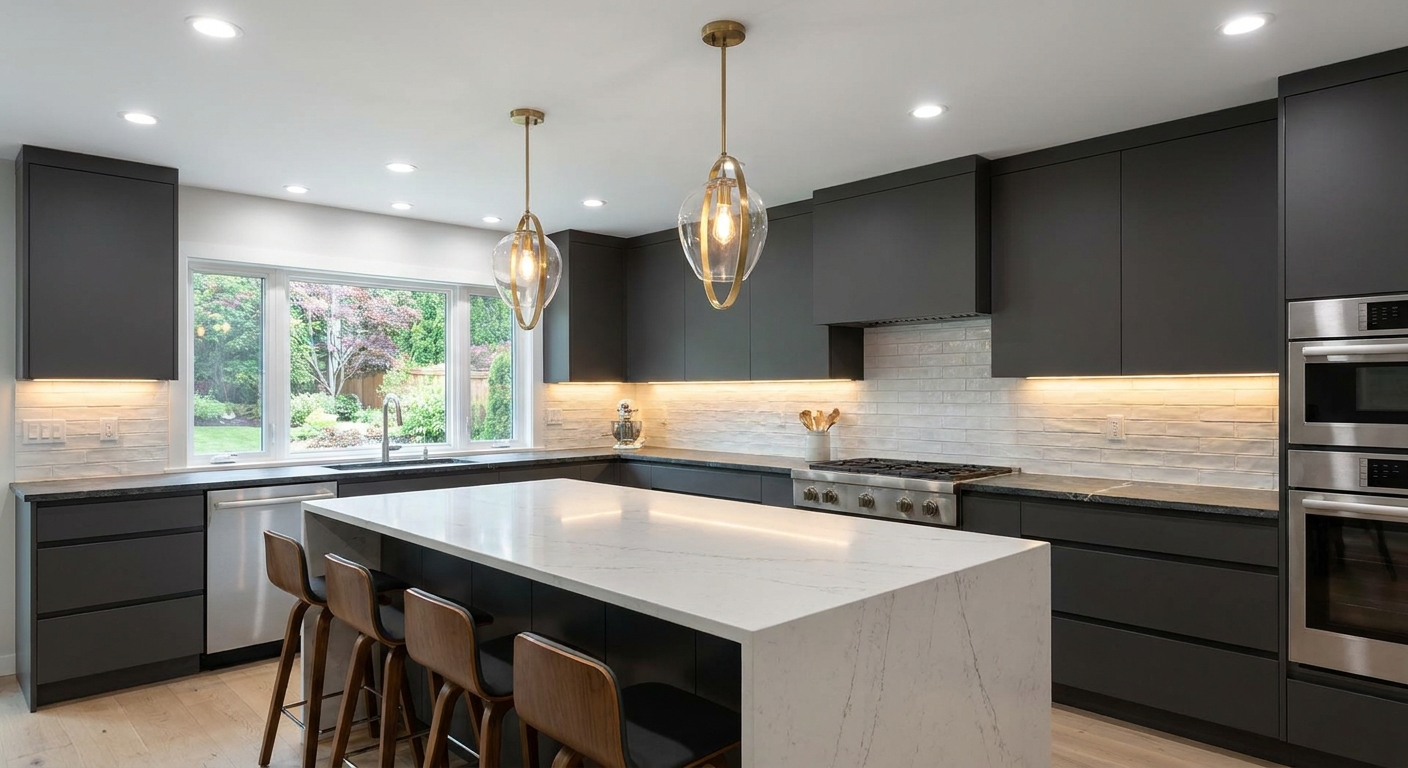
Kitchens often have multiple metals already. Stainless appliances often sit in the same visual family as brushed nickel, so they can act like part of your base, as long as the sheen and undertone feel compatible.
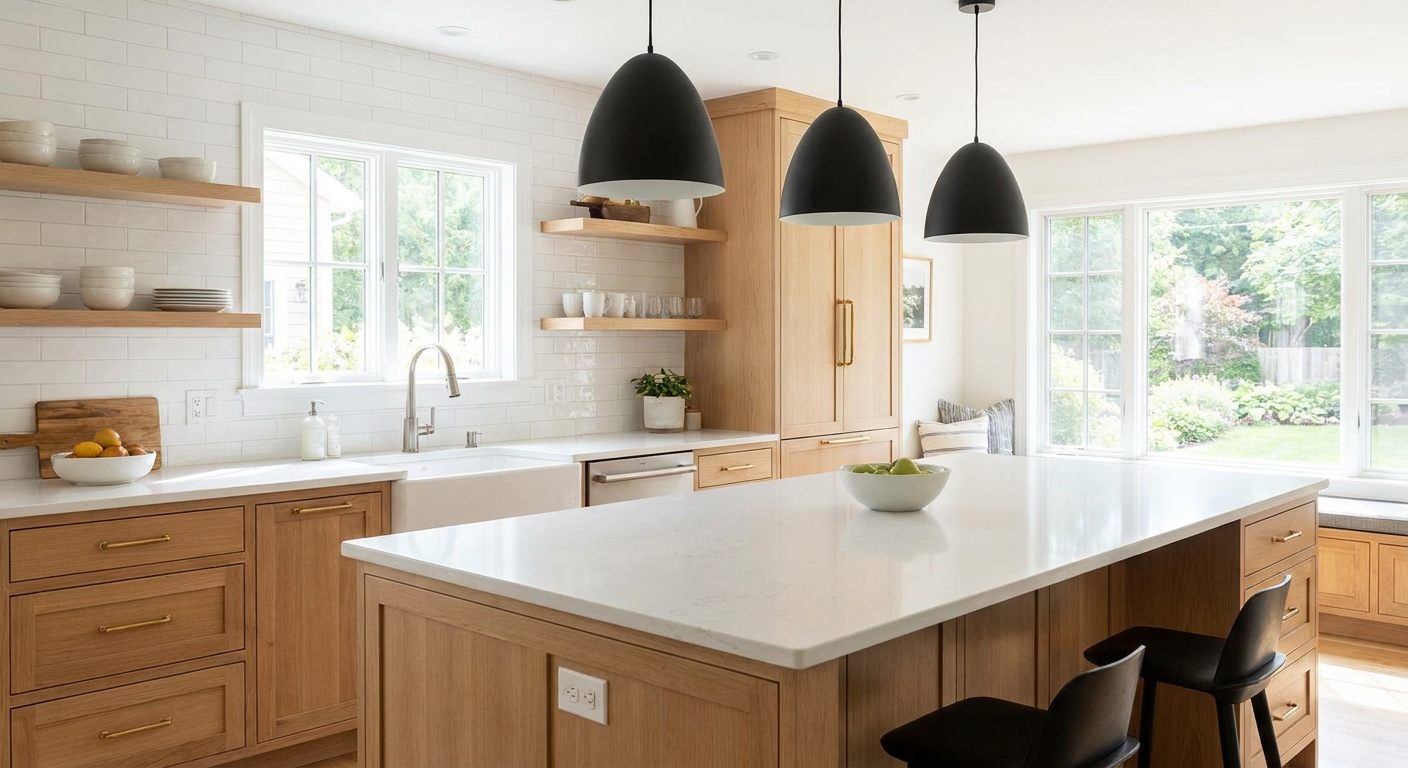
- Try matte black pendants to add contrast over an island.
- Use brass hardware on cabinets to warm up white or gray finishes.
- Keep the faucet in brushed nickel or stainless for a timeless anchor.
Example “touchpoint map”: Matte black pendants + black barstool legs; brass cabinet pulls + a small brass picture light; brushed nickel faucet + stainless appliances.
For overall balance, layering matters as much as finishes. See How to Layer Kitchen Lighting for a clear game plan.
Bathroom
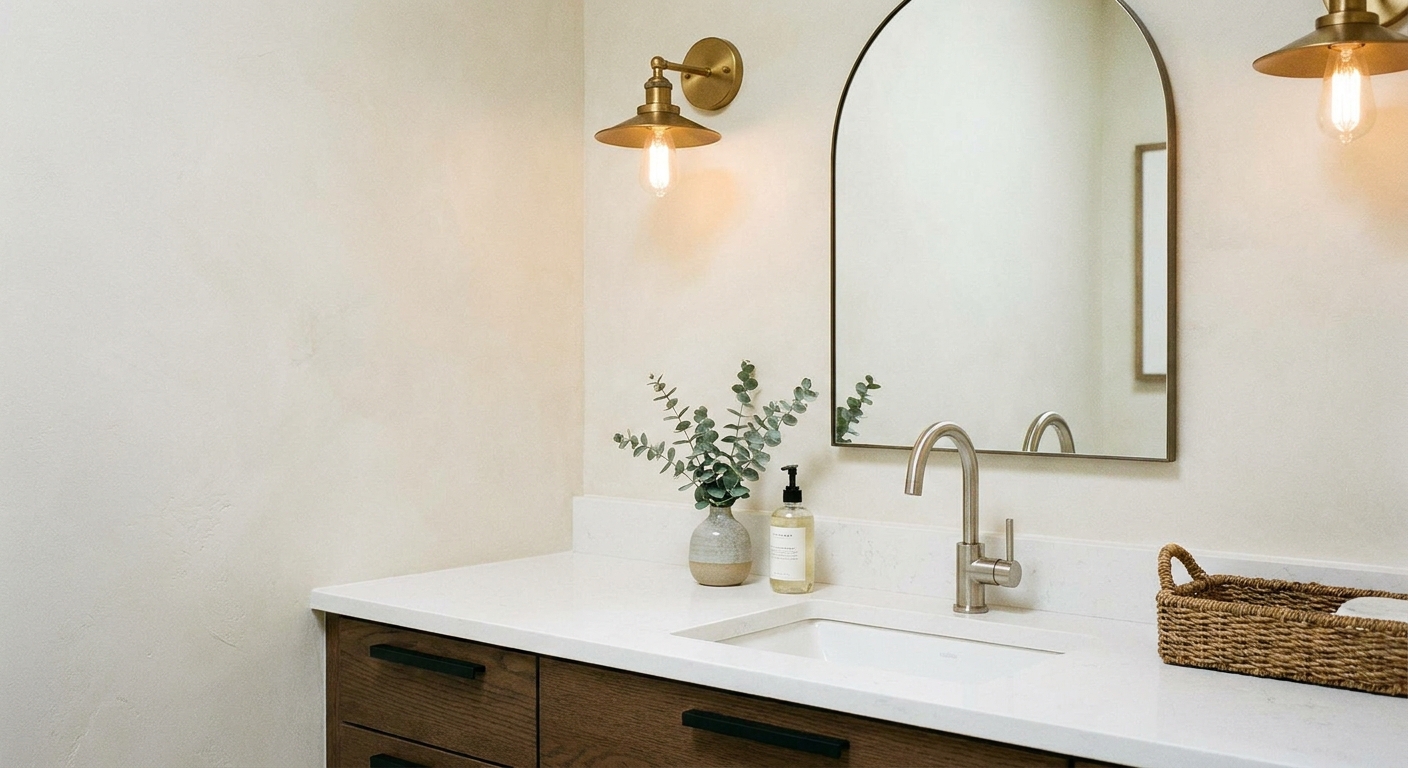
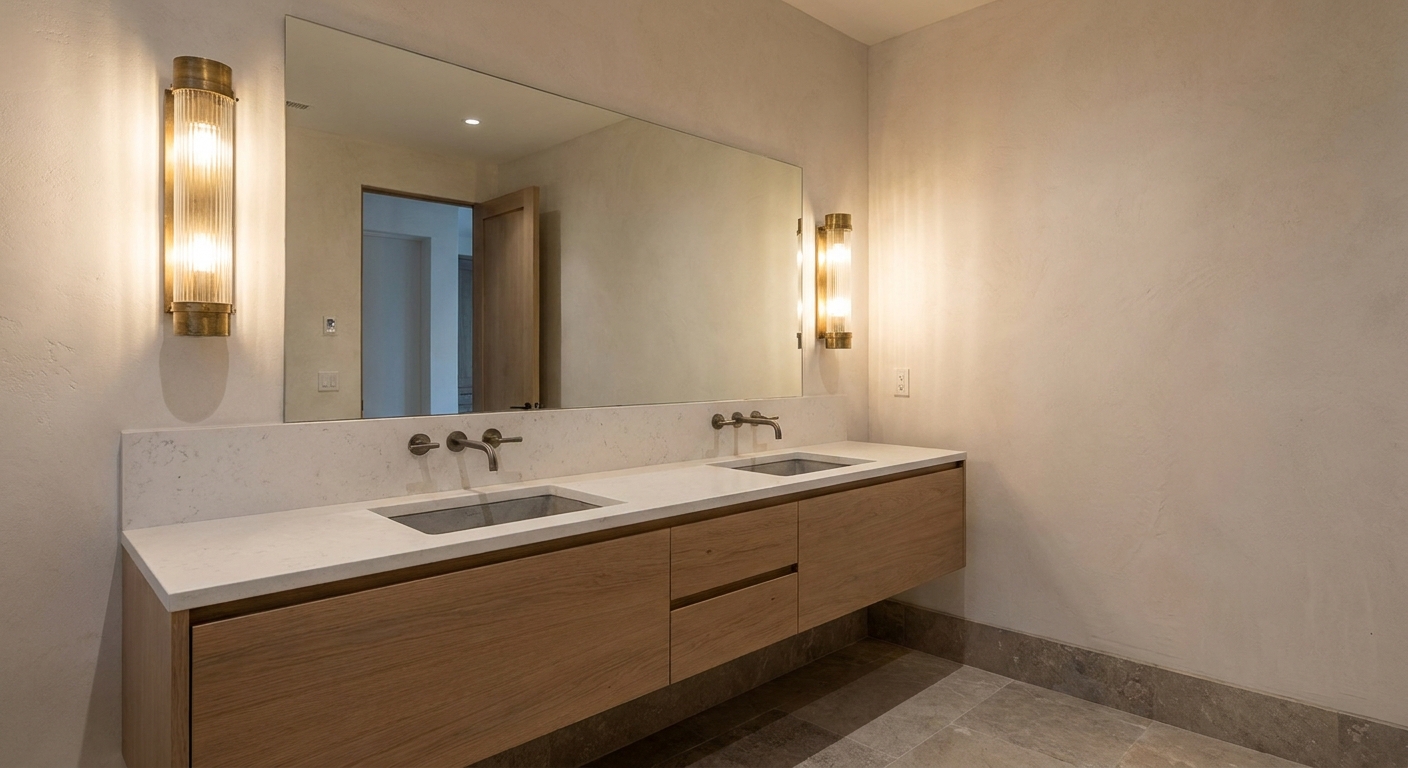
Bathrooms look best when they feel clean and edited. If you mix three metals, keep each one purposeful.
- Let the faucet and shower trim lead (often brushed nickel).
- Make the vanity light the style moment (brass or black).
- Use the third finish only once more (mirror frame or cabinet pulls).
Example “touchpoint map”: Brushed nickel faucet + matching towel bar; brass vanity light + brass drawer pulls; matte black mirror frame (and, if needed, black hooks to repeat it).
Color temperature also changes how metals read. Warm light makes brass richer and nickel softer. For bulb guidance, visit Best Color Temperature for Bathroom Vanity Lighting.
Entryway and hallway
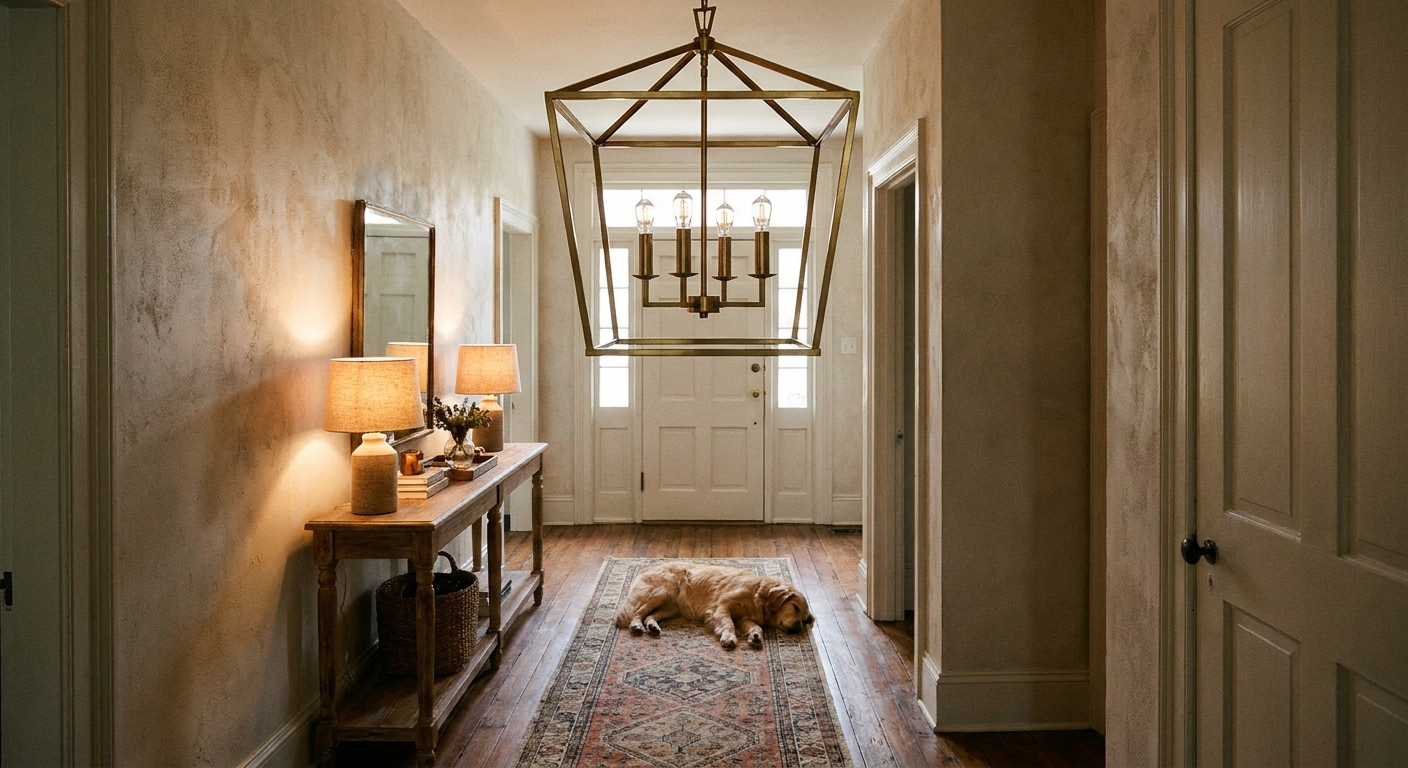
These pass-through areas connect rooms, so mixed metals here can help your home feel cohesive.
- Use one finish repeatedly for ceiling fixtures (often matte black or brass).
- Let door hardware stay consistent, typically brushed nickel.
- Add one small accent in the third metal, like a mirror frame or a small semi-flush mount detail.
Example “touchpoint map”: Matte black semi-flush + black console table legs; brushed nickel door lever + brushed nickel hooks; brass mirror frame + a brass tray for keys.
Need a starting point for the first impression zone? Explore Entryway Lighting.
Living room
Living rooms can carry mixed metals beautifully because you have more surfaces to repeat finishes.
- Pick one metal for “tall items” (floor lamps, sconces).
- Pick one metal for “table height” (table lamps, side tables).
- Use the third metal in small decor that catches light, like a picture light or a thin mirror frame.
Example “touchpoint map”: Brass floor lamp + brass picture light; matte black coffee table legs + black curtain rod; brushed nickel cabinet hardware + a nickel-framed side table.
If you do not have an overhead fixture, mixing metals still works. It just shifts to lamps and plug-in pieces. See Living Room Lighting Without Overhead Fixtures.
Mini checklist
- Count your metals: keep it to 2 or 3 per room.
- Choose a lead finish: dominant, secondary, accent.
- Repeat each finish: at least twice per room.
- Control shine: satin with satin, brushed with brushed.
- Unify shapes: similar glass, similar lines.
- Use warm bulbs where you want brass to glow and black to look soft, not harsh.
Quick FAQ
Can you mix brushed nickel and brass in the same room?
Yes. Keep one dominant, repeat both finishes, and avoid wildly different shine levels. Matte black is an excellent bridge between them.
Do all the light fixtures have to match?
No. They should coordinate, not clone. Matching glass type, similar silhouettes, or one repeated finish across all fixtures usually does the job.
Should door hardware match light fixtures?
Not always. Door hardware can stay consistent throughout the home for flow, while light fixtures change by room. If they differ, repeat the door hardware finish somewhere else in the room so it feels connected.
What is the easiest way to make mixed metals look expensive?
Reduce the number of finishes, repeat them intentionally, and keep the room’s lighting style consistent. A calm plan reads polished, even when the metals are different.
If you want more style-forward fixture ideas that play nicely with mixed finishes, head to Fixtures & Styles. A little planning, a little repetition, and your metals will look like they were meant to sparkle together all along.